
By Joseph E.A. Connell Jnr
Broadcasting in Ireland began in 1926 with 2RN in Dublin. From that date until June 1960 the broadcasting service operated as a section of the Department of Posts and Telegraphs; those working in it were directly employed by the Irish government and were regarded as civil servants.
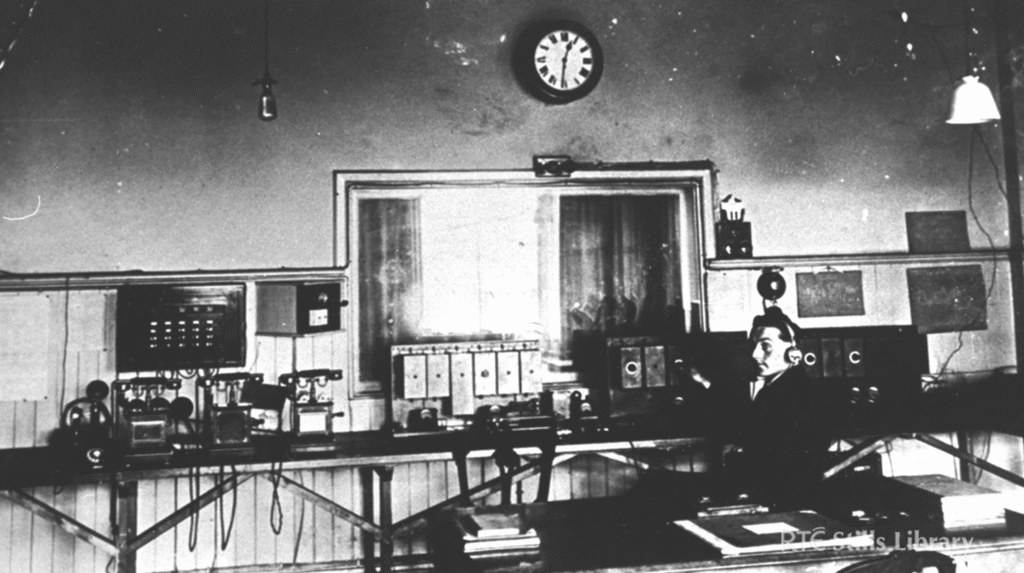
The radio service began on 1 January 1926, while regular television broadcasts began on 31 December 1961, making it one of the oldest continuously operating public service broadcasters in the world (known as RTÉ from the 1960s). RTÉ is a statutory body, run by a board appointed by the government. General management is in the hands of an executive board headed by a director-general. RTÉ is regulated by the Broadcasting Authority of Ireland. Radio Éireann, RTÉ’s predecessor, was one of 23 founding organisations of the European Broadcasting Union in 1950.
Under Section 31 of the Broadcasting Authority Act 1960, the minister for posts and telegraphs of the day could direct RTÉ ‘not to broadcast any matter, or any matter of any particular class’. This infamous clause of the Broadcasting Act was a contentious issue during coverage of the Troubles in the 1970s and 1980s. In 1971 the first such directive was issued by Gerry Collins, directing RTÉ not to broadcast ‘any matter that could be calculated to promote the aims or activities of any organisation which engages in, promotes, encourages or advocates the attaining of any particular objective by violent means’. A year later Collins dismissed the entire RTÉ authority over a report of an interview with Seán Mac Stiofáin, chief of staff of the Provisional IRA. RTÉ reporter Kevin O’Kelly had reported, not broadcast, his taped interview with Mac Stiofáin. He was jailed briefly for contempt in a court case arising out of the interview when Mac Stiofáin was charged with IRA membership. O’Kelly refused to identify Mac Stiofáin’s as the voice on his unbroadcast interview. The tape had been seized from his house by the Garda Síochána.
In 1976, Section 31 was amended by Minister Conor Cruise O’Brien. He issued a new annually-based directive to the RTÉ authority, prohibiting the broadcast of interviews or reports of interviews with spokespersons for, or representatives of, Sinn Féin, the IRA and other named organisations. RTÉ was also banned from broadcasting interviews or reports of interviews with spokespersons for any organisation banned in Northern Ireland under the UK’s Northern Ireland (Emergency Provisions) Act 1973. Somewhat contrary to the perception that he single-handedly instituted a draconian censorship regime, O’Brien also oversaw new legislation which sought to prevent abuse of such powers. From 1976 onwards, a minister could not prohibit the broadcast of ‘any particular matter’ at any time, but only that which was ‘likely to promote, or incite to, crime or would tend to undermine the authority of the State’.
The restrictions irritated many groups and their affiliates, but were also opposed from the outset by many journalists, broadcasters and civil liberties activists. However, campaigns to have Section 31 removed failed to gain significant purchase amongst the general public. The restrictions continued until January 1994, when a renewal order was not issued by the then minister, Michael D. Higgins.
Joseph E.A. Connell Jr is the author of The Terror War: the uncomfortable truths of the War of Independence (Eastwood Books, 2022).