
James Joyce’s brother and long-time resident of Trieste found himself in the crosshairs of the authorities during both world wars.
By Isadore Ryan
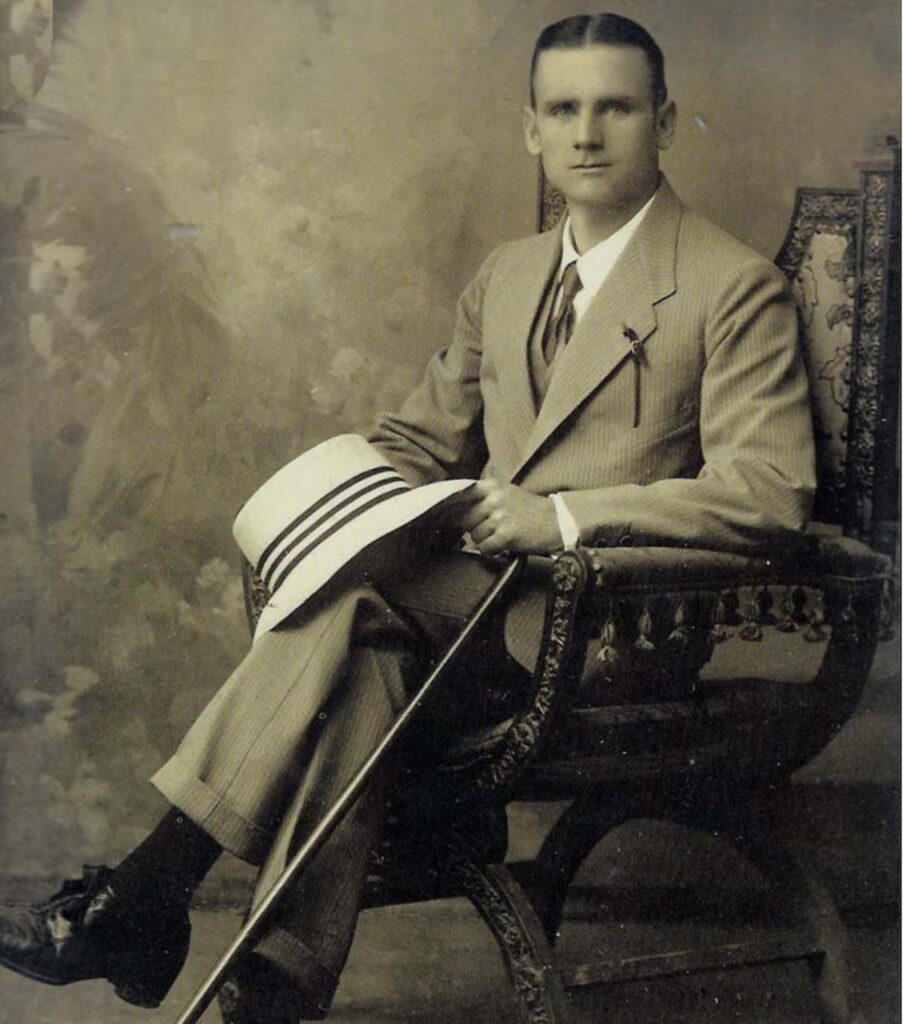
In 1905 James Joyce was joined in Trieste by his younger brother, Stanislaus. For the next ten years Stanislaus played ‘Sancho Panchez … to James’ Don Quixote’, in the words of Richard Ellmann, until the First World War divided the brothers.
Stanislaus constantly bickered with his older brother during their time in Trieste, Austria-Hungary’s main outlet to the sea. Stanislaus was also, according to one of his pupils, ‘irrepressibly anti-German’ and became mixed up with the irredentista movement in Trieste, which sought the attachment of the city and its Istrian hinterland to Italy. By contrast, James proudly proclaimed that he ‘never took much interest’ in his brother’s politics.
SARAJEVO
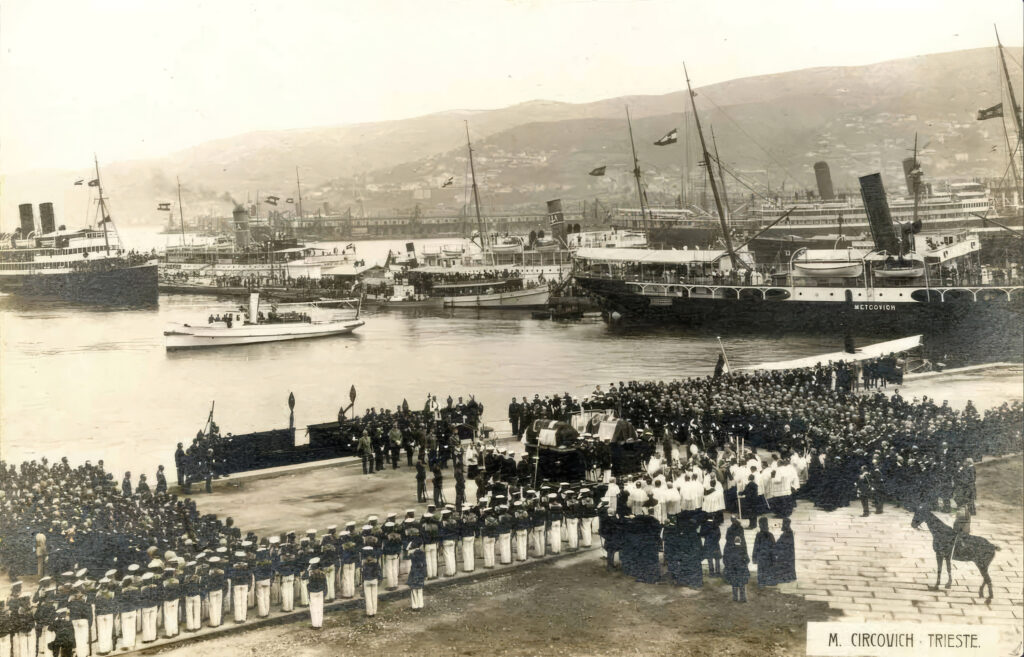
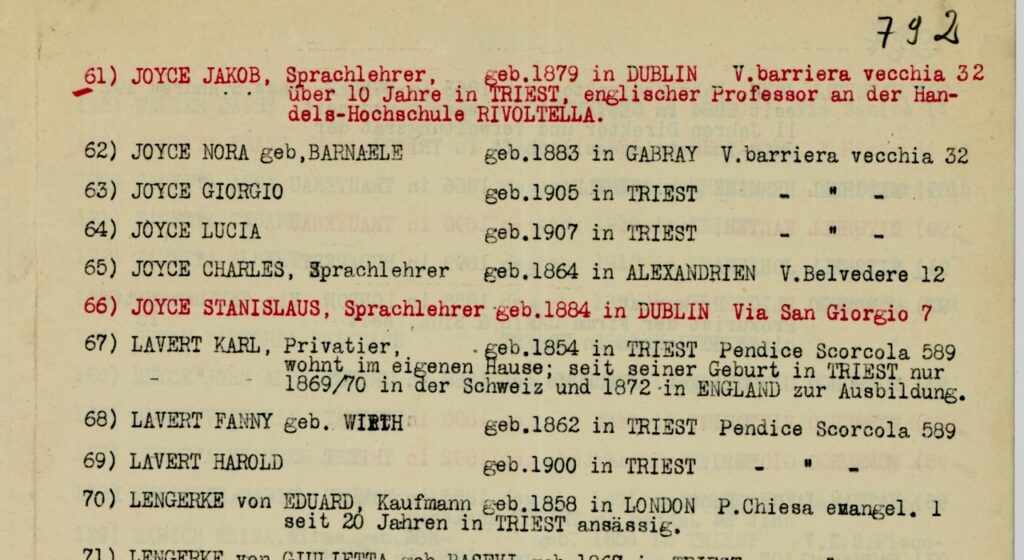
Both James and Stanislaus were present in Trieste on 2 July 1914 when the coffins of Crown Prince Franz Ferdinand and his wife Sophie were hauled through the streets from the dock to the train that would bring them to Vienna after their assassination in Sarajevo. And the two Joyce brothers were in the authorities’ sights after the UK declared war on Austria-Hungary just over a month later, with both their names appearing in red as worthy of ‘special vigilance’ on a list of 130 British citizens resident in Trieste in November 1914. Yet the brothers were treated very differently.
Stanislaus’s anti-Austrian utterances and the curiosity he and some of his irredentista Italian friends showed towards Austrian military installations resulted in his arrest on 28 December 1914 and his transport to an internment camp a few days later. By contrast, James was able to linger on in the city for several months. He even served as best man at his sister Eileen’s wedding in Trieste in April 1915. Just a few days before his departure for Zurich, James wrote to his interned brother on 16 June 1915 (not yet known as Bloomsday): ‘Dear Stannie, we are still here and in good health. I shall write to you should we travel. Do not worry about us. We have always been well treated up to now. I have written a bit. The first episode of my new novel Ulysses is written.’
INTERNMENT
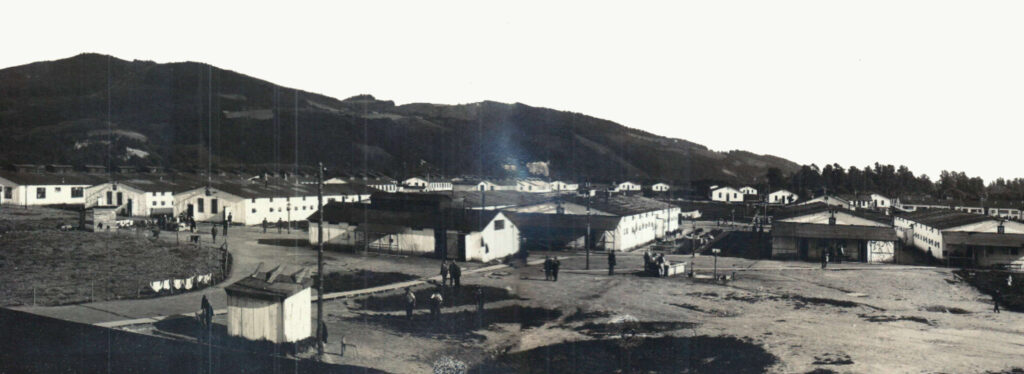
The Austrians moved Stanislaus between a number of internment camps. Food and fuel for heating were in short supply, and early on there were outbreaks of typhus. Yet civil internees undoubtedly fared better than the hundreds of thousands of Russian and Serbian prisoners of war imprisoned by the Austro-Hungarians. They were regularly visited by foreign and Red Cross delegations, and internees able to pay for supplementary supplies could live in relative comfort. Some could even live in local B&Bs. Stanislaus was first interned in Kirchberg Castle, set up to cater for the better class of internee and administered by priest and ecclesiastical historian Alphons Zák. In autumn 1915 Stanislaus was transferred 20km north to another Internierungslager in Grossau bei Raabs, near the present-day Czech border. There, two fellow guests-of-the-nation were a 47-year-old jockey from Roscommon called Richard Morris and a Dublin-born engineer called Charles Gray.
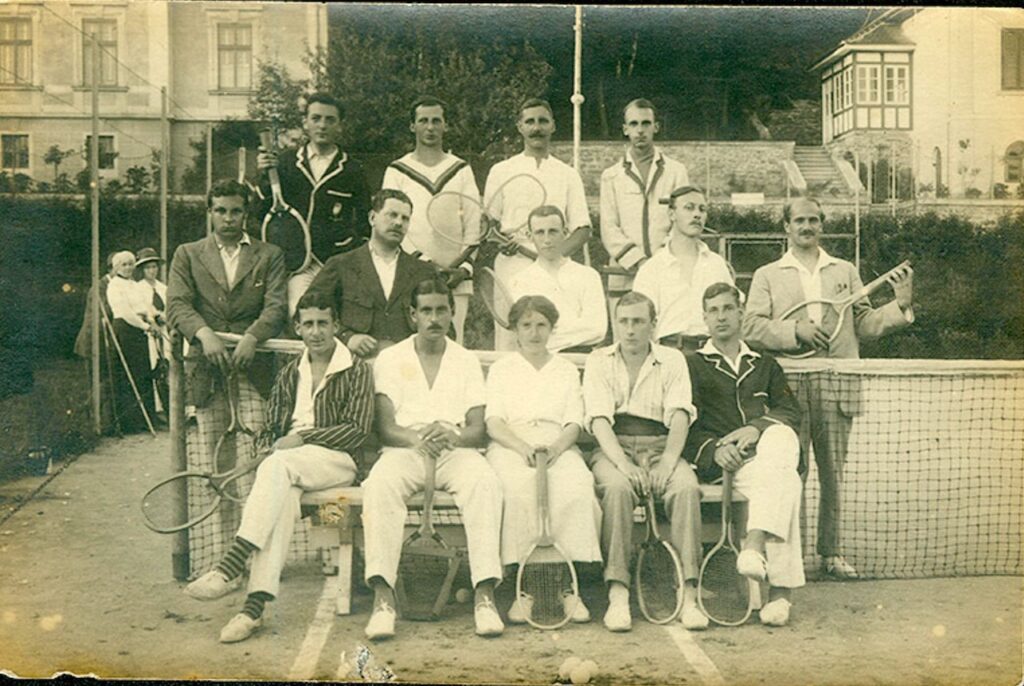
The internees were given a large degree of organisational autonomy. Theatre groups were formed, boxing and football tournaments were organised, and even fencing and tennis clubs were tolerated. Stanislaus was able to correspond with his family, including James in Zurich. In a letter dated 2 November 1915, the latter informed Michael Healy (his wife Nora’s uncle) that, along with news of his transfer to Grossau, Stanislaus had recently sent him a photograph: ‘He has a long full beard and looks like the late Duke of Devonshire. He tells me that he sprained his wrist, playing tennis, but is now better.’ A sister, May, wrote to James: ‘Have you heard from Stannie lately? … I sent him shoes about six weeks ago … He is wonderful to keep up so well during all this time, it must be dreadful for him being a prisoner and idle all this time, but he says he has nothing to complain of in his treatment, which is some consolation.’ Alongside frequent requests for food, clothes and books, Stanislaus expressed his unhappiness about the more limited sports facilities at Drosendorf, a camp centred on a large, converted granary, to which he was transferred later in 1916.
Another sister, Eileen, now in Prague, applied for her brother to be granted temporary leave from the camp in Grossau, but a police official in January 1916 decided that it would be better not to accede to the request despite the favourable impression made by the Irishwoman. Nevertheless, Eileen was able to visit her brother in his last place of confinement, Katzenau, near Linz. Here, one of Stanislaus’s fellow internees was Antony Fernando, an Australian aborigine, who was to become a regular speaker at London’s Hyde Park Corner in defence of his people’s cause during the 1930s.
Katzenau, much bigger than the previous camps where Stanislaus had been held, was overwhelmingly populated by Reichsitalianer, Italian-speaking subjects of the Habsburg empire. The accession of Emperor Karl to the throne led to an amnesty being proclaimed for most of these in spring 1917. Stanislaus himself was offered liberation from internment in the aftermath of the Roger Casement trial in June 1916 but, according to one of his ex-pupils, Oscar Schwarz, Stanislaus refused, ‘possibly because he did not know where to turn but also because he did not want to appear as a friend of Germany’.
At the war’s end Stanislaus went back to Trieste, his cause—the transfer of the city to Italy—now vindicated. And yet there was much upheaval. Trieste became an important stronghold of the nascent fascist movement and there were bouts of violence against the German and Slavic minorities in the city. Meanwhile, partially on the strength of news reports of ‘water shortages, typhus, inflation, dead commerce, rubbish piled in the street’, brother James hesitated to return to the city. In the end, Stanislaus ended up sharing a flat with ten other people (the families of James and Eileen and two servants).
THREATENED WITH EXPULSION
James failed to settle back in and left for Paris in July 1920, bequeathing his job at the Scuola Superiore di Commercio to his brother. A change in the school’s status meant that Stanislaus was appointed English teacher in the economic and business faculty at the Commercial University—a position he was to maintain, with a couple of interruptions, until his death in 1955. One of these breaks came in April 1936, a few months after Fascist Italy had invaded Abyssinia, when, according to the Irish minister to Italy, Michael MacWhite, Stanislaus ‘came into disfavour with the Italian authorities … because of his unsympathetic activities’. Stanislaus vehemently disagreed with this assessment. In a letter to his brother, he claimed that ‘At my lessons at the University and elsewhere, I am very careful not to say anything that might be interpreted as a political allusion. I go nowhere, to no café, bar, or restaurant … I see only my private pupils, who all come here—so the root of the evil must be there.’ What appears to have happened is that Italian military intelligence opened a letter that Stanislaus had written to somebody in England that contained disparaging remarks about Mussolini. Stanislaus, by now married to the Triestine native Nelly Lichtensteiger, was given a week to pack his bags before he was to be escorted to the French border.
Stanislaus pulled out all the stops to prevent his expulsion. He got the rector of the Commercial University to write to the Ministry of Education in Rome and approached Fulvio Suvich, Mussolini’s foreign undersecretary at the time and later Italy’s ambassador to the US. Suvich had been one of his students, and Suvich’s brother had been a friend of Stanislaus’s before being killed in the First World War. Fulvio Suvich had been a fervent Triestine irredentista, and no doubt Stanislaus stressed his credentials in this regard. In parallel, he contacted the British embassy in Rome, which brought up Stanislaus’s case with Pietro Gerbore, a historian and senior official in the Ministry of Foreign Affairs. Gerbore, on learning that Stanislaus was James Joyce’s brother, mounted a ‘strenuous fight’ in his favour.
In the end, a trip Stanislaus took to the foreign ministry in Rome and two meetings with Suvich, along with Pietro Gerbore’s intervention, ensured that the expulsion order was suspended indefinitely. Nevertheless, it took many months for him to be reinstated in his job at the university. He also remained deprived of the income that came from the evening classes he gave at the Dopolavoro, a fascist afterwork organisation. Stanislaus was sufficiently rattled by the whole affair to ask his brother to put feelers out for a job in Paris or elsewhere. He himself applied for a teaching job in Neufchâtel in Switzerland. ‘I have no ambition at all to play the part of Public Enemy No. 1’, he wrote despondently to his brother. ‘It is not a brilliant end to twenty-seven years unbroken work in one city, four years internment in great part for my Italian sympathies, and fifteen years at the University.’
In September 1936 Stanislaus travelled to Zurich to meet James, who had helped find a teaching position for his brother in the nearby town of Zug. But Stanislaus turned down the offer and decided to hunker down in Trieste instead. Then, in May 1937, after considerable lobbying by influential friends, he was reinstated to his old job at the university.
CHANGE OF PASSPORT
Like James, Stanislaus jealously held on to his British passport—but upon Italy’s declaration of war on 10 June 1940, he rushed down to Rome to fill out his application for an Irish one. Nonetheless, Stanislaus was once again dismissed from his teaching post in October 1940 without pay and served with another expulsion order. He decided to try to find refuge in Switzerland more purposefully than he had in 1936, but this plan was scuppered when the Swiss demanded that he cough up a CHF20,000 deposit.
In the end, although Michael MacWhite’s intervention meant that Stanislaus again managed to avoid expulsion from Italy altogether, he was told that he could not stay in Trieste, which was declared off-limits to foreigners. And so Stanislaus went into ‘internal exile’ in Florence just after Christmas 1940. Knowing nobody in the city and required to sign in at police headquarters each day, he used up his meagre savings and what he earned from teaching English to private students to pay for his bed and board. Fervidly anti-clerical, Stanislaus is unlikely to have frequented the Irish nuns of the Little Company of Mary who ran a nursing home in Via Cherubini and in Fiesole above the city.
Stanislaus’s more famous brother had also been displaced by war by this stage. James Joyce left Paris for a village near Vichy in December 1939, but for a series of motives returned to Zurich a year later. It was from there that he sent a postcard in Italian to Stanislaus dated 4 January 1941, purportedly his last written message to anybody. On it was a list of names of people whom James thought might be able to help Stanislaus, including Ezra Pound, by that stage a wholehearted supporter of Fascism and Nazism, and the shape-shifting Italian writer Curzio Malaparte. James Joyce died in hospital nine days later.
It is perhaps not the least of Italian fascism’s many contradictions that Stanislaus, a man who had been sacked from his job and expelled from his home for his opposition to the regime, was allowed to publish a long essay in Letteratura, Italy’s most prestigious literary magazine, after James’s death. Simply entitled ‘Ricordi di James Joyce’, the essay, spread over two issues, covers Stanislaus’s relationship with his brother right up to the publication of Finnegans Wake in 1939. James had offered to send Stanislaus a copy of Finnegans Wake upon publication, but Stanislaus refused. Now, writing in Letteratura just a few months after his brother’s death, Stanislaus admitted that ‘it is useless to say how much that refusal pains me now, for regret itself is useless’.
Living in penury in Florence, Stanislaus was frequently ill, a medical certificate from June 1942 stating that he was suffering from enteritis and a stomach ulcer, and that he had lost 20kg of weight. Any intervention by Pound or others seems to have had limited effect, for he was to remain stuck in Florence until the city’s liberation in August 1944. His wife, Nelly, stayed there some time with her husband, resulting, fifteen years after their marriage, in the birth of their only child, James, in February 1943.
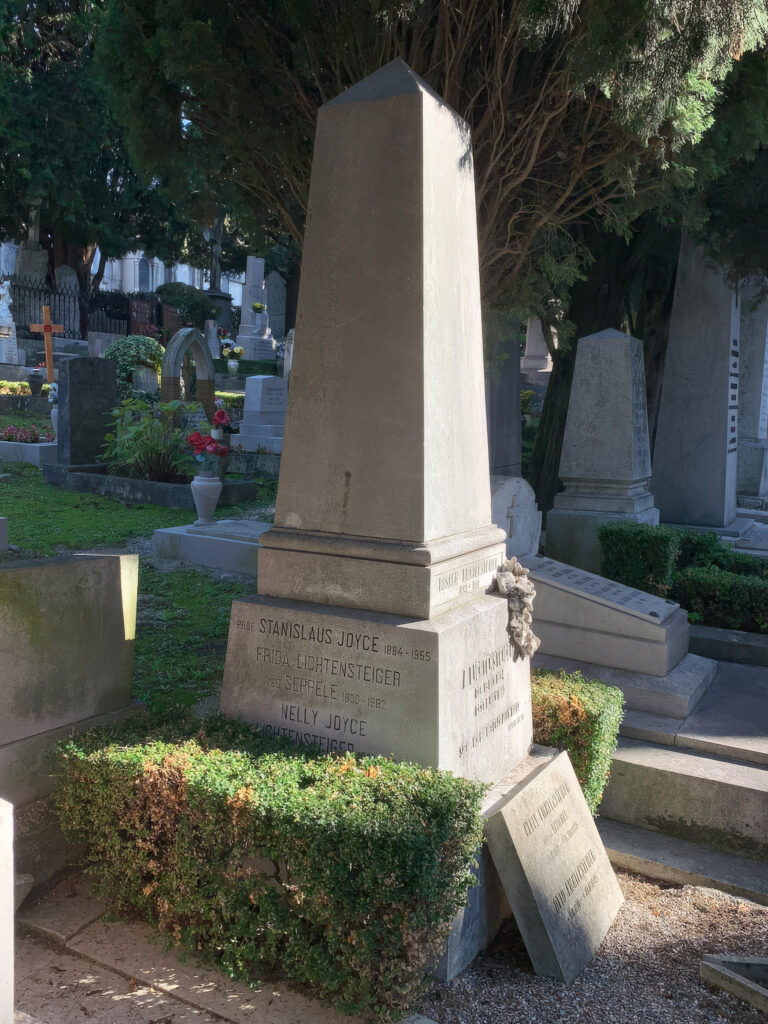
Stanislaus Joyce returned to Trieste in 1945, at which time he gave up his Irish passport for a fresh British one. As well as recovering his job as English lecturer at the university, he found work as an official interpreter for the Allied Military Government in the city. He also broadcast English lessons over the local radio station. Stanislaus gave his last lesson at Trieste university just three weeks before his death on Bloomsday (16 June) 1955.
Isadore Ryan is a financial editor based in Paris.
Further reading
R. Ellmann (ed.), The letters of James Joyce (3 vols, London, 1957–66).
R. Ellmann, James Joyce (Oxford, 1983).
I. Ryan, Roman imbroglio—Italy and the Irish during World War II (Dublin, 2023).