
By John Mulqueen and Fergus Whelan
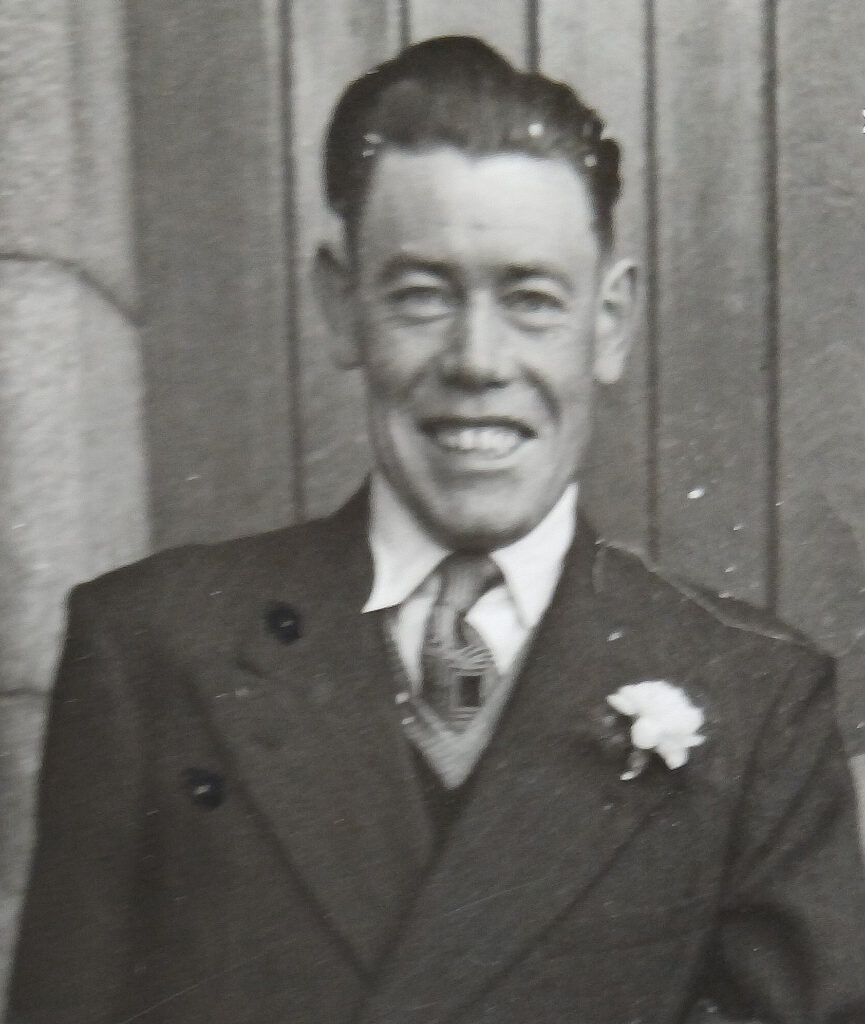
Too young for involvement in the Saor Éire or Republican Congress initiatives, Paddy Whelan witnessed the revival of left-wing activity in Dublin from the start of the Spanish Civil War in 1936. As a member of the IRA, he also witnessed the upsurge in right-wing activity in the shape of Catholic ultras who openly attacked left-wing republicans and communists and disrupted public meetings. However, the Irish left would have been particularly pleased by one anti-fascist victory in October.
BATTLE OF CABLE STREET
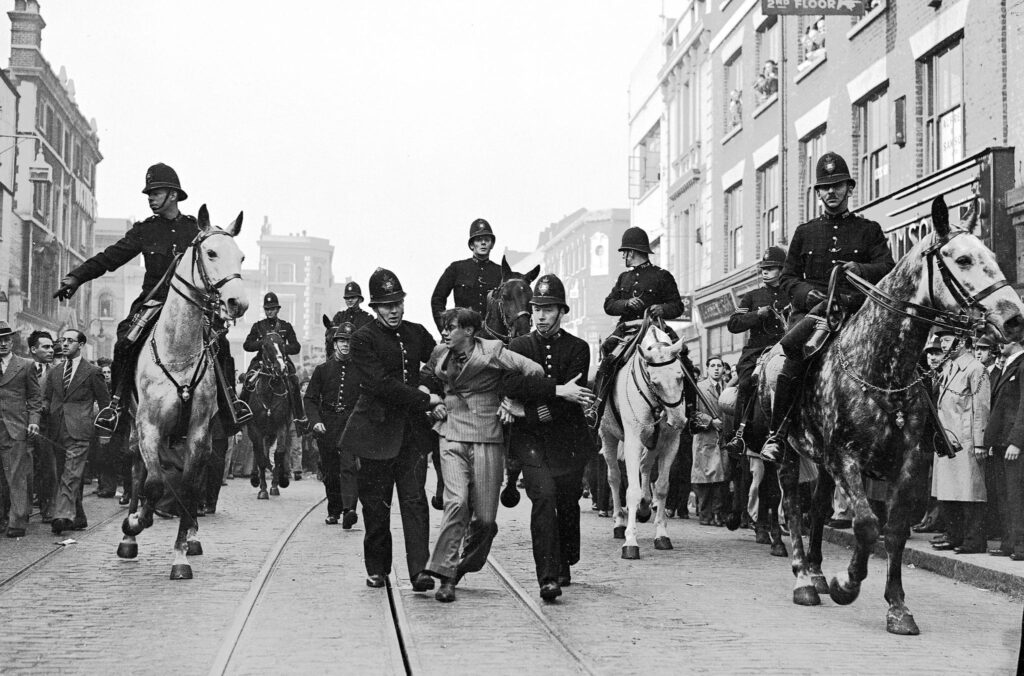
Ten weeks after the generals rebelled against the elected government in Spain, Irish and Jewish immigrants defeated Oswald Mosley’s British Union of Fascists in the London confrontation known as the Battle of Cable Street. As the Blackshirts prepared to march through what Mosley described as a ‘Jew-ridden and communistic’ East End, barricades were erected to block them at Cable Street. The large Jewish community in the area, mostly refugees from pogroms in Tsarist Russia, lived alongside Irish dockers. Anti-fascists, both locals and reinforcements, chanted ‘They shall not pass’—the slogan of the Spanish Republic—as they prevented mounted police from forcing a way through for the march.
Max Levitas, a Dubliner who grew up in Portobello (known as ‘Little Jerusalem’), participated in the Cable Street engagement with his trade unionist father and older brother Maurice. The Jewish Levitas family had moved to London during the Great Depression, and Maurice later joined the Irish contingent in the International Brigades led by Frank Ryan. Fearing that a stream would become a flood, the IRA chief of staff, Tom Barry, banned Volunteers from travelling to Spain, but four of Whelan’s IRA comrades disobeyed orders and followed Ryan in December; two were killed in action shortly afterwards.
The previous month, with Whelan and fellow republicans acting as stewards, a well-attended meeting in Dublin heard that the Christian Front and the Irish Independent had misrepresented Irish opinion on Spain. Ernie O’Malley pointed out that those who interpreted the war as a religious conflict were ‘anti-republican’. Peadar O’Donnell said that he had seen the situation there for himself: the landed class feared that their estates would be taken from them, and the manufacturers worried that the police would not be used to crush strikes. The Independent, he argued, and those associated with it, wanted to ‘smash trade unionism’ in Ireland. The offended editor responded to these allegations the next day in an editorial, ‘The insolence of a clique’, and claimed that republicanism could not be compared to ‘anti-God’ communism. The editorial spuriously equated republicans with Catholic nationalists: ‘The cause of an Irish republic is the cause of an Ireland not merely free but Catholic’.
‘NEITHER FROM MOSCOW NOR MAYNOOTH’
At this time many Catholics, in Ireland and elsewhere, held anti-Semitic views. In Cork, a Christian Front rally with a reported attendance of 40,000 heard a priest—representing the diocese, no less—blame ‘atheistic Jews’ in Moscow for directing the ‘persecution’ of Spanish Catholics. Ryan challenged Cardinal MacRory’s support for ‘Catholic Spain’ and Franco: ‘I will take my politics neither from Moscow nor Maynooth’. Franco’s adherents in Ireland were not the custodians of Christianity; the enemies of religion, he argued, were those who used its name for political purposes. Ryan, expelled from the IRA in 1934 for pursuing a political path, remained popular with the Dublin membership.
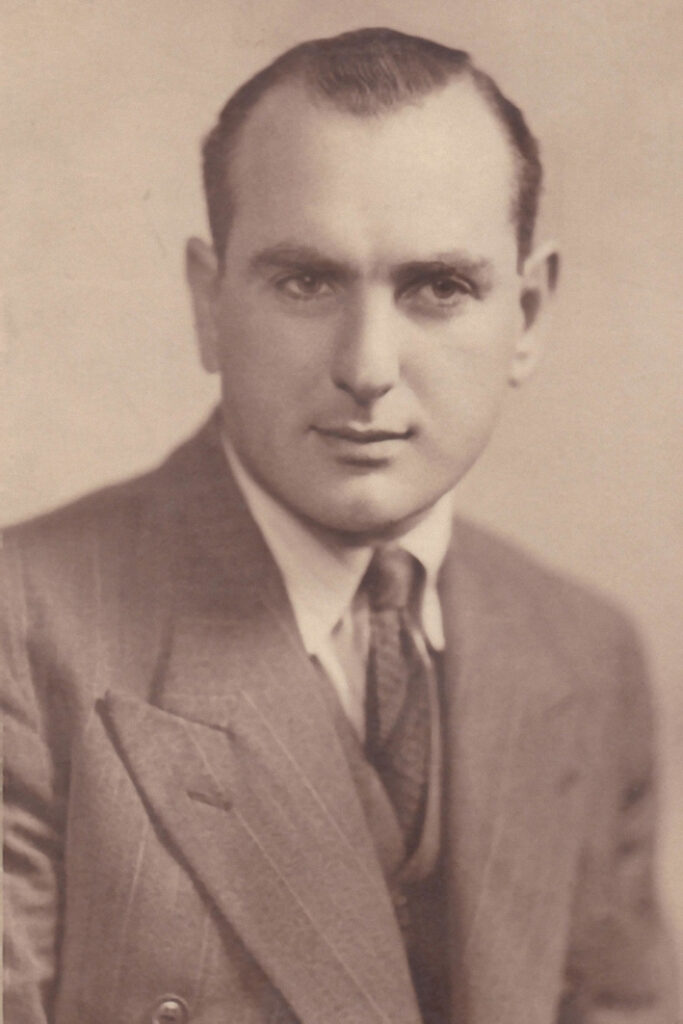
The leaders of anti-communist, and anti-republican, opinion dominated the discourse in 1930s Ireland. In April 1939, five years after Eoin O’Duffy left Fine Gael, leading members of the party joined former members of his Francoist ‘Irish Brigade’ in the Pro-Cathedral to celebrate the victory of ‘the Catholic cause in Spain’. Twelve Catholic societies jointly sent a telegram to Franco thanking him for restoring ‘Christian rule’ in that country and saving western Europe from ‘the degradation of Communism’.
SEÁN RUSSELL
Meanwhile, Seán Russell’s controversial take-over of the IRA pushed leading republicans out, with Máirtín Ó Cadhain expressing unease at his lack of political awareness. But many left-wing Volunteers stayed, such as Whelan and his friend Brendan Behan. Michael O’Riordan rejoined the organisation in Cork when he returned from Spain and was dismayed to see ‘splendid comrades’ bombing targets in England, which only succeeded in antagonising ordinary people. In 1939 the militarist chief of staff, not just non-political but anti-political, explored the possibility of securing German aid for the IRA. He sent the pro-Hitler Jim O’Donovan to Germany on three occasions to get arms, ammunition and money, with no strings attached. Having an ‘exclusively military’ focus, Russell, Seán Cronin writes, ‘would go to the devil’ for arms. ‘This explains his Moscow mission in 1926 and his Berlin mission in 1940.’ It is not known what Russell intended to do at this stage because he took his secrets with him when he died on board the German submarine that was taking him home in August 1940.
Had Russell landed, Eunan O’Halpin observes, he would have found the IRA ‘in a pitiful state’—with hundreds interned—‘and under the hammer in both parts of Ireland’. While stating that ‘England’s enemy is Ireland’s ally’, the leadership’s relationship with the Germans did not amount to much. Above all, to quote Max Hastings, a ‘pervasive strand in all Germany’s Irish operations was an awesome ignorance of the country, much greater than that of the British about, say, Albania’. The first German attempt to contact Russell’s cohort in Ireland illustrates this point. The Abwehr agent began by approaching a horrified fascist, the former Blueshirt leader O’Duffy. Very few Volunteers knew anything about such conversations, and many would have disapproved.
ANTI-SEMITISM IN THE IRA
There were anti-Semites in the IRA, as there were in all walks of Irish life. War News, the organisation’s publication, or what was left of it after internment, published anti-Semitic propaganda. ‘The Jews’, it warned, were ‘like the English, when they are strong, they bully and rule’. ‘Jews and Freemasons’ threatened to become the ‘new owners of Ireland’ and dominated de Valera’s cabinet. The writers, or perhaps writer, of War News continued in an anti-Semitic vein previously expressed by the Sinn Féin propagandist ‘Sceilg’. The Anglophobia of the paper also reflected that of the Wolfe Tone Weekly, which in December 1937 advocated an Irish alliance with Mussolini’s Italy, ‘whose enemy, likewise, is England’. Pre-empting Russell, an editorial suggested, ‘What about Ireland and Germany?’ Clearly, this strain of right-wing nationalist propaganda cannot be seen as republican, as outlined by, for example, Frank Ryan.
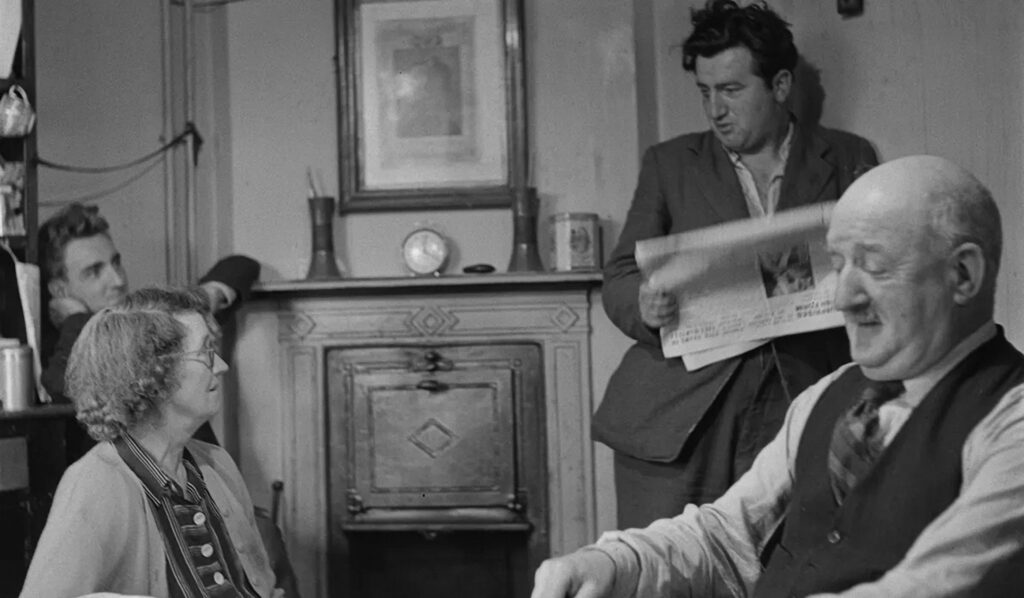
In the autumn of 1942 Behan concluded that the militarist IRA was going nowhere—republicanism ‘of this particular brand is defunct’. He did not have much in common, intellectually or politically, with his comrades in Mountjoy, he wrote in a letter to his (communist) half-brother Seán Furlong. According to Behan, a few had no issue with O’Duffy. In his view, while most of them were ‘sincere’, they were not actually republicans. One of his fellow prisoners in Mountjoy, Eamonn Smullen, later emigrated to Britain and joined the Communist Party, as did other released prisoners.
INTERNEES IN THE CURRAGH
Russell’s militarist adherents held sway among the hundreds of IRA internees in the Curragh, but the left-wing cohort made its presence felt. The issues around the world war were debated from 1941—after the invasion of the Soviet Union—when Neil Goold (non-IRA) and O’Riordan articulated a controversial, communist, argument: Irish republicans should join the British armed forces to defeat Hitler. Supplied with anti-fascist material from the Left Book Club, the Connolly Group, as they were known, became influential—one former member later claimed that it appealed to as many as 200 prisoners. Significantly, while Goold and O’Riordan were seen as ‘disloyal’ by many, they made their argument. If they persuaded very few—only six or so ‘signed out’ of the camp to join British forces—they succeeded in arguing the anti-fascist case. One of Whelan’s friends left to join the RAF and the Communist Party; he remained on good terms with his republican circle thereafter.
In O’Riordan’s recollection, only a fervent few among the internees hoped for German victory. ‘Some of the IRA wanted Hitler to win’, Kathleen Behan remembered, ‘but more of them, like Brendan, wanted to see him in Hell’. The dominant attitude in the Curragh may have been a mixed-up contradictory one—they may not have wanted the Nazis to win but they hoped that Britain would lose.
PUBLIC OPINION UNINFORMED
IRA prisoners were not alone in being confused about the Allied war effort, as the strict censorship enforced in the Irish state led to widespread ignorance about the global conflict. Student debates in UCD illustrate a prevailing mood of complacency. Among this middle-class, nationalist milieu, Garret FitzGerald remembered that he advanced pro-Allied arguments ‘in an atmosphere of some hostility’ because ‘the more vocal elements tended to be anti-British and consequently vaguely pro-German’. In wartime Ireland you could energetically back the government’s neutral stance and feel free to be hostile to Churchill. When James Dillon opposed neutrality in the Dáil in 1942, it took five minutes before he could be heard. There were also some pro-Nazis in the college who wore swastika badges. As for Mussolini, Anthony Cronin was ‘nearly lynched’ in 1945 when he asserted that the Italian people ‘redeemed their honour’ by executing him. Attitudes in wartime Ireland towards Germany might best be understood as uninformed, and these persisted for some time.
In 1946, eighteen months after the horrors of the Holocaust were first reported, Dublin witnessed scenes of—anti-communist—‘jingoism and racialism’ in the Mansion House. Protesters displayed swastika flags and shouted ‘Up Franco’ and ‘Down with Jews’ as Hewlett Johnson—better known as the ‘Red Dean’ (of Canterbury)—spoke about his recent visit to the Soviet Union. Anticipating trouble at this meeting, the Irish Soviet Friendship Society called on republicans, including Brendan Behan and Paddy Whelan, to protect the speaker, who delivered his speech. For once, the mob did not succeed.
In the decade following the outbreak of the Spanish Civil War, a small number of left-wing republicans—‘an insolent clique’, to coin a phrase—took an anti-fascist stand at home and abroad. They may have been outnumbered by right-wing enemies but they had a better argument.
John Mulqueen is preparing a study of Frank Ryan and his anti-fascist generation; Fergus Whelan is an author and historian.
Further reading
S. Cronin, Frank Ryan: the search for the Republic (Dublin, 1980).
U. Mac Eoin, The IRA in the twilight years: 1923–1948 (Dublin, 1997).
F. McGarry, Eoin O’Duffy: a self-made hero (Oxford, 2005).