
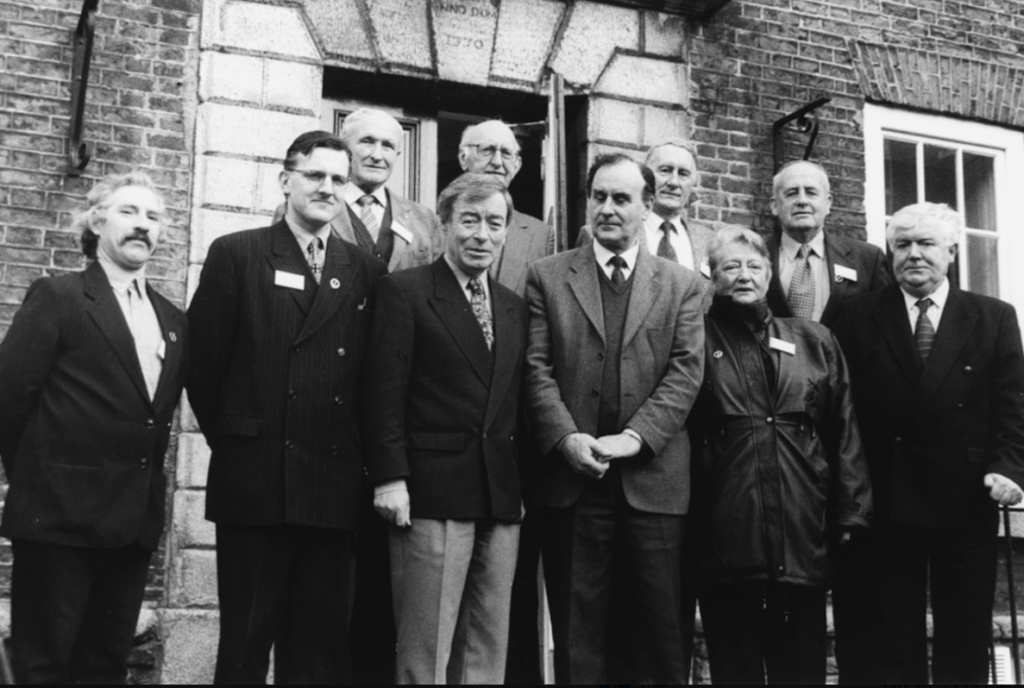
Delegates from almost every county in Ireland attended a re-enactment of the Catholic Convention in Tailors’ Hall, Back Lane, Dublin, on 5 December 1998. The original Convention, dubbed the ‘Back Lane Parliament’ by its detractors, met in the same place on 3-6 December 1792, to organise the Catholics of the country and to petition for relief from the strictures of the Penal Laws.
The re-enactment was organised by Dublin ‘98 (the Dublin 1798 Commemoration Committee) as part of their commemoration of the events leading up to the rising of 1798. During the year a programme of lectures by leading academics and historians had been held in public libraries throughout the Greater Dublin area; several plaques commemorating leading United Irishmen like Lord Edward Fitzgerald and the Sheares brothers had been unveiled; and a number of relevant publications had also been produced.
The reconvening of the Back Lane Parliament was the last major commemorative event of the bicentenary year and attracted a full house for a morning seminar and afternoon panel discussion. Proceedings were opened by Minister of State Seamus Brennan TD, chairman of the government 1798 commemoration committee. Speakers included Dr David Dickson, Dr Dáire Keogh, Dr Ruan O’Donnell, Brian Cleary, Breandán MacSuibhne, John Gray and Tommy Graham. Chairing the proceedings were Richard Roche, chairman of Dublin ‘98, and Tomás Mac Giolla, chairman of the event sub-committee.
The open discussion in the afternoon produced some lively contributions from the floor, including suggestions that pike groups throughout the country should remain in existence; that RTÉ be criticised for lack of coverage of commemorative events during they ear; and that local government should be more democratic. The gathering passed, with acclamation, a resolution reaffirming the principles of ‘liberty, equality and fraternity’ as originally enunciated by the United Irishmen and restating Wolfe Tone’s ideal of a free, sovereign and united Ireland.
A dinner for delegates in the evening rounded off a memorable day with United Irish toasts being drunk amid acclamation.