
By Helen Litton
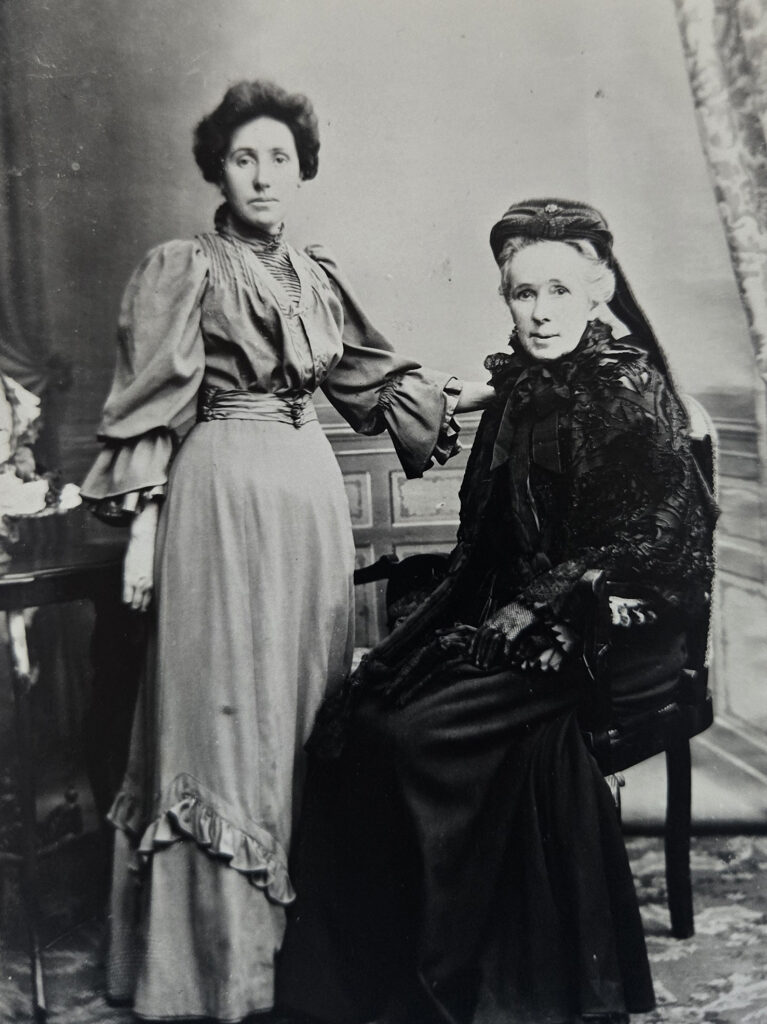
On Saturday 29 November 2025, a new gravestone was officially unveiled in Glasnevin Cemetery, Dublin, to the accompaniment of prayers, music and a display of nationalist banners. The grave being honoured belongs to the parents of Thomas J. Clarke, first signatory of the 1916 Proclamation and widely acknowledged as a prime mover in the Easter Rising of that year. His father, James Clarke of Leitrim, a British Army soldier billeted in County Tipperary, met Mary Palmer of Clogheen and they were married in 1857. They spent some years in South Africa and then returned to Ireland in 1865, settling in Dungannon, Co. Tyrone. Here Tom grew up with his three siblings, leaving only in 1880 when he emigrated to New York and joined Clan na Gael. His return to Ireland in 1907 sparked new life into the Irish Republican Brotherhood, ultimately leading to the Easter Rising.
The Tipperary connection is important, because it was a group of Tipperary activists who followed up on the recent discovery of this unmarked grave by researchers Andrew Woods and Martin Mooney. Surprised that this important grave had been neglected for so long, they began to fund-raise. The stone is engraved with the names of James and Mary and their distinguished son Tom, and also lists his sister Hannah, a republican activist, who is buried in the same grave. Further research revealed the presence elsewhere in Glasnevin of the grave of Tom’s brother Alfred, who drowned in the Grand Canal in 1917, leaving a widow and five children, and this is also recorded on the gravestone.
The ceremony was attended by Andrew Woods and Martin Mooney, along with Tom Hennessy, chair of the Seán Hogan/Tom Clarke Committee of Tipperary. A piper led a procession to the graveside, followed by representatives of Independent Republican groups from Tipperary, Armagh and Dublin. Prayers were read by Fr Joe McDonald, and wreaths were laid on behalf of, among others, Cumann na mBan and the National Graves Association. Roisin Kelly laid a wreath on behalf of the Kelly family: Willy John Kelly was a lifelong friend of Tom Clarke. As a great-niece of Tom’s wife, Kathleen Daly Clarke, I laid flowers on behalf of the Clarke and Daly families, and also spoke briefly, thanking all who had worked to bring this about.
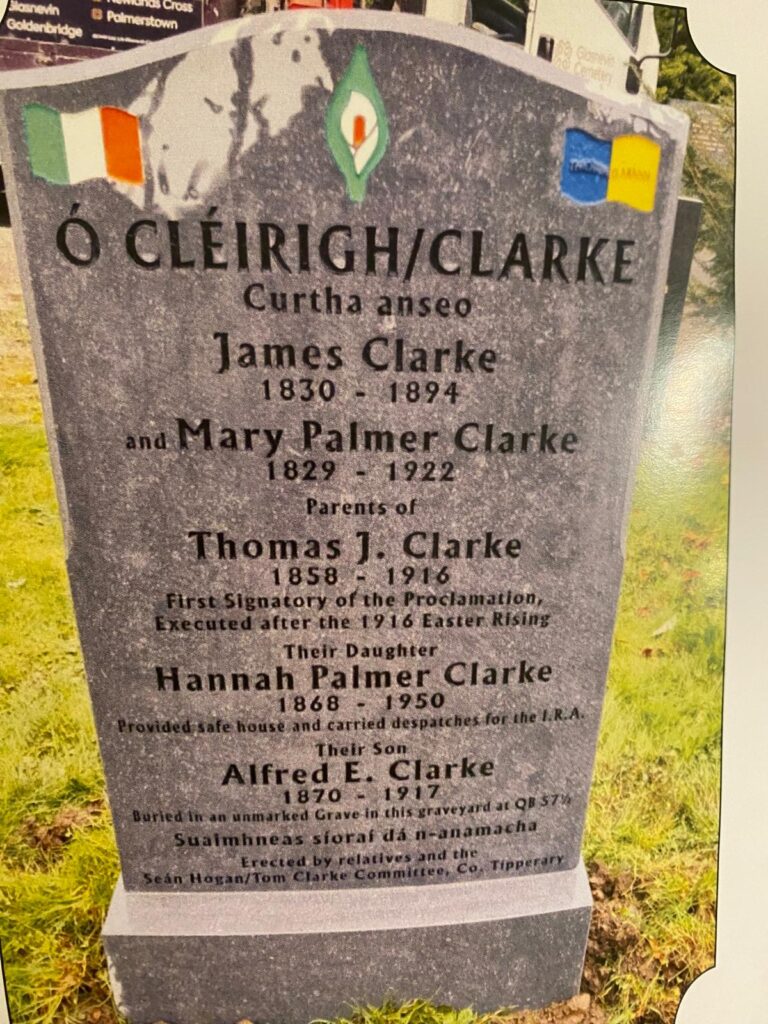
Gerry McNamara of Independent Dublin Republicans gave a speech on the history of Irish republicanism; his own great-grandfather had been a Fenian. An oration was then given by Dr Tim Horgan, historian of the revolutionary years in County Kerry, who dwelt on the proud republican history of Tipperary and paid tribute to those who had planned, designed and erected this monument. He ended: ‘The old Roman republican Cicero once declared, “Poor is the nation that has no heroes, but poorer still is the nation that having heroes fails to remember and honour them”. Today you have remembered, you have honoured.’ Tom Hennessy sang ‘The Galtee Mountain Boy’ and also spoke about Hannah Clarke, who carried dispatches and provided a safe house during the revolutionary years. Michael McCormack of the podcast ‘The Irish Sound’ was thanked for donating a bodhrán to be raffled to raise funds. The ceremony ended with the National Anthem.
It is not known why this grave had not been marked before. Kathleen Clarke was a founding member of the National Graves Association and would surely have wanted to see her husband’s parents honoured. Nor is it known why Alfred Clarke was not buried in 1917 with his father, who had died in 1894. It was the only grave of parents of executed leaders of the Easter Rising which had been left unmarked, but that situation has now been rectified.
Helen Litton is the author of Thomas Clarke: 16 Lives (O’Brien Press, 2014).