
By Maurice Hartigan
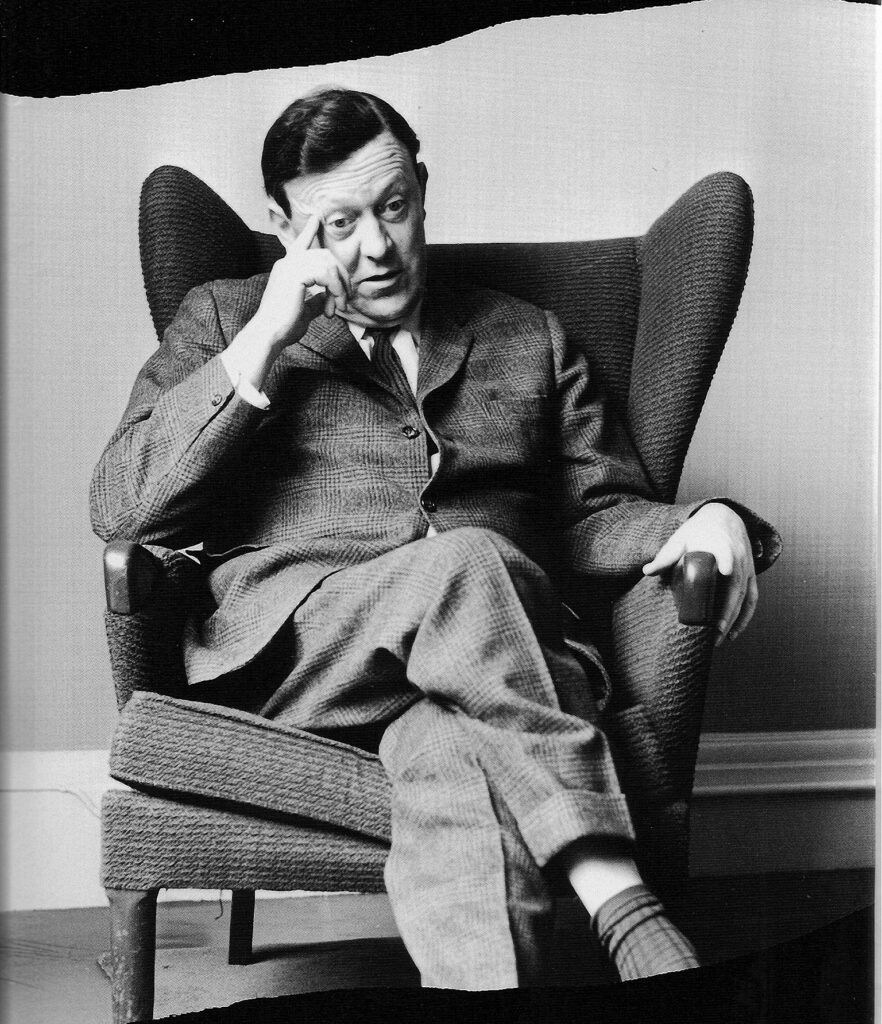
In States of Ireland (1972), Conor Cruise O’Brien, the Labour Party’s spokesman on Northern Ireland, wrote ‘let us have a truce on commemoration until we can find something which Irishmen of both the main political and religious groupings can commemorate in peace’. Within a year he was minister for posts and telegraphs in a coalition with Fine Gael and in a position to shape policy on State commemorations during a turbulent period in the North’s history.
1966 COMMEMORATIONS
Unlike most southern politicians in the early 1970s confronted by the Troubles in Northern Ireland, O’Brien had some knowledge of Northern life—his first marriage was to a Belfast Protestant, and following the outbreak of violence after 1968 he engaged in fact-finding trips across the border. In doing so, he examined the causes of communal strife in the North and the uneasy relationship between Dublin and Belfast since partition in 1920. Convinced that militant nationalism only served to make these problems worse, he concluded that the recent 1966 commemoration of the 1916 Rising and its cult of blood sacrifice had contributed to a revival of the IRA:
‘These celebrations had to include the reminder that the object for which the men of 1916 sacrificed their lives, a free and united Ireland, had still not been achieved … The Dublin Government tried to discourage these last conclusions, but there was no way of discouraging them effectively within the framework of 1916. The numerous commemorations of similar type that had to follow could only reinforce this trend, favouring a revival of the Sinn Féin-IRA movement, in various forms.’
In response to the unsettled state of Northern Ireland and IRA activity in the Republic, the outgoing Fianna Fáil government had already abandoned the traditional military parade staged on Easter Sunday, so as to make troops available for border duty. More importantly, it had also established the Special Criminal Court to deal with the subversive threat posed by republican paramilitaries. With the Easter parade suspended, the scale of commemorative events in 1973 became rather modest. These included the annual Arbour Hill ceremony in memory of the executed 1916 leaders, the McKee/Clancy/Clune commemoration at Dublin Castle and the Wolfe Tone commemoration at Bodenstown, Co. Kildare. The annual Michael Collins commemoration at Béal na Bláth, Co. Cork, remained, for the most part, a Fine Gael-sponsored event.
‘NATIONAL DAY OF COMMEMORATION AND RECONCILIATION’
In States of Ireland, O’Brien called for a new departure in the area of commemoration, and once in government, together with Paddy Donegan, the Fine Gael minister for defence, he outlined plans for what was termed a ‘National Day of Commemoration and Reconciliation’ to replace all existing State commemorations of the revolutionary period. This would take place on St Patrick’s Day, 17 March 1974, and be continued into the future as ‘the sole public commemoration of the year’. That this was indeed a new direction was also shown in the intended transfer of the State’s traditional role in commemorative events to the various religious denominations.
Notwithstanding this, there would be the maximum appropriate State participation at any religious services organised, and prayers would be offered for reconciliation between opposing traditions and for all who had died for Ireland and the victims of civil strife. Moreover, given that these ceremonies were to promote peace, there would be no need for military displays, as the ‘officers of the Defence Forces who will be present will be there in their role as guardians of peace, in an imperfect world’.
On 10 July 1973 the government endorsed the proposal. With no cabinet subcommittee appointed to move things forward, O’Brien was quick to advance his own conception of what the new initiative should entail. In correspondence with Donegan, he argued that
‘The main problem concerns the role of the Defence Forces in these proceedings. I am frankly uneasy about the idea of a parade of unarmed soldiers. I think that this might lead to dissatisfaction among both officers and men, and also might lend credence to the idea that the IRA are “the real armed forces of the State”.’
Furthermore, he pointed to the apparent paradox and ‘possible impropriety of any kind of display of armed forces on an occasion such as this’. Limiting military involvement, he argued, would make it easier to organise the day on an all-Ireland basis, on the grounds that ‘if there were military ceremonies here, efforts would be made to involve the British Army in the Northern ceremonies which might thereby actually become an occasion of violence’.
With this in mind, he suggested that the event should be organised on an entirely civil and religious basis without any military presence—a separate ‘Defence Forces Day’, with a military parade, might instead take place in July of each year.
CROSS-PARTY SUPPORT
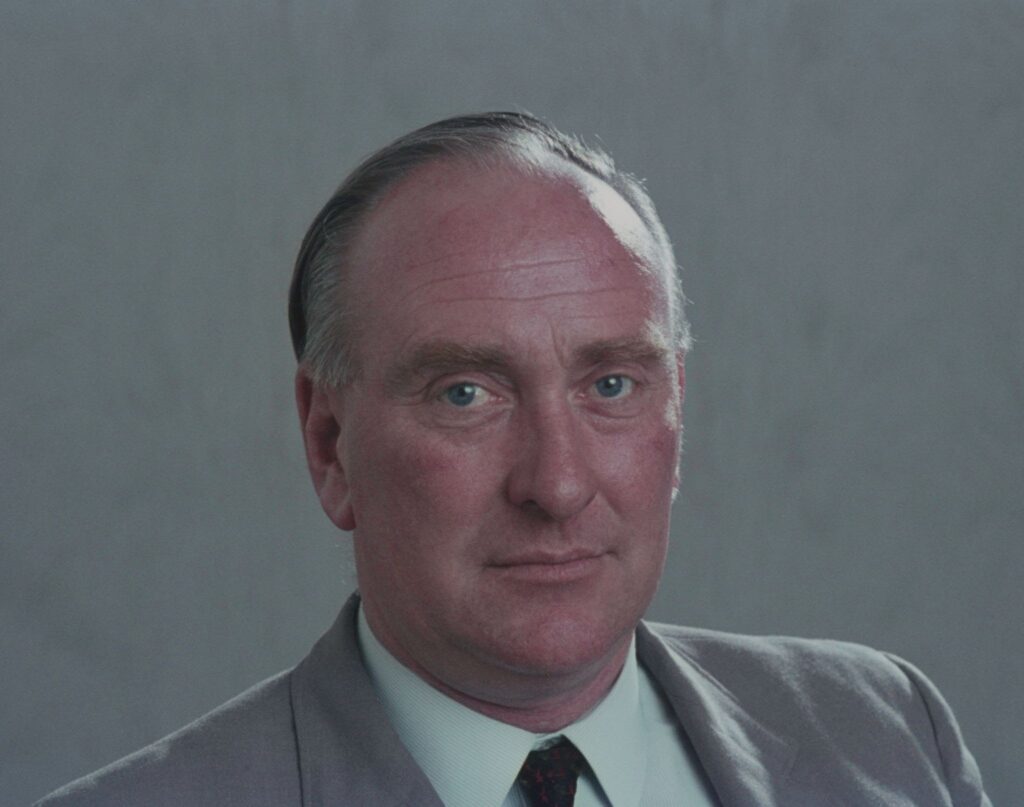
With ever-increasing tensions north of the border, there were tentative signs of cross-party support for the O’Brien/Donegan plan. On 8 August the Irish Independent carried a report that Jack Lynch, the Fianna Fáil leader, seemed to favour the government’s approach, provided that communities remained free to honour local patriots if they so wished. At the same time, the Dublin Brigade of the Old IRA, although expressing dissatisfaction at a lack of consultation, did not appear to be in outright opposition. Encouraged by this, the Government Information Services issued a bulletin from Taoiseach Liam Cosgrave, on 15 August, stating that St Patrick’s Day 1974 would focus on the coming of Christianity as a reminder of a common heritage, North and South, a sentiment endorsed the following day by the Fianna Fáil-supporting Irish Press. Not everyone was happy, however—Church of Ireland rector Revd Roy Warke from Rathgar worried in the Irish Times that if St Patrick’s Day became a day for commemoration ‘one can visualise a truly happy national occasion becoming yet another excuse for militant posturing’.
O’Brien, meanwhile, maintained his push to ensure that the churches would play a central role in the coming event. He wrote to Donegan in November 1973:
‘I would much prefer the commemoration to take place in churches, cathedrals or other places with religious associations … because I feel they are associated with particular traditions or groups of traditions. I would be opposed to State participation at ceremonies at either the Garden of Remembrance or Arbour Hill. I recognise that this may not be the government view, but I think any chance of getting the Day of Commemoration and Reconciliation to be celebrated by more than one side in Northern Ireland would depend on this point.’
DIFFERENCES WITH DONEGAN
Although both ministers wanted to lessen the fervour associated with nationalist commemorations, differences in approach now emerged. Unlike O’Brien, Donegan favoured military honour parties at the planned religious ceremonies and the use of the Garden of Remembrance. Faced with this situation, O’Brien did not hesitate to appeal to Cosgrave behind Donegan’s back. In January 1974, in reference to Donegan’s stance, he told the taoiseach that ‘it would be laying undue emphasis on the military element. It seems to me that it would be adequate to have the Defence Forces represented at the ceremonies by their senior officers and that honour parties are not strictly required.’ To do otherwise would be
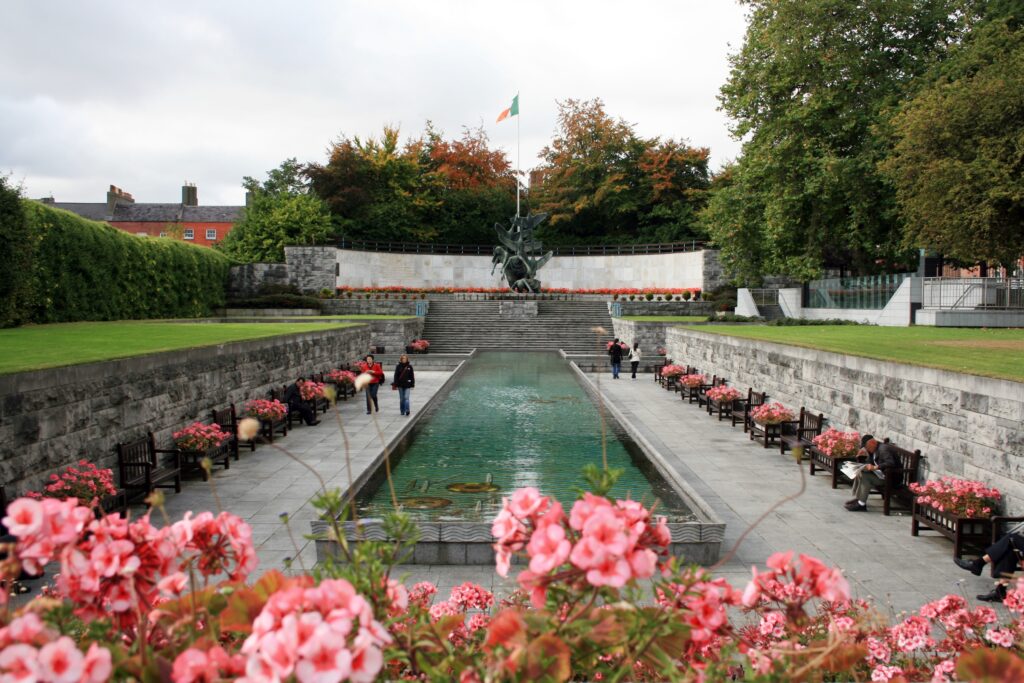
‘… a deviation from the central idea of a national day, and a return to the concept that those to be commemorated are only those within the republican tradition. Those commemorated in the Garden do not include, for example, the numerous body of Irishmen who fell in the first world war, firmly believing that their sacrifice was for Ireland’s sake. A ceremony at the Garden of Remembrance and it alone would deprive our new commemorative concept of any unifying value it might have in relation to the North.’
Moreover, he argued that the Garden of Remembrance ‘is in fact exclusively republican and Gaelic and quite repugnant to any ecumenical or conciliatory view of the needs of the Irish people’. Putting all his cards on the table, he also called for an end to the annual Arbour Hill ceremony. He was aware of the political difficulties this might pose, with the risk of opposition from Fianna Fáil and republican counter-demonstrations, but remained adamant in his stance.
RELIGIOUS LEADERS
In the meantime, with the various denominations expected to be to the fore during the coming commemoration, religious leaders had to be brought on board. Donegan used the head chaplain to the Defence Forces, Father Phelim McCabe, to sound out Dermot Ryan, Catholic archbishop of Dublin, while O’Brien took the lead in engaging with the Church of Ireland. In this he made use of his son-in-law, Nicholas Simms, son of Archbishop Simms of Armagh and an official at Posts and Telegraphs. Simms approached Alan Buchanan, Church of Ireland archbishop of Dublin, who informed him that the government’s proposals had the general approval of the House of Bishops but that there was an issue around the Royal British Legion and its involvement in Armistice Day commemorations in November. Following consultation with O’Brien, Simms reassured the archbishop that, as the limitation on commemorative ceremonies was essentially concerned with State participation, the Legion’s adherence to the November commemoration would not pose a problem.
With St Patrick’s Day approaching, in February 1974 O’Brien asked Cosgrave to form a committee to coordinate arrangements, headed by senior civil servant Dermot Nally, alongside Simms from Posts and Telegraphs and an official from Defence. He also suggested that President Childers should have a central role on the day, when he could deliver an address on RTÉ, ‘approved by us … so that no divisive note would be struck’. While Cosgrave went along with this, he opted to appoint H.J. O’Dowd as chair of the committee, along with Simms and Matt Crowe from Defence. At the committee’s first meeting on 13 February 1974 it became clear that O’Brien had largely won the day when it was conceded that there would be no honour parties at religious services and no ceremony at the Garden of Remembrance. The services on 17 March, it was agreed, would be followed by a televised address by President Childers and a State reception in the evening, at which it was hoped there would be attendance from Northern Ireland. However, when Kenneth Bloomfield, secretary to the Northern Ireland Executive, was sounded out on this, he replied that such attendance was unlikely. That said, progress was made when the text of a prayer for use by all denominations on the day was approved by both Archbishop Ryan and Archbishop Buchanan.
By the time the subcommittee next convened later that month, Cosgrave had decided to scrap the State reception and ordered officials at his department to focus on the president’s address. With Childers due to speak at the National Peace Week Service at Christ Church, Leeson Park, on St Patrick’s Day, the committee urged that any speech he delivered there would not be broadcast, so as not to cut across his address to the nation that evening. Also, as requests were arriving for military participation at St Patrick’s Day parades throughout the country, the committee recommended that such participation be minimal and merely involve army bands, unarmed FCA contingents and troops from the Army Apprenticeship School. This minimalist approach was summed up by an official at the Department of the Taoiseach, when he wrote that, as the government’s approach to the National Day of Commemoration would be rather low-key, ‘efforts to generate enthusiasm and participation should be as unobtrusive as possible’.
Not surprisingly, with St Patrick’s Day imminent and so little engagement with the public on the matter, the Sunday World sought information on the government’s plans. In response, the Government Information Services issued a rather terse statement of just two sentences, which referred to the coming day of national commemoration and the expected address by the president. Efforts to arouse public enthusiasm were certainly not being entertained.
NON-EVENT
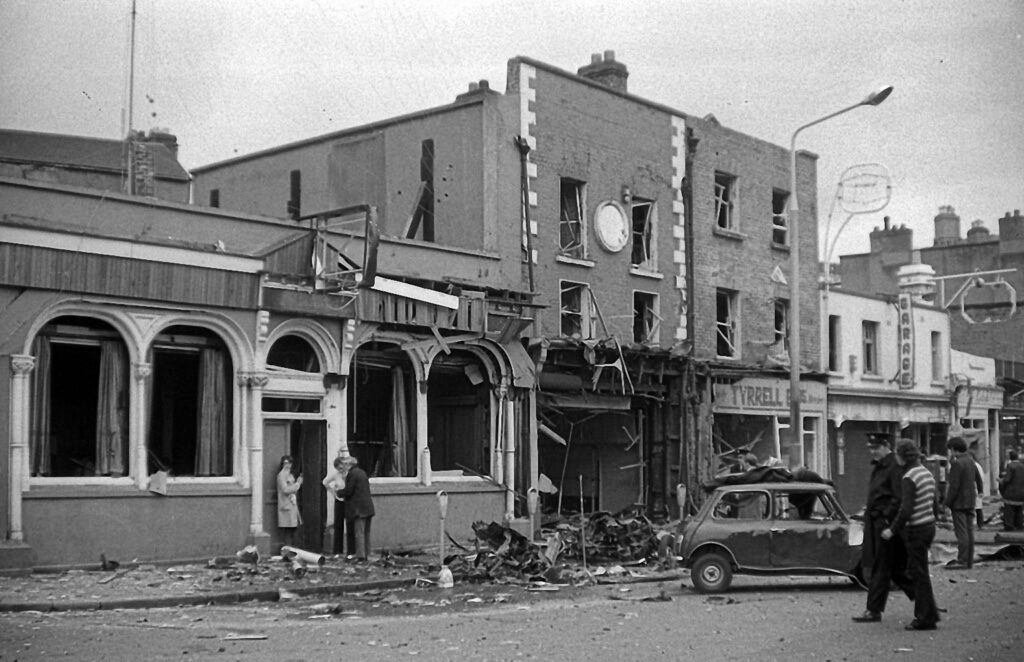
The National Day of Commemoration and Reconciliation as it unfolded on 17 March 1974 proved to be something of a non-event and was largely subsumed into the St Patrick’s Day festivities. O’Brien, however, would not have been unhappy. He had said in 1971 that he hoped to administer an electric shock to the Irish psyche. After all, his effort to strip away the trappings and emotional associations attached to State-supported commemorations had been largely successful. Notwithstanding this, it was surely more likely that the real jolt came from ongoing violence in Northern Ireland and the accompanying fear of cross-border contagion. This was made real only two months later, when on 17 May 1974 the Ulster Volunteer Force detonated bombs in Dublin and Monaghan, resulting in 34 civilian deaths.
Maurice Hartigan is an independent scholar with an interest in the Catholic Church and the politics of commemoration in modern Ireland.
Further reading
D. H. Akenson, Conor—a biography of Conor Cruise O’Brien (Montreal, 1994).
D. Ferriter, Ambiguous republic—Ireland in the 1970s (London, 2012).
C. Cruise O’Brien, States of Ireland (Dublin, 1972).