
While Daniel O’Connell’s influence on Belgium, France and Italy is relatively well known, little has been written about his impact on German-speaking lands.
By Eda Sagarra
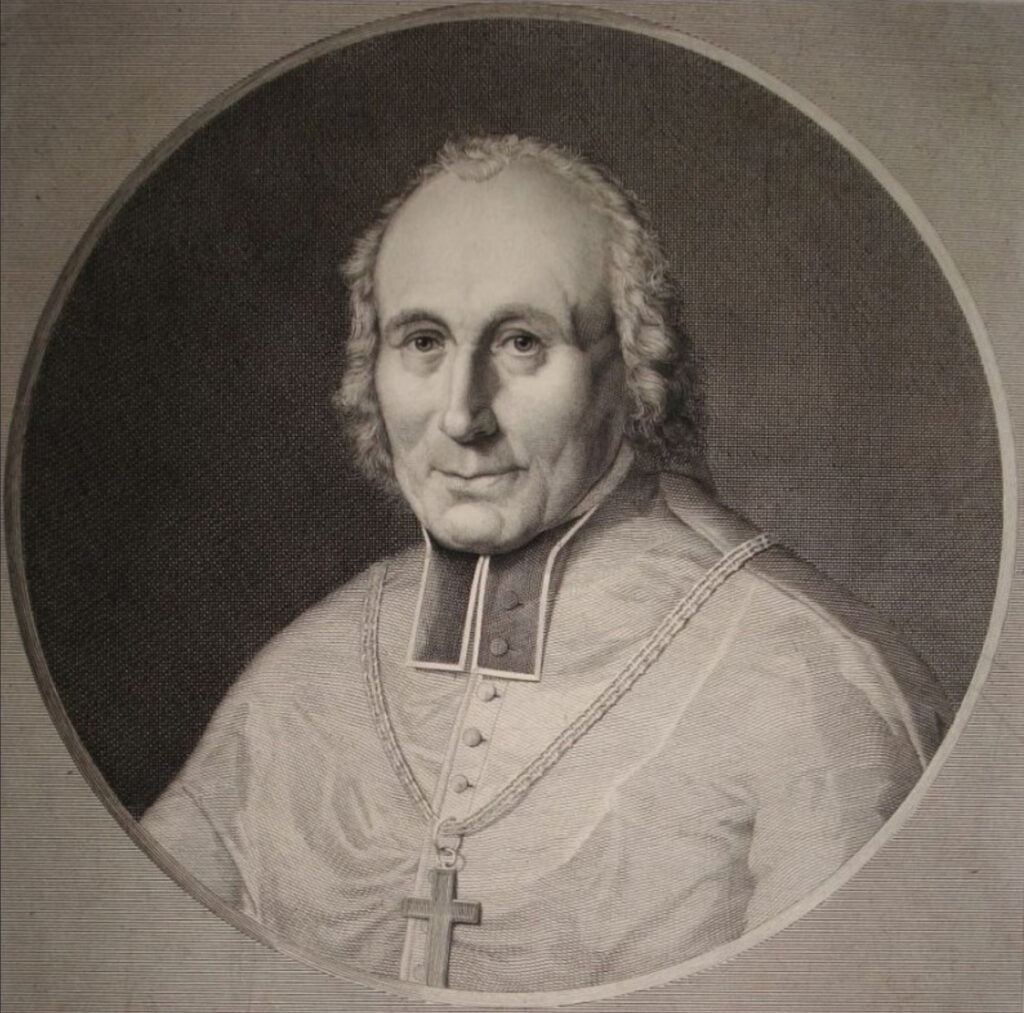
When in 1806 Napoleon Buonaparte abolished the 1,000-year-old Holy Roman Empire, in which Catholics had formed a majority of the population and Catholic archbishops commanded extensive wealth and influence in their capacity as territorial rulers, the impact on the German Catholic Church and on the self-identity of German Catholics would prove profound. Over the next years Napoleon reordered the map of Germany, abolishing bishoprics and smaller states, reducing the 343 territorial units of the erstwhile empire to what after his defeat by the European powers would emerge at the Congress of Vienna as the 67 states of the German Confederation (1815–67).
CATHOLIC RHINELAND TO PRUSSIA
For centuries ambitious men from established Catholic dynasties had looked to careers in their Church rather than the state service. Of vital significance for the future German Catholic Church was the fact that its pastors, parish priests, bishops and women religious would now be drawn from the lower middle and predominantly poorer rural sectors of the populace, from those who lived close to the people they served and could identify with their concerns. Equally significant for the cultural mentality of German Catholics throughout the following century and beyond, whether from the prosperous Rhineland in the west or the poorer lands of Baden in the south-west or Silesia in the east, was the decision forced through the Congress by the British foreign secretary, Castlereagh, to award the Rhineland and Westphalia with their rich mineral deposits to Prussia as a bulwark against potential future French aggression. Rhinelanders, devout Catholics but liberal in their politics, now found themselves ruled by the Protestant house of Hohenzollern, subject to active or passive discrimination in the public service, the military and education.
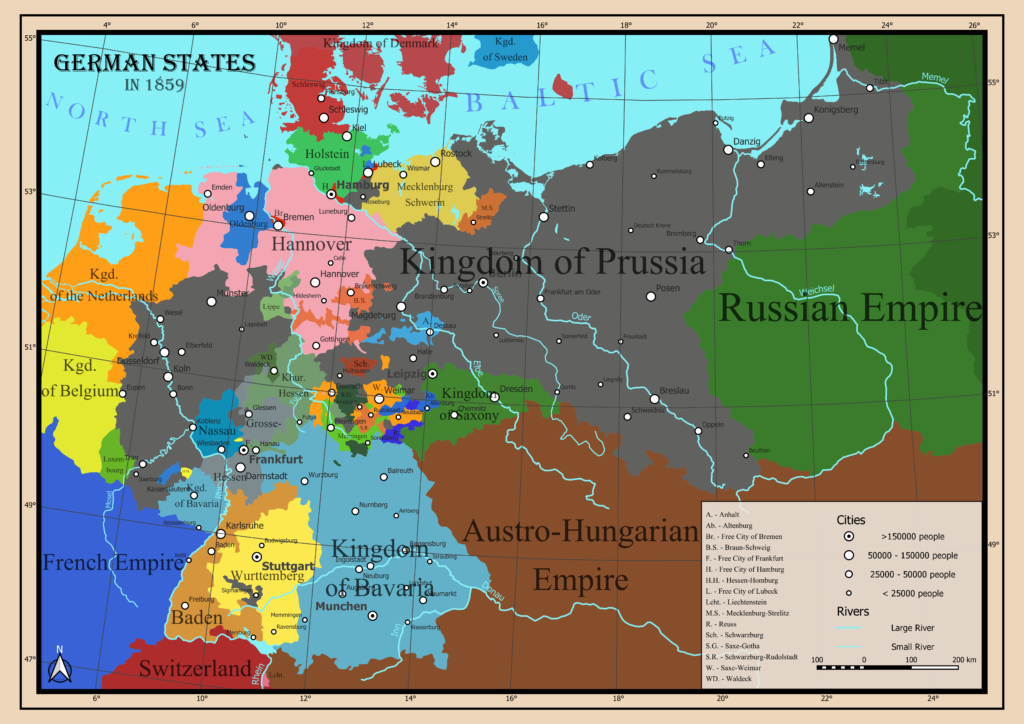
For the first two decades after Vienna, reaction to the new order by Church authorities was muted. In 1837, however, a combination of Prussian legislation regulating marriage in the interest of the state and the appointment to the Cologne see of the militant Archbishop Droste-Vischering, from an old established Westphalian Catholic dynasty, led to a public confrontation between the Church and the Prussian state, subsequently known as the ‘Cologne Incident’. Following the transfer of the Rhineland and Westphalia to Prussia, the Berlin government had set about reordering the regional and local administration by sending in a host of Protestant administrators. In time, many sought brides among the local population. Legislation insisting that the children of such marriages be brought up as Protestants was challenged in 1837 by Droste-Vischering. The Prussian authorities’ response to his vigorous refusal to obey the state’s dictates and his instruction to the faithful to resist was to place the prelate under fortress arrest and have his residence and his household goods confiscated and sold at auction. Outrage at such an unprecedented act became headline news in the Catholic media.
ORGANISATIONAL TEMPLATE FOR GERMAN CATHOLICS
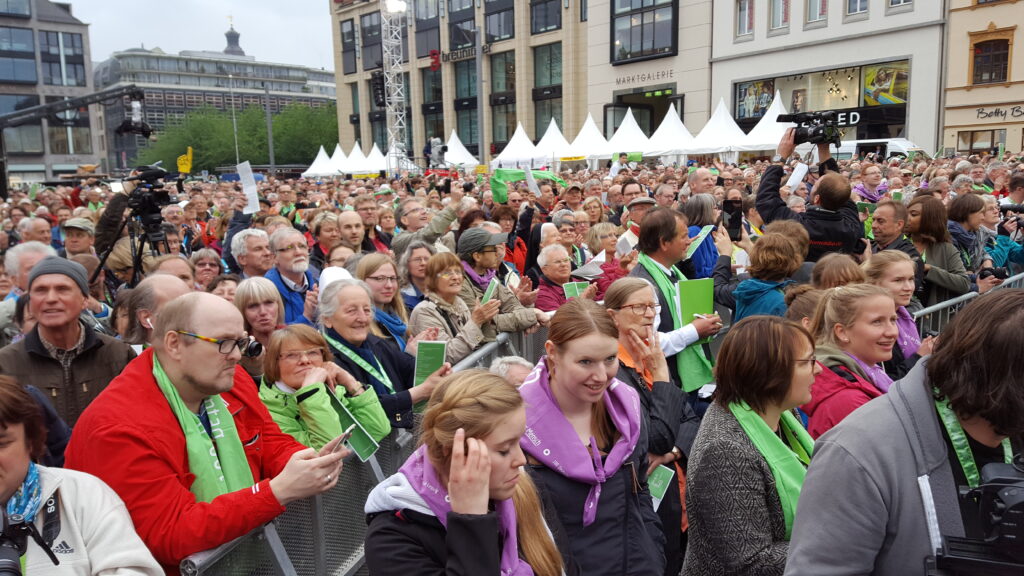
It was precisely at this point that Daniel O’Connell’s Repeal Association provided the German Catholic Church under its lay and clerical leaders with what became the blueprint for its future organisation. The years from 1837 to the outbreak of the 1848 Revolution saw a hive of activity in the form of theoretical writings, public assemblies and networking at regional and local level in those states with majority Catholic populations but secular rulers—the Rhineland, Baden, Bavaria and Silesia. Scarcely two weeks after the outbreak of the March Revolution of 1848, the first association of German Catholics, the Piusverein (Pius Association, named after Pope Pius IX, 1846–78), was established in Mainz by prominent laymen with the support of the hierarchy. Subsequently renamed Katholischer Verein Deutschlands (German Catholic Association), by October 1848 over 300 such associations had been established across Germany. Today, 170 years later, assemblies of German Catholics still meet on an annual basis in different parts of the state. In remit, direction and organisation the original assemblies were modelled on O’Connell’s Repeal Association, even to the extent of giving a sense of ownership to all members by requiring payment of a monthly fee of one groschen (the smallest unit of currency in Prussia).
But how had the ‘Liberator’ come to be a familiar name in mid-century Germany? Cultural links between France, Italy, Spain and Belgium and Ireland were long established. Had not O’Connell received part of his secondary education in France and francophone Belgium? But to most western Europeans in the first half of the nineteenth century Germany was little more than a distant and poor extension of Britain. The first mediators between Ireland and Germany were the French spokesmen of liberal Catholicism at the time of the 1830 Revolution: the philosopher and priest Félicité de Lamennais, whose journal, L’Avenir (The Future), was being fairly widely read in Germany by the early 1830s thanks to the vibrant German translation industry; Count Charles de Montalembert, who had travelled in Ireland and met O’Connell; and the Dominican friar, influential publicist and former deputy to the French parliament Henri-Dominique Lacordaire, who would preach at O’Connell’s funeral and whose writings in German translation continued to be republished annually into the late 1860s. A further source were travellers’ tales, which from the time of the eccentric Prince Pückler-Muskau’s Briefe eines Verstorbenen (Letters of a dead man, 1827–8) enjoyed continued success among German readers. Germany in the first half of the century was a poor country, where only the better-off could afford to travel. These travellers’ accounts provided readers—and nineteenth-century Germans led the world in adult literacy—with a virtual reality. Every German traveller to Ireland made sure to include a meeting with the architect of Catholic Emancipation (1829) and the ‘Liberator’ of his people; thus Jakob Venedey (1844) could embellish his account with details of a picnic to Dalkey Island with the great man.
EMANCIPATION IN TERMS OF HUMAN RIGHTS
By the mid-1840s O’Connell and the Repeal movement had become familiar names in the predominantly Catholic lands of the German Confederation (1815–67), Bavaria and Baden, and more particularly in the Rhineland in the west, even to the extent of a correspondent in the (secular) Kölnische Zeitung (Cologne News) claiming in 1843 that the living room of an average Catholic Rhenish family displayed alongside a picture of the Sacred Heart one of the ‘Great Catholic Liberator’, the Irishman Daniel O’Connell. His primary appeal, in Germany as elsewhere, was that he defined Catholic, as well as Jewish, emancipation in terms of human rights. Parallels between the Irish, crushed under the heel of the British imperial power, and the Catholic Rhinelanders, forced by the 1815 settlement to accept Prussian domination and discrimination in the labour market, family law and education, were not hard to find. At the height of the Repeal movement’s success in 1843–4 and during the 1848 Revolution, O’Connell featured widely in the German secular and Catholic print media, and in polite as well as popular literature.
The 1840s were the period when O’Connell’s formative influence on the organisational structures of the German Catholic Church was at its height. His impact proved remarkably enduring. The German Catholic Association, founded on the model of O’Connell’s Repeal movement and its mass meetings, was the work of prominent Catholic laymen such as the Baden parliamentarian Heinrich von Buss, famed like his mentor O’Connell for his mastery of the spoken word. From the outset the Association enjoyed the full support of the hierarchy and of the people who flocked to join. In the decades to follow it enjoyed rapid and sustained growth owing to the German Catholic Church’s sophisticated and innovative use of modern print media. Thanks to traditional Catholic deference to the clergy, the future direction and day-to-day management of the Association and of most of the affiliated local organisations became the provenance of the clergy.
SOLIDARITY AND SUBSIDIARITY
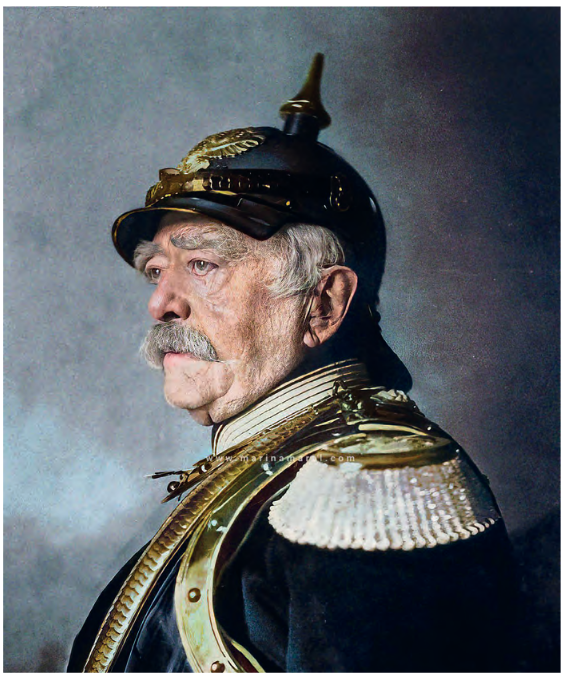
The key features of German Catholicism in the years between 1848 and the early twentieth century were solidarity and subsidiarity. These came, however, at a cost. Catholics’ loyalty to the Vatican, tested during the years of state persecution under Bismarck known as the Kulturkampf (1872–85), laid them open to the charge of disloyalty to the newly unified Second German Empire. In the age of imperialist nationalism, many of their fellow citizens in Prussian-dominated Germany tended to regard Catholics with a certain suspicion, even disdain, as not to be trusted and as being less educated, drawn as they were predominantly from the lower ranks of society. Prejudice even left its mark on unconscious usage in everyday language which is occasionally to be encountered today: es ist zum Katholisch werden (‘it’s dreadful, it would nearly make you turn Catholic’) or katholisch as a synonym for ‘false, devious’. Catholics’ response was to seek refuge in a parallel universe characterised by regular church attendance, active involvement in local, regional and national Catholic associations and leisure hours spent with one’s own kind; marriage ‘outside the community’ carried particular stigma. Every aspect of Catholic life was to be represented and supported by an appropriate association. From the 1850s onward, Catholic publishing houses sprang up, successfully catering for ‘good books’ as ‘shields’ against the blandishments of modern secular philosophies. Age- and class-specific journals and magazines were provided for young adults, for boys and girls, for household servants, and in time even for the barely literate rural labourer. Over the next century their outreach was impressive—thus the house of Herder based in Freiburg in Breisgau marketed Catholic belles lettres in Spanish translation in South America up to the time of the Third Reich, while a number of Bavarian Catholic publishing houses in Missouri catered for the large groups of German immigrant domestic servants.
O’CONNELL CENTENARY
In 1874 German bishops and prominent laymen, among the latter the Prussian MP August von Reichensperger, received invitations to attend the 1875 centenary celebrations of O’Connell’s birth in Dublin. All regretfully declined, citing pressures of the Kulturkampf persecution. Thereafter Daniel O’Connell and his formative influence on the socio-political organisation of the German Catholic Church may have largely faded from the collective memory. Yet the institutions he had fostered, their organisational strategies and propaganda tactics modelled on his practice proved remarkably resilient. The Katholikentage continue to this day to meet annually in different parts of Germany, a social as well as religious occasion for the participants and their families. German Catholics’ political party, the Centre Party (so called because of the seating arrangements in the Reichstag), flourished under its formidable leader Ludwig Windthorst, energised by the very Kulturkampf policies designed to frustrate its appeal. Moreover, the party continued to enjoy the loyalty of its voters throughout the Second Empire (1871–1918) and the Weimar Republic (1919–33). And while the National Socialists successfully recruited large numbers of Catholic voters between 1930 and 1933, and Catholics were prominent among influential party members, practising Catholics remained largely loyal to their Centre Party until its forcible suppression in March 1933.
In the wake of the bicentenary of his birth, Daniel O’Connell’s contribution to German history deserves to be more widely known.
Eda Sagarra is Emerita Professor of German at Trinity College, Dublin.
Further reading
L. Anderson, Windthorst: a political biography (Oxford, 1981).
D. Blackbourn, Germany 1780–1918: the long nineteenth century (Oxford, 2003).
G. Grogan, The noblest agitator: Daniel O’Connell and the German Catholic movement 1830–1850 (Dublin, 1991).
E. Sagarra, Germany in the nineteenth century: history and literature (New York, 2002).