
By Robert Grendon
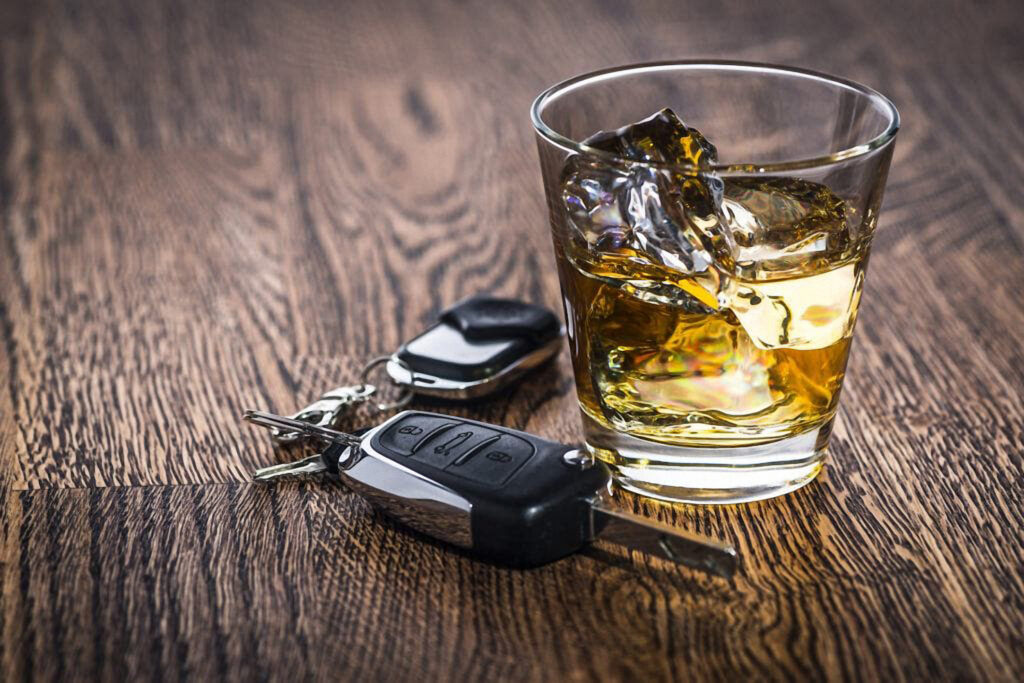
On an autumn evening in the early 1950s, the renowned Irish novelist and playwright Brian O’Nolan (a.k.a. Flann O’Brien) was drink driving with his good friend Tommy Connolly SC, one of the most pre-eminent barristers in Ireland, as his passenger. O’Nolan was pulled over by the gardaí and brought to Donnybrook Station, where he would be examined by a doctor. Before the doctor arrived to test his ability to pronounce long words and to pick objects up off the floor, Mr Connolly, with the permission of the duty sergeant, went to get Mr O’Nolan a drink. Much to the sergeant’s dismay, Connolly returned to the holding room and instructed O’Nolan to drink the noggin of whiskey that he had brought before he could be tested by the doctor. When the case appeared before the district court it was immediately thrown out by the district justice.
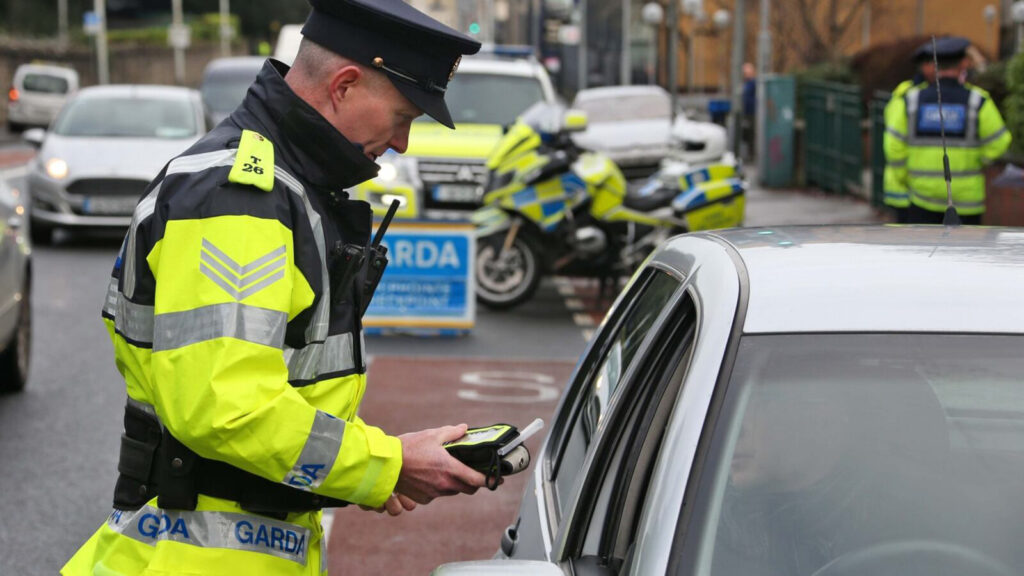
This anecdote highlights some of the most significant failings of the legislative regime that existed in Ireland before the Road Traffic Act (RTA) 1968. On Monday 3 November 1969, the Department of Local Government organised ‘Breathanalyser Day’, which was described by contemporary newspapers as ‘one of the most significant dates in the social life of the community’. Following the enactment of the new Act, when a garda was of the opinion that a person in charge of a motor-propelled vehicle (MPV) had consumed intoxicating liquor, he could compel the driver to undergo the new breathanalyser test. But how had the offence of drink driving developed in the late 1950s and 1960s? How was it prosecuted? And why was the RTA introduced in 1968?
LEGISLATIVE FRAMEWORK
The Licensing Act 1872, the first attempt to deal with drink driving, made it an offence for a person found in a highway or public place to be in charge of a carriage, horse, cattle, steam engine or loaded firearm while drunk. The RTA 1933 was the first piece of legislation to specifically criminalise driving an MPV while drunk. The Act provided that ‘every person who drives or attempts to drive a motor propelled vehicle in a public place while he is drunk shall be guilty of an offence’.
As is often the case, it was a single word in a statute that became a point of serious contention over the subsequent decades. In this instance it was the use of the word ‘drunk’. The legislature had defined the term in the Act as indicating someone who by reason of the consumption of intoxicating liquor was incapable of exercising effective control over such a vehicle in motion. The definition set out by the Act led to many judges taking the view that a defendant could not be found guilty unless he or she had been completely overcome by the effects of liquor. An example of this was seen in 1961, when a pedestrian named William Egan was killed by a drunk driver on a country road outside Ballina. The chief state solicitor set out that he did not believe that a drink driving charge would be successful because the accused had only demonstrated a ‘social drunkenness’.
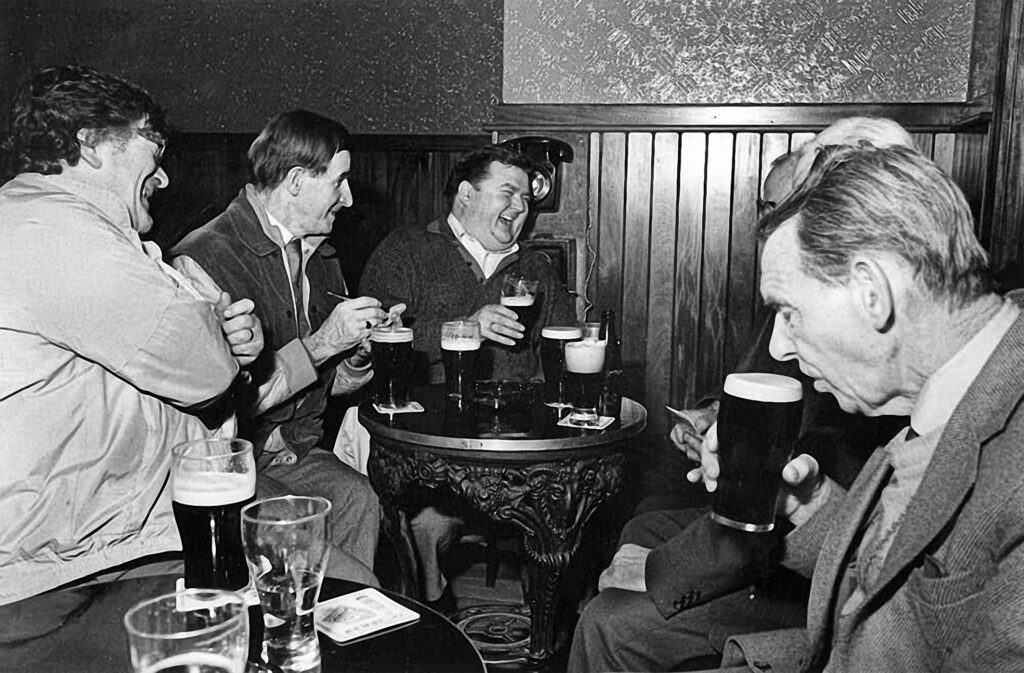
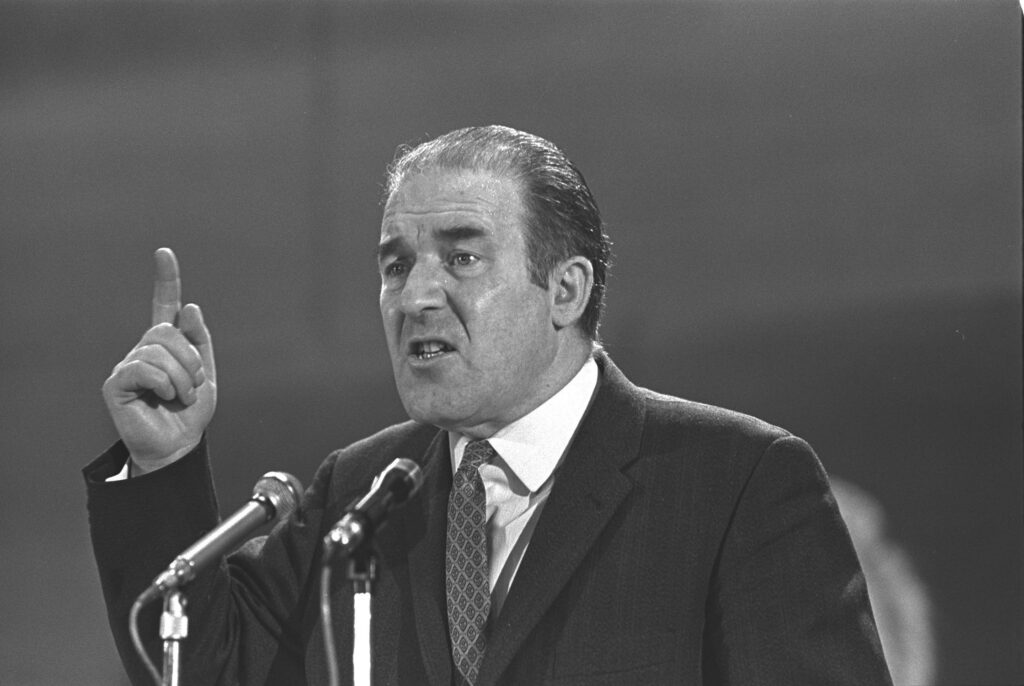
The RTA 1961 sought to tackle this issue, although it did not represent a radical departure from its predecessor. Instead of adopting a new standardised approach, the Act provided that it would be an offence to drive or attempt to drive an MPV while under the influence of intoxicating liquor ‘to such an extent as to be incapable of having proper control of the vehicle’. Neil Blaney, the then minister for local government, noted that he had refused to include standardised testing in the legislation for three main reasons: concerns around public opinion; the efficacy of such testing; and the possible infringement on personal liberty. While the bill was eventually passed, it was with an acknowledgement that the question of standardised testing would have to be explored.
Soon after the introduction of the 1961 Act, in Attorney General v. Conroy it was argued by Tommy Connolly SC (the same barrister as mentioned in the introduction) that the legislation was unconstitutional and that defendants should be entitled to a jury trial. While this argument was successful in the high court, it was unanimously overturned in the supreme court, where it was decided that, while there was a dereliction of moral duty and potential imprisonment, the Act was not unconstitutional.
ENFORCEMENT OF THE LEGISLATION
In the decade before the introduction of breathalysers there was a steady increase in the number of prosecutions, with the conviction rate being relatively steady at 64–74%. Over the course of the decade convictions rose from 235 in 1958 to 906 in 1968. While this may seem like a significant increase, a far more remarkable one came about following the 1968 Act. By 1971 this number had jumped to 1,586. Convictions were heavily dependent on opinion evidence that was given by doctors in drink driving cases. The testing conducted by doctors was at best loosely scientific, ranging from accused persons walking in a straight line to testing their ability to pronounce long words. While accused persons were given the necessary constitutional protections, the ‘medical evidence’ certainly raises eyebrows.
The inconsistency and peculiarity of doctors’ examinations is possibly best exemplified by a case from Letterkenny court in 1966, wherein two doctors examined the same individual within the space of fifteen minutes but arrived at different conclusions. First, the Garda medic, Dr McGinley, tested the accused’s ability to walk in a straight line for five yards. Observing that he stumbled five times, McGinley concluded that he was unfit to drive. When Dr Scally, the accused’s doctor, arrived, she examined the accused, which involved speaking to him, asking him to write his name to test his handwriting, and then getting him to test his own reflexes. Dr Scally was satisfied that, while he had taken some drink and was visibly staggering, he was still fit to drive. The district justice said that in view of the conflicting medical evidence he would dismiss the drunken driving charge and instead find him guilty of careless driving and impose a fine of £2.
Besides the complete lack of consistency with doctors, the punishments that were imposed by the courts varied significantly. In one case a defendant drunkenly crashed his car into a donkey in Castlerea in an act that the district justice described as ‘slaughter’, resulting in a £30 fine. In Killaloe court in 1967, a defendant admitted to having drunk two gin and tonics, four glasses of Scotch and two beers, but he assured the court that this did not affect his ability to drive—rather it cleared up his sinuses! In finding him guilty, the judge apologised but noted that he had not refuted the fact that he had told the garda who arrested him that he was drunk, and therefore the district justice imposed a fine of £1 and suspended his licence for a year.
In practice, the courts heavily favoured issuing fines as opposed to imprisonment or lengthier suspensions of licences beyond the twelve-month ban required by statute. Of the 193 convictions for drink driving in 1959, 173 cases resulted in only the imposition of a fine. Nearly 80% of these fines were less than £15, with only two fines of over £100 issued. The discretion of district justices led to a variety of approaches when it came to sentencing cases such as that of William Reape in Ballina in October 1958, which resulted in a one-month prison sentence, a £10 fine and a twelve-month suspension of his licence. On the other hand, six months later, in the Dublin metropolitan district court, a Mr Kevin Waters received a £100 fine and no prison sentence, but his licence was suspended for twenty years. In 1958 eleven guilty people were committed to prison for sentences ranging between one and three months. This relatively low number of cases resulting in imprisonment was not unusual, with twelve committals in 1958 and only five in 1960.
THE DAVITT REPORT
Before the RTA 1961 came into force, there was an appreciation that the legislation had to change with regard to the offence of drink driving. In September 1961, Blaney appointed the Commission on ‘Driving While Under the Influence of Drink or a Drug’, chaired by Cahir Davitt. It was given four main areas to investigate: objective tests for drink driving; graded offences according to degrees of drunkenness; penalties; and methods of trial and court procedures. In approaching this report, the commission acknowledged that they had been given an important task that was dealing with a matter of life and death on Irish roads, but there was an awareness that the general safety of the roads would have to be balanced with personal liberties.
In trying to frame the scale of the problem in Ireland, the commission noted that the existing statistics that were available to them were not representative of the true scale of the impact that alcohol was having on Irish roads. In their submissions to the report, both the Garda commissioner and the chief state solicitor set out a series of flaws in the legislative framework and how this resulted in the problems being underrepresented in the official statistics. The Garda commissioner believed that many district justices were reluctant to prosecute such offences in the absence of satisfactory medical evidence. Given the fact that in most cases a doctor was not readily available, most tests that were administered were usually conducted well over an hour after the accused had been arrested. The chief state solicitor was more succinct, as he concluded that the lack of a uniform standard as to what constituted an ability to have effective or proper control over an MPV for the purposes of section 49 of the Act was the root of all of the issues. Owing to the fact that members of his office, the gardaí, doctors, district justices and the members of the public all had their own standards of what this would mean, it resulted in complete inconsistency in the prosecution of the offence, and the discrepancies in court decisions were resulting in unfair and unjust decisions.
The commission made a series of scientific inquiries regarding the impact of alcohol on a person’s ability to drive and how best to detect it. They highlighted as a major flaw the fact that there was no prescribed method of medical testing that was used by doctors; more importantly, none of the methods that were currently employed could sufficiently detect impairment at the lower, but still dangerous, levels. The commission noted that random tests of coordination or the ability to pronounce certain words were not sufficiently scientifically indicative of impairment, and that they were resulting in many cases where people who ought to have been prosecuted were given the benefit of the doubt.
The commission also took into consideration how other jurisdictions were approaching this problem, with particular reference to Britain, North America and Scandinavia. One striking example was given in the comparison of successful prosecutions in courts of summary jurisdiction for this offence in Ireland and England and Wales. In Ireland in 1960 only 62% of all prosecutions resulted in convictions, compared with 95% in England and Wales.
The commission ultimately concluded that the present system was unfit and that legislative reform was required. They concluded that being under the influence of drink was the primary cause of road accidents in Ireland, that the current system of doctors examining drunken suspects was ineffective, that the legislative framework was ineffective, and that a standardised blood alcohol limit of 125mg/g should be introduced. This new blood alcohol limit could be tested by the breathanalysers brought in under a new legislative regime.
CONCLUSION
The introduction of the RTA 1968 marked a turning-point in the regulation and prosecution of drink driving offences in Ireland. For the first time, the law moved away from vague and subjective standards and towards a more scientifically grounded and enforceable framework. The implementation of objective testing methods, particularly the breathalyser, addressed long-standing issues that arose from inconsistent medical testing, opinion evidence and the fragmented approach of the district justices. What had previously been a matter of personal judgement was now defined by a quantifiable metric.
The introduction of the 1968 Act was more than a technical legal improvement: it reflected a shift in social attitudes towards road safety and public health. There were, of course, some initial concerns that the new legislation was puritanical or that the measures amounted to State-imposed morality, but increasing road deaths meant that something had to be done. There were those who attempted to beat the test, with one newspaper suggesting that a spoonful of vinegar after drinking vodka might neutralise the crystals in the breathalyser.
The Road Traffic Act 1968 had a profound impact, reflected in the rise in prosecutions and convictions in the years following its introduction, and it provided the courts and the gardaí with the enhanced powers needed to effectively deter, detect and prosecute drink driving offences.
Robert Grendon is a legal executive and recent Law with History graduate of UCD.
Further reading
British Medical Association, ‘Relation of alcohol to road accidents’: report of a special committee of the British Medical Association (London, 1960).
N. Hill & G. O’Keefe, Dangerous driving cases (Dublin, 2003).
Stationery Office, Commission on ‘Driving While Under the Influence of Drink or a Drug’: report (Dublin, 1963).
This is an edited version of the winning entry for the 2025 Irish Legal History Society student essay prize. Closing date for the 2026 competition is 31 May 2026.
Further information: https://www.irishlegalhistorysociety.org/?page_id=1464.