
By Brian Smyth
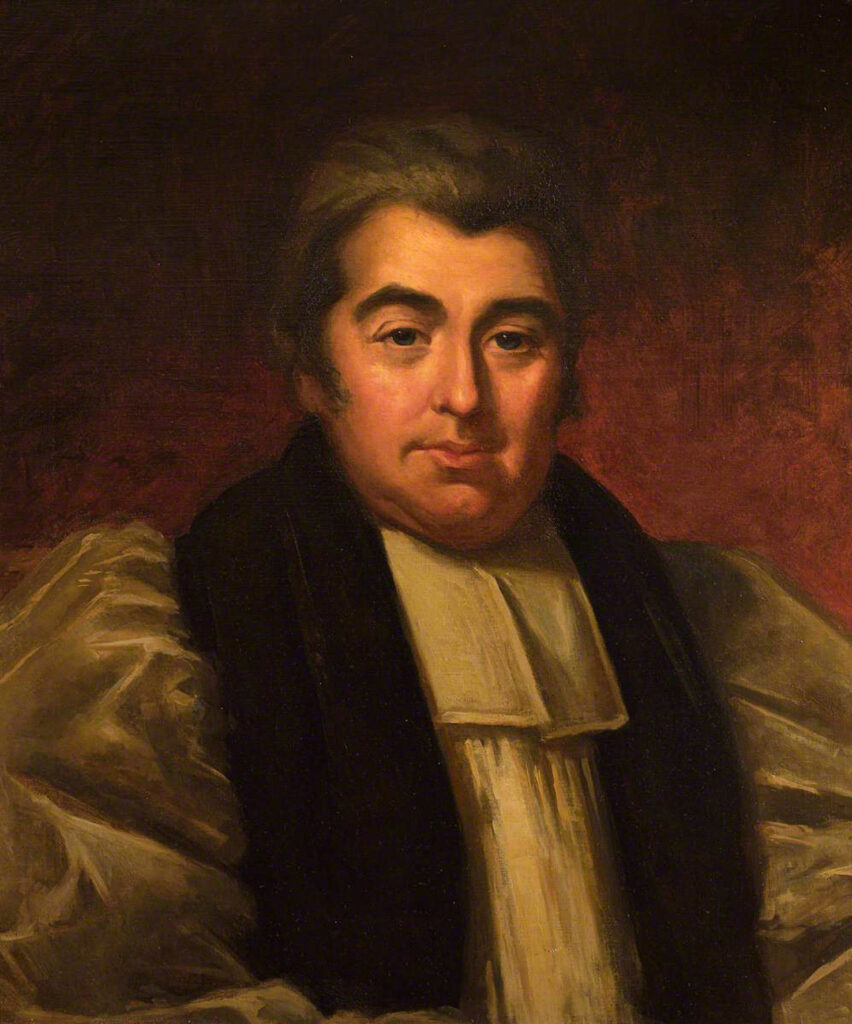
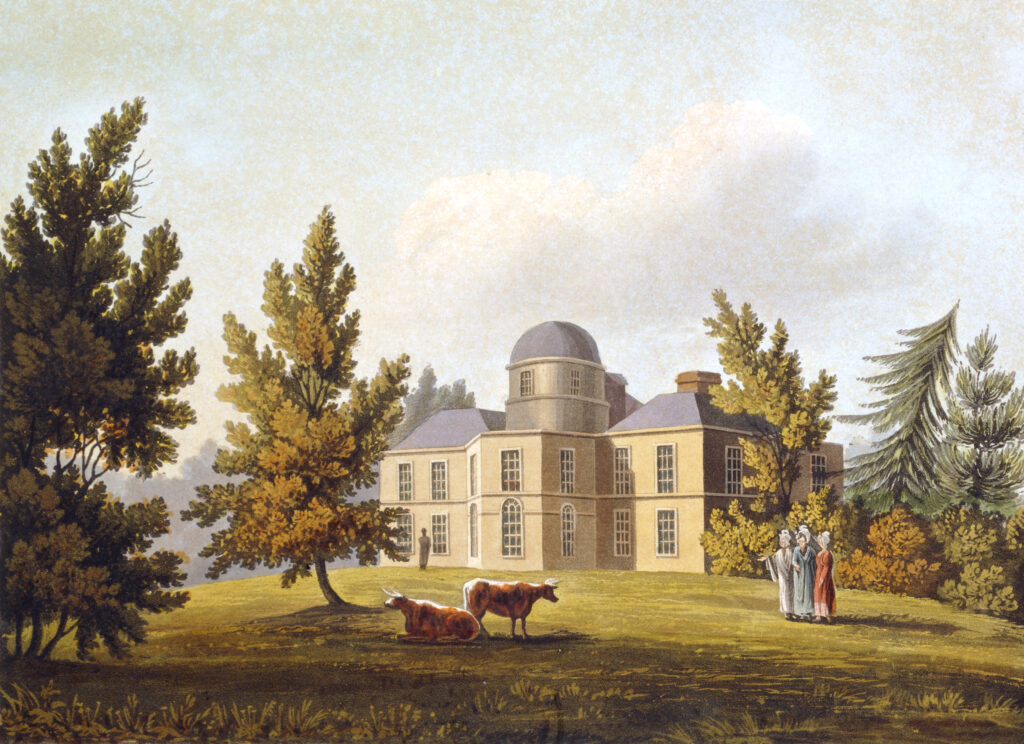
A bequest by Francis Andrews, the provost of Trinity College, Dublin, enabled the building of Dunsink Observatory in 1785 and the foundation of the Andrews Professorship in Astronomy. The first Andrews Professor was Revd Henry Ussher, who was appointed in 1784. Ussher died suddenly in 1790, and Revd John Brinkley (1766–1835) was appointed to the Andrews chair. Although only 24 years old, Brinkley was recommended for the position by Neville Maskelyne, the Astronomer Royal. Brinkley, who was ordained a Church of England priest in 1791, was able to combine his religious vocation in Ireland with his work in astronomy, moving up the clerical ladder while at Dunsink and becoming bishop of Cloyne in 1826.
EARLY YEARS
John Brinkley was born in Woodbridge, Suffolk, c. 1766. While his exact birth date is unknown, a record exists of his baptism on 17 January 1767 at St Mary’s Church in Woodbridge. He was the illegitimate son of John Toler, a vintner, and Sarah Brinkley, whose father had been a butcher. She later married James Boulter in 1790. Brinkley was educated by local clergy—Revds Drysdale, Black and Tilney of Northamptonshire—and entered Caius College, Cambridge, on 29 August 1783; he graduated with a first-class honours degree and a Smith’s Prize in mathematics and theoretical physics. He was the Senior Wrangler (top undergraduate in mathematics) in Cambridge in 1788. While still a student, Brinkley was assistant to Nevil Maskelyne, the Astronomer Royal at Greenwich, during 1787 and 1788, and he resided at the observatory in Greenwich, where he was introduced to practical astronomy. He was awarded a master’s degree from Caius College and became a Fellow of Gonville and Caius College in 1789. He was ordained in Lincoln Cathedral in 1791.
Following the death of Henry Ussher, the first Andrews Professor of Astronomy in Trinity College, Dublin, in 1790, a new professor had to be appointed. Dr John Stack, the college’s junior dean, who had written A short system of optics (1787), was favoured by his peers. The provost, John Hely-Hutchinson, sought advice from the Astronomer Royal, Nevil Maskelyne, who recommended first Samuel Vince (1749–1821) and second John Brinkley, whom he rated highly. Both had been Senior Wranglers in Cambridge. Samuel Vince was not interested in the position and John Brinkley was appointed in December 1790. He was not well received in Dublin by his peers, who had favoured John Stack, the local man. Brinkley suggested that he and Stack should be examined by competent people with respect to their astronomical qualifications and, if he (Brinkley) came second, Stack could have the position. Stack did not accept the challenge and Brinkley was duly appointed.
ROYAL ASTRONOMER OF IRELAND
At the time, as Dunsink was deficient in equipment, Brinkley concentrated on mathematics. In 1808 he published Elements of astronomy, which was used as a textbook through many editions for most of the nineteenth century. He is credited, along with Humphrey Lloyd, with reforming mathematical teaching and research in Trinity, introducing ideas from Europe—for example, the work of Lagrange and Laplace. He is also responsible for influencing his successor, William Rowan Hamilton, perhaps Ireland’s greatest mathematician, in his choice of mathematical topics.
In 1792, by letters patent from George III, the Andrews Professor became known as the Royal Astronomer of Ireland, so Brinkley was the first holder of that position. That year also saw his marriage to Esther Weld of Dublin, with whom he had three children, John, Matthew and Sarah. The initial work at Dunsink was to confirm the Copernican idea that the planets revolved around the sun and that the earth was not the centre of the universe. A second objective was to use observational astronomy to verify the results of Newton’s Laws of Motion. In the early years of the nineteenth century astronomers were concerned with the position of objects—that is, where the object was rather than what the object was. To achieve this, astronomers used a variety of meridian instruments, including transit or meridian circles. Accurate clocks were also needed. In June 1787 a 6ft transit instrument was installed to observe the positions of the stars. In May 1791 two precision clocks made by John Arnold were delivered to Dunsink Observatory, where they still reside.
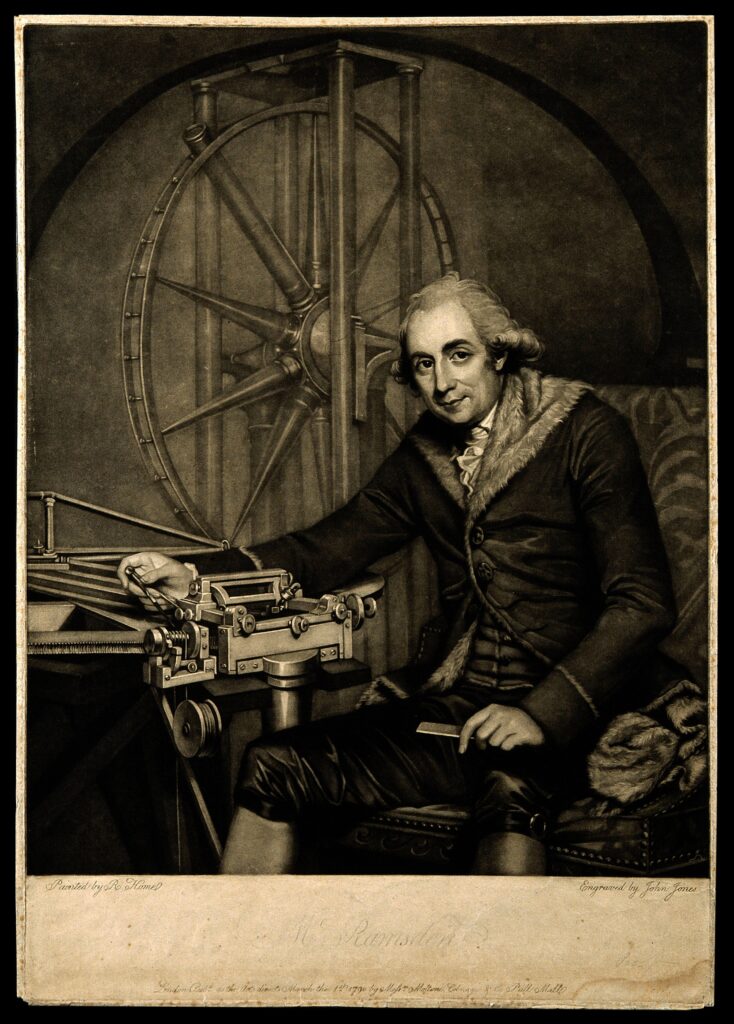
In 1788 an altitude and azimuth circle (used to measure the horizontal angle (azimuth) of objects relative to a reference point) had been ordered by Henry Ussher for Dunsink from Jesse Ramsden, an instrument-maker in London. Originally this circle was to be 10ft in diameter, but its construction was delayed owing to a dispute between Ussher and Ramsden. After Ussher’s death in 1790, it was found that the extremities of the circle had rotted. Ramsden died in 1800 and the circle was completed by Berge, his successor, and delivered to Dunsink in 1808. It was 8ft rather than 10ft in diameter.
Until then, Brinkley had only had available to him a transit instrument, two clocks and a refracting telescope—insufficient to do serious astronomical work. The arrival of the 8ft meridian circle allowed him to start an ambitious programme of astronomical research. At this time there was only one circle of comparable size in existence, and this was at Greenwich. Another problem facing Brinkley was that Ussher’s observation records had been taken to Armagh Observatory and were not returned until 1827, by which time Brinkley had been appointed bishop of Cloyne and William Rowan Hamilton had taken over as Royal Astronomer at Dunsink.
John Pond, Nevil Maskelyne’s successor as Astronomer Royal, upgraded the equipment at Greenwich. At this time important work in observatories concerned the measurement of the distance of stars from the earth. This work was carried out at both Greenwich and Dunsink. A controversy arose about the accuracy of the results, which carried on for fourteen years between 1810 and 1824. While neither set of data compared exactly to more modern results, Pond’s results were closer.
CHURCH OF IRELAND APPOINTMENTS
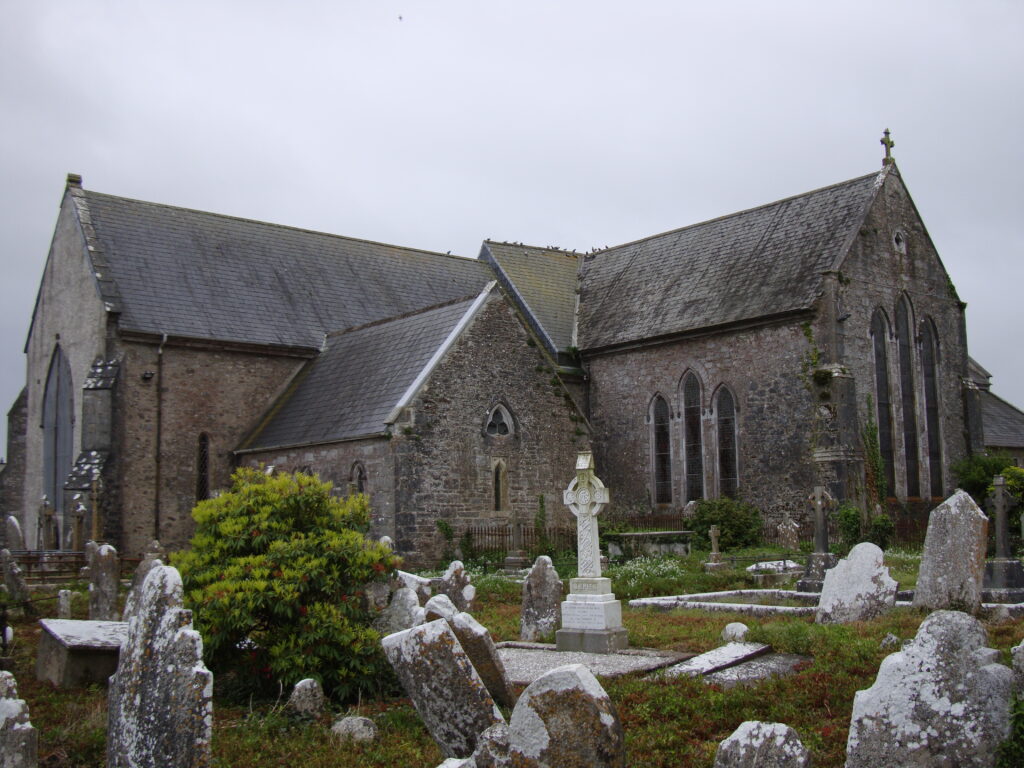
In an effort to enhance his annual income of £250 for being the Andrews Professor, John Brinkley held a number of positions in the United Church of Ireland and England (so-called after the Act of Union in 1800). He held positions in the dioceses of Elphin and Meath and was archdeacon of Clogher from 1808 until he was appointed bishop of Cloyne by letters patent on 28 September 1826. He resigned his Andrews Professorship in 1826 and did no further astronomical work, devoting his time entirely to his episcopal duties. The archbishop of Cashel, assisted by the bishops of Meath and Kildare, consecrated Brinkley in the Chapel Royal in Dublin Castle on 8 October 1826; the service included a 30-page sermon.
At the time when Brinkley was consecrated bishop, John George de la Poer Beresford was archbishop of Armagh and, as a reformer, saw Brinkley as an ally. He wanted to abolish church tithes, stop rectors having more than one parish, build glebe houses, pay curates adequately and expand the United Church of England and Ireland, among other reforms. Brinkley’s tenure in Cloyne was active, and he attracted many able young clergy to the diocese. It was a time of change in Ireland: Catholic Emancipation occurred in 1829; there was a tithe war in 1831–6 (in 1834 up to twenty people were killed in his diocese in Rathcormac (Gortroe) as a result of a skirmish); and a national education system was introduced in 1831.
Over the period of his episcopacy Brinkley’s health declined. He died in a relative’s house in Leeson Street, Dublin, on 14 September 1835, at 69 years of age. He was buried in the chapel in Trinity College, Dublin. After his death, the Church of Ireland diocese of Cloyne was subsumed into the United Diocese of Cork, Cloyne and Ross.
AWARDS AND HONOURS
John Brinkley received many honours and awards during his lifetime. He was elected a Fellow of the Royal Society in 1803. In 1806 he was awarded a Doctor of Divinity degree from Trinity College, Dublin. He was awarded the Cunningham Medal of the Royal Irish Academy in 1818 for his essay ‘Mean Motion of the Lunar Perigee’. Nevil Maskelyne, the Astronomer Royal, was one of his nominators. He was awarded the Copley Medal of the Royal Society in 1822 for his mathematical and astronomical papers, and, in particular, for his work on statistical methods applied to astronomy, which were published in the Philosophical Transactions of the Royal Society. He was elected president of the Royal Irish Academy in 1822, a position he held until his death in 1835. He was president of the Royal Astronomical Society of London from 1831 to 1834 and presided over its bicentenary, though he did not attend meetings.
His memorial in Cloyne tells us much about the man:
‘Quick in discerning and rewarding professional merit, and anxious to rule with firmness without severity, he succeeded in maintaining discipline without voicing complaint. In general literature and natural history, as well as in science, his attainments were accurate and diversified, and his communications interesting and instructive; learned without pedantry and pious without ostentation. Kind to every member of his household, liberal in his charity and given to hospitality. His death was generally deplored.’
Brian Smyth is a former chair of the National Committee for Plaques in Science and Technology.
Further reading
A. Acheson, A history of the Church of Ireland, 1691–1996 (Cambridge, 1997).
P.A. Wayman, Dunsink Observatory 1785–1985: a bicentennial history (Dublin, 1984).