
BY AODHÁN CREALEY
JANUARY
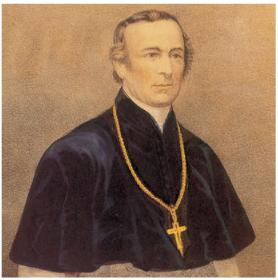
03/1864
John Hughes (66), archbishop of New York since 1840, died. An immigrant from Annaloghan, near Clogher, Co. Tyrone, Hughes played a key role in fostering the Irish-American identity. At the time of his installation an estimated 20% of the population of New York was Irish, mostly living in wretched conditions and subjected to intense anti-Catholic prejudice. Then came the Great Famine, with mass immigration. Hughes’s first objective was to win respect for his impoverished fellow immigrants. With the support of William Seward, then mayor of New York, he challenged the anti-Catholic, anti-immigrant rhetoric of the then Evangelical Revival as basically anti-American. In the meantime, he set about developing his archdiocese, opening schools and hospitals and, anticipating an emerging Catholic middle class, founding St John’s College (1841), now Fordham University. Politically he was very much a conservative. He disliked the Democrats for their ‘assertive secularity’. For the same reason he criticised the Young Irelanders. His mission, as he saw it, was to cultivate an Irish-American identity, Catholic and patriotic to their adopted country. He regarded the outbreak of the Civil War as an excellent opportunity for the Irish to prove that patriotism. As for the key issue in that conflict—slavery—he stood with most of the Catholic hierarchy in opposing abolition. The abolitionist lobby, after all, were anti-Catholic, and his parishioners were largely hostile to their coloured neighbours, as shown during the Draft Riots (1863), when a mostly Irish mob rampaged across Manhattan, targeting African-Americans and torching an orphanage for black children. Today Hughes is probably best remembered for building St Patrick’s Cathedral, a prominent landmark beneath the skyscrapers of Fifth Avenue.
01/1926
Radio 2RN, the national broadcasting station of the Irish Free State, later Radio Éireann, was opened by Douglas Hyde.
03/1946
William Joyce (40), Nazi propagandist known as ‘Lord Haw-Haw’, was hanged for treason in Wandsworth jail.
04/1976
UVF gunmen shot dead the brothers John Martin Reavey (24) and Brian Reavey (22) at their home near Whitecross, south Armagh. A third brother, Anthony (17), later died from his wounds. Ten minutes later, in a co-ordinated attack, the UVF entered the O’Dowd family home near Gilford, Co. Armagh, and shot dead the brothers Barry (24) and Declan O’Dowd (19) and their uncle Joe O’Dowd (61). The brothers’ father was seriously injured.
05/1976
The Kingsmills massacre. The IRA, using the cover name ‘South Armagh Action Force’, shot dead nine Protestant factory workers at Glenanne, near Markethill, Co. Armagh. A tenth victim, despite eighteen bullet wounds, miraculously survived.
05/1976
John A. Costello (84), taoiseach in the first two interparty governments (1948–51, 1954–7) and best remembered for the Republic of Ireland Act (1949), died.
08/1976
Following the upsurge in paramilitary violence in the North, Prime Minister Harold Wilson announced the deployment of additional troops and, for the first time, the SAS.
21/1976
Richard R. Hayes (73), bibliographer and perhaps the only person ever to take three simultaneous honours degrees—Celtic Studies, Modern Languages and Philosophy—at Trinity College, Dublin, died. During the Second World War his genius as a codebreaker frustrated German attempts to establish an intelligence network in Ireland.
23/1976
Paul Robeson (77), African-American singer, actor and civil rights activist who made a number of visits to Ireland, adding Danny Boy and Kevin Barry to his extensive repertoire, died.
31/1936
D.P. Moran (66), colourful founder and editor of The Leader (1900–75) who criticised almost every part of the national movement, including Sinn Féin (‘the green Hungarian band’) and the Irish Parliamentary Party (‘West Britons’ and ‘shoneens’), died.
FEBRUARY
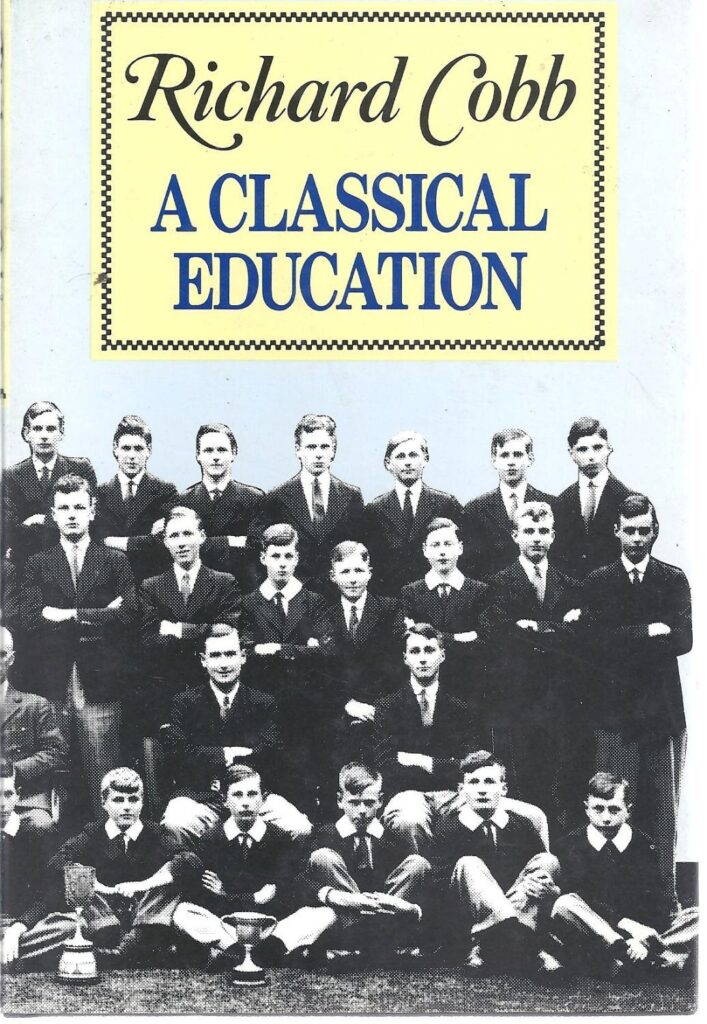
17/1936
Edward Preston Ball (20) killed his mother with an axe at their home in Booterstown, Co. Dublin. He then drove to Shankill and threw her body into the sea. It was never recovered. He pleaded not guilty at his subsequent six-day trial, during which it emerged that his father, a doctor, had left home when he was eleven. However, despite having attended an élite private school—Shrewsbury School in Shropshire—Edward had no fixed employment, spending much of his time playing unpaid parts in the Gate Theatre. On the night in question, he had a row with his mother—described as a woman of ‘independent means’ but with a foul temper who was possibly ‘mentally deranged’—over her refusal to give him £60 so that he could join the Gate players on a foreign tour. He was found guilty but insane and sentenced to indefinite detention in the Central Criminal Lunatic Asylum in Dundrum. There he was to spend fourteen years, receiving regular visits for a time from the writer and historian Dorothy Macardle, who probably remembered him from her involvement with the Gate. He also received regular correspondence from his best friend in Shrewsbury, the historian Richard Cobb, who was to pen A classical education (1985), less a memoir than a psychological thriller about his friend. Cobb concluded that he had acted ‘in a sudden uncontrollable rage and under pretty severe provocation’ but, meeting him in Paris after his release, wrote that he showed no sign of remorse or guilt. He found him utterly unchanged from his school-days despite the passing of years. Little is known about Edward afterwards except that he travelled extensively on the Continent. According to Shrewsbury School, he died abroad in 1987.
05/2016
David Byrne (33), a known criminal, was shot dead in the Regency Hotel, Dublin, during a boxing weigh-in, leading to a bloody feud between the Kinahan and Hutch organised crime gangs.
09/1996
The IRA detonated a 3,000lb. bomb in the London Docklands, killing two people and causing damage estimated at £150 million. The attack marked the end of their seventeen-month ceasefire.
09/1926
Garrett Fitzgerald, leader of Fine Gael (1977–87) and twice taoiseach (1981–2, 1982–7), born in Dublin, the son of the then minister for external affairs, Desmond Fitzgerald.
11/1926
A riot broke out during the third performance of Seán O’Casey’s The Plough and the Stars at the Abbey Theatre, prompted by republican women who objected to the play’s depiction of the Easter Rising.
12/1976
Frank Stagg (34), from Hollymount, Co. Mayo, died in Wakefield prison after a 62-day hunger strike in pursuit of a number of demands, including an end to solitary confinement and transfer to a prison in Ireland.
13/1966
‘The bishop and the nightie controversy’. Following an item on the Late Late Show the previous evening in which a woman declared that she hadn’t worn anything on her honeymoon night, the bishop of Clonfert denounced the programme from the pulpit as being unworthy of Irish audiences.
24/1826
Peter O’Connell (71), schoolmaster and lexicographer who spent 40 years compiling an Irish–English dictionary, died. Soon afterwards, when his nephew showed it to Daniel O’Connell at Tralee courthouse, the Liberator famously dismissed it, describing his uncle as ‘an old fool to have spent so much of his life on so useless a work’. Today it is in the British Museum.
25/2006
A planned march by the unionist ‘Love Ulster’ organisation from Parnell Square to Leinster House was blocked by protesters, leading to serious rioting and many arrests.