
BY AODHÁN CREALEY
MARCH
24/1968
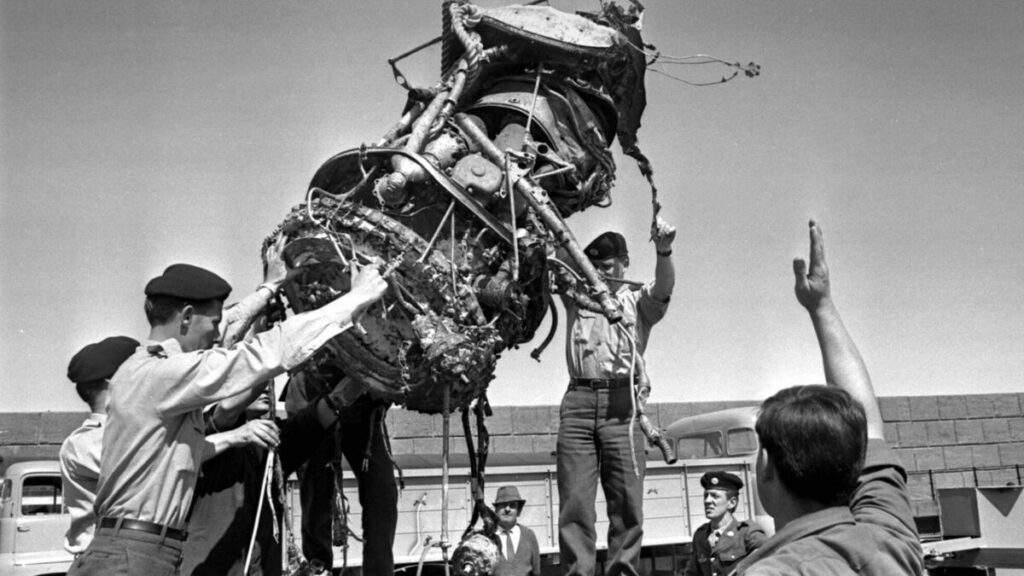
Aer Lingus Flight 712, en route from Cork to Heathrow with a capacity load of 61 passengers and crew on board, crashed into the sea near the Tuskar Rock lighthouse, Co. Wexford. There were no survivors and only fourteen bodies were recovered. Thirty-three of the victims were Irish, the remainder from five different countries. There was much speculation for decades on the cause of the crash. The most enduring theory was that the plane had been struck by an RAF drone, fired from a secret base in Wales, which caused her to swerve violently, lose control and nosedive into the sea, but a review by the Air Accident Investigation Unit (2002) totally discounted that theory. Rather, the most likely cause was structural failure. Questioning the maintenance records of the almost eleven-year-old Viscount, the review suggested that the left tailplane had failed owing to metal fatigue and corrosion, a malfunction which came to light shortly after take-off. The crash, it seemed, was the climax of a lengthy ordeal for all on board. Taking off at 10.32am, the crew reported less than half an hour later that they were ‘at twelve thousand feet, spinning and descending rapidly’, after which Captain Barney O’Beirne (35) and First Officer Paul Heffernan (22) struggled to control the plane, almost making a controlled landing in the sea until she finally crashed ‘like a sharp roll of thunder’ at 11.00am. Tuskar Rock was Ireland’s worst air disaster. The last fatal airline crash here also centred on Cork airport, when in 2011 a Manx 2 Metroliner, arriving from Belfast with ten passengers and two crew, crashed on its third attempt to land in heavy fog, with the loss of six passengers and both pilots.
04/1976
The Maguire Seven, Anne Maguire and various members of her family, were convicted of possessing nitroglycerine intended for use by the IRA. Her brother-in-law, Giuseppe Conlon, died in prison and the remainder served their entire sentences. Their convictions were quashed in 1991.
07/1776
During the American Revolutionary War, County Wexford-born Captain John Barry of the Continental Navy led his cruiser USS Lexington in an hour-long battle with HMS Edward, forcing the latter to surrender. It was the first capture of a British warship by an American cruiser.
07/1936
On Hitler’s orders, the demilitarised Rhineland was reoccupied, in direct violation of the Treaty of Versailles and the Locarno Treaties.
10/1966
Frank O’Connor (62), pen-name of Michael O’Donovan, writer, best remembered for The Big Fellow (1937), his biography of Michael Collins, his short stories and memoirs, notably An only child, died.
16/1976
Harold Wilson resigned as British prime minister, claiming that he had planned his shock announcement two years previously.
17/1876
In an operation planned by John Boyle O’Reilly and John Devoy, six Fenian prisoners made a dramatic escape from Freemantle, Western Australia, on board the whaling ship Catalpa, landing in New York four months later.
17/1976
Four people were killed and eleven injured, some seriously, by a UVF car bomb at the Hillcrest Bar in a Catholic area of Dungannon, Co. Tyrone.
24/1936
Vice-Admiral Henry Boyle Somerville (72), brother of the writer Edith Somerville, was shot dead by the IRA at his home in Castletownsend, Co. Cork.
30/1926
Ray McAnally, actor, notably as a Labour prime minister in the BBC’s A Very English Coup, born in Buncrana, Co. Donegal.
31/1976
The Cork–Dublin mail train was robbed of £150,000 near Sallins, Co. Kildare. Five members of the Irish Republican Socialist Party, including Nicky Kelly, were arrested.
APRIL
15/1840
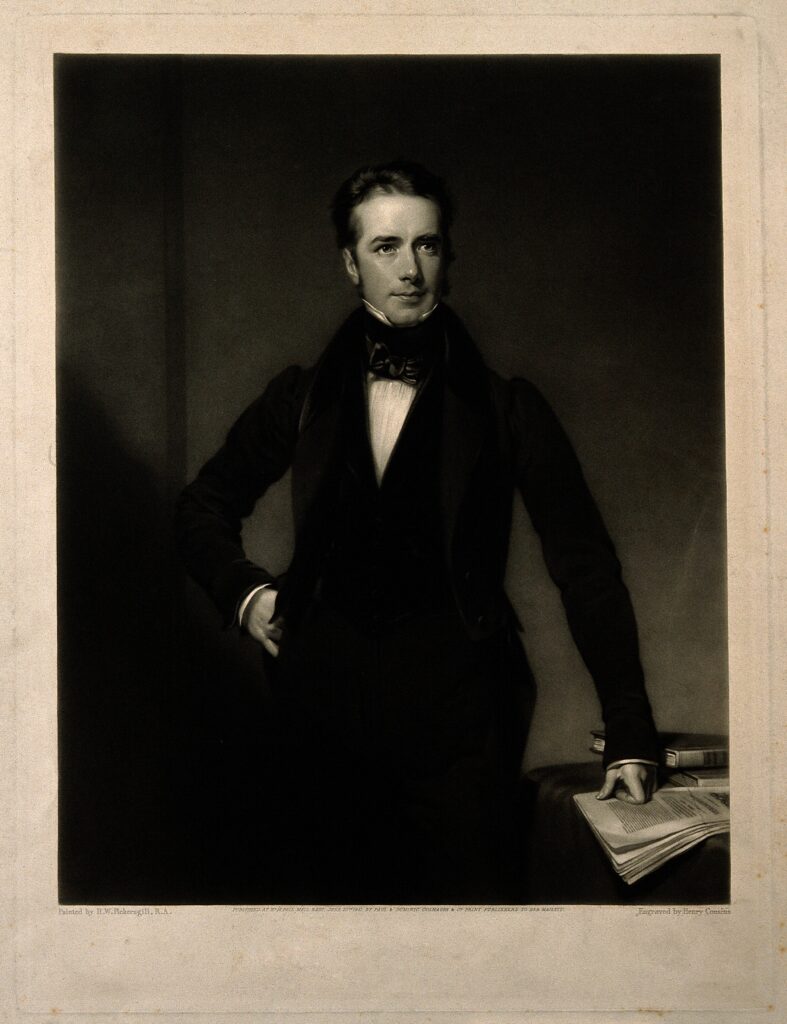
Thomas Drummond (42), under-secretary for Ireland since 1835, died. Before his appointment to Dublin Castle, Edinburgh-born Drummond had served as an army officer working on the Ordnance Survey in Scotland and later Ireland, where he witnessed at first hand the deplorable conditions endured by tenant farmers. Once in office, effectively head of the civil service in the Lord Melbourne government, which was supported by Daniel O’Connell, he immersed himself in all aspects of the Irish administration. He had little sympathy for landlords. When a group of Tipperary magistrates wrote to him complaining about the state of the country, he famously reminded them that ‘property had its obligations as well as its rights, to the neglect of these duties in times past is mainly to be attributed that diseased state of society in which such crimes can take their rise’. One of his first moves was to address the fact that not a single Catholic held office in the senior ranks of the judiciary and police by making a raft of Catholic appointments. Under the Constabulary (Ireland) Act (1836) he brought about a more efficient police service and encouraged Catholics to join. On the legal front, he appointed stipendiary magistrates who were independent of landlords and played a leading role in curtailing the influence of the Orange Order. Perhaps his greatest success was on the thorny issue of tithes. The Tithe Rent Charge (Ireland) Act (1838) effectively ended the Tithe War by converting the despised tithes into a fixed rent. Never in good health, he died in office. He had requested to be buried in Ireland, in whose service he claimed he had lost his life, and was interred in Mount Jerome cemetery.
01/1976
The Apple Computing Company was founded in Los Altos, California, by Steve Jobs, Steve Wozniak and Ronald Wayne.
04/2006
Denis Donaldson (c. 56), former member of the IRA and Sinn Féin who was exposed as an MI5 agent four months previously, was shot dead at his home near Glenties, Co. Donegal. The Real IRA claimed responsibility.
06/1926
Ian Richard Kyle Paisley, evangelical minister, leader of the Democratic Unionist Party (1971–2008) and First Minister of Northern Ireland (2007–8), born in Armagh, the son of a Baptist preacher.
07/1926
Violet Gibson, daughter of Lord Ashbourne, lord chancellor of Ireland, fired a single shot at point-blank range at the fascist dictator Benito Mussolini in Rome. The bullet merely grazed his nose. Deported to Britain, she spent the rest of her life in a psychiatric hospital.
08/1976
Patrick Dillon (36), a prison officer at Magilligan prison, was shot dead by the IRA outside his home near Omagh, Co. Tyrone. He was the first serving prison officer to be killed during the Troubles.
09/1926
Gerry Fitt, prominent civil rights activist, MP for West Belfast (1966–83), co-founder of the SDLP and its leader 1970–9, born in the Lisburn Road workhouse, Belfast.
16/1986
Jennifer Guinness, wife of John Guinness, merchant banker and a member of the Guinness brewing dynasty, was rescued by gardaí from a house in Waterloo Road, Ballsbridge, after an eight-day kidnap ordeal.
18/1926
The Irish Free State’s first census recorded a population of almost three million (2,971,992), a decrease of 5.3% from the 1911 census. It revealed that 800,000 people were living in overcrowded conditions and that tuberculosis was still causing 4,500 deaths annually.
19/1876
Sir William Wilde (61), surgeon, antiquary and prolific author, died, survived by his wife Jane (‘Speranza’) (c. 1821–96) and two sons, William (1852–99) and Oscar (1854–1900).