
Written and directed by Annemarie Jacir
By Brian Hanley
It is impossible to watch this powerfully evocative film without referencing the horrors that Israel has inflicted on the Palestinian people since October 2023. Annemarie Jacir’s movie ends with a dedication to ‘our people in Gaza in the years the world failed you’. Almost every scene of Palestine 36 contains powerful resonances for today. Crops are destroyed to make way for new settlements; women and children are casually humiliated at checkpoints; peaceful marchers are shot down. Ultimately there is brutal collective punishment and massacre. What the film illustrates is that the template for Israeli military tactics came originally from Palestine’s former colonial rulers, the British.
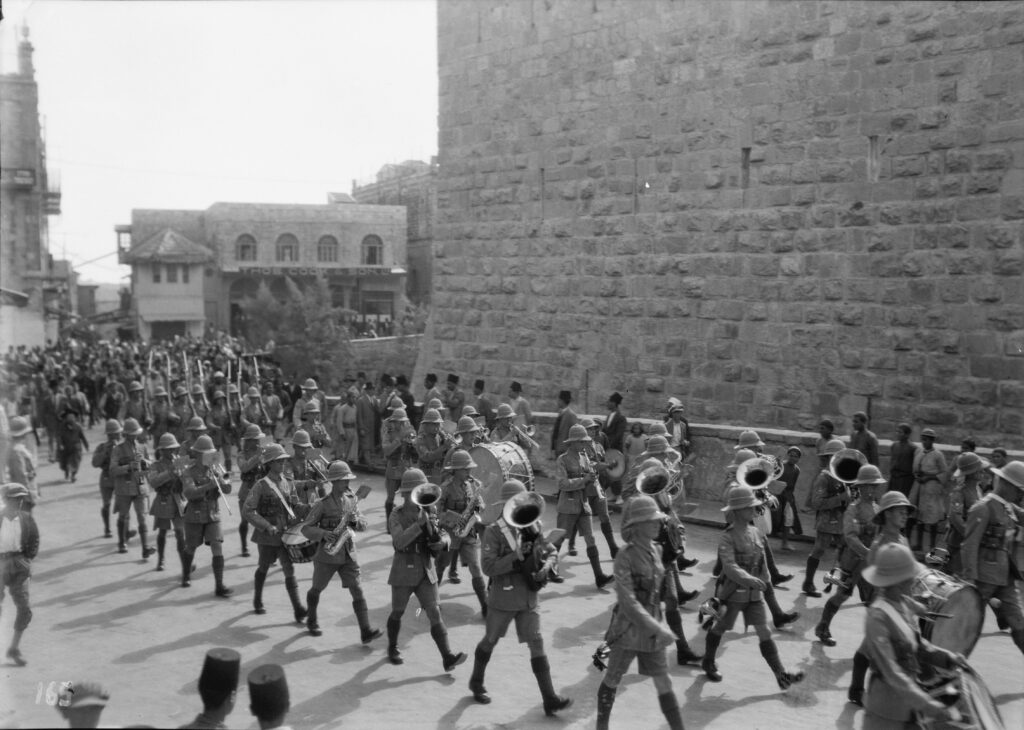
Palestine 36 is based around the so-called Arab revolt of 1936–7, one of the largest but least well-known rebellions against British rule in the twentieth century. It lasted three years and was only crushed after the deployment of 100,000 troops, backed up by air power. The colonial authorities imposed curfews along with detention without trial, destroyed over 2,000 homes, burned crops, and utilised torture and executions, both legal and unofficial. In an Arab population of around one million, 5,000 were killed, 10,000 wounded and over 5,000 jailed. Scholars such as Rashid Khalidi argue that the crushing of the rebellion affected the Palestinians for decades, with the Nakba of 1947–8 in effect only the ‘second chapter of the Palestinian defeat’. The film ends with a massacre based on the British destruction of the village of al Bassa in September 1938. Palestine 36 is beautifully shot, with echoes of David Lean’s Lawrence of Arabia, and there is clever use of archival footage.
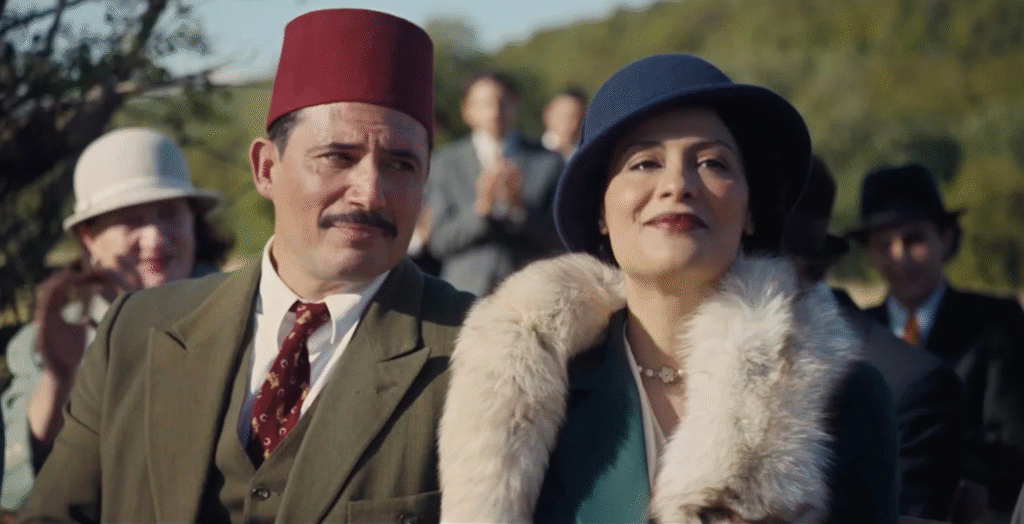
The story is told through multiple narratives. There are young Palestinians radicalised by repression, and farmers confused by the sale of land they have worked for years to settlers and merchants who favour conciliation. The despair when hopes for compromise are destroyed by the Peel Commission’s endorsement of partition during 1937 is powerfully evoked. The diversity of Arab society is illustrated, with Christian and Muslim communities living together, educated élites mingling with colonial society, and dockworkers complaining of low pay and long hours. (The revolt itself began with a general strike which lasted from May to October 1936.) Yusuf (Karim Daoud Anaya) is a young man from al Bassa who goes to work in Jerusalem for journalist Amir (Dhafer L’Abidine). Initially wanting to stay out of trouble, he ultimately joins guerrillas led by Khalid (Saleh Bakri) and dies fighting the British. Amir’s wife, Khuloud, powerfully played by Yasmine Al Massri, is one of the film’s standout characters. A journalist who writes under a male pseudonym, she is a perceptive activist disgusted by her husband’s ultimate collusion with British and Zionist interests. In al Bassa, a young woman, Rabab (Yafa Bakri), sees her husband shot by militia from the new Jewish settlement. She tries to protect her daughter, Afra (Wardi Eilabouni), and her daughter’s friend, Kareem (Ward Helou), the son of the village priest, from the growing danger. Rabab’s parents (Hiram Abbass and Kamel El Basha) suffer terribly at the hands of British troops.
At times the dialogue is didactic and reminiscent of some of Ken Loach’s work. The most obvious villain is Captain Orde Wingate (Robert Aramayo), a Protestant fundamentalist and true believer in the Jewish return to the Holy Land. Wingate was a killer, of the type often attracted to special forces, who murdered both civilians and suspected rebels during the revolt. He also organised ‘Special Night Squads’, composed of British personnel and Jewish militia, who terrorised Arab villages. Wingate trained many of those who later became senior members of the Israeli military, such as Moshe Dayan. Then there is Charles Tegart (Liam Cunningham), imported from India, where he had been a notoriously brutal chief of police in Calcutta. (See HI 4.8, Winter 2000, ‘An Irishman is specially suited to be a policeman’, pp 40–4.) Tegart was a native of County Meath and a Trinity graduate. Some of the forts and prison camps built by him during the revolt are still in use today. Tegart warns the British High Commissioner, Arthur Wauchope (Jeremy Irons), that ‘we don’t want another Ireland on our hands’. Though the film does not mention them, there were numerous other Irish connections. The actual massacre at al Bassa was carried out after two soldiers of the Royal Ulster Rifles (RUR) had been killed there in an ambush. The RUR was one of the units involved in the reprisal. There were also many other Irishmen, including southern Catholics, in British forces in Palestine.
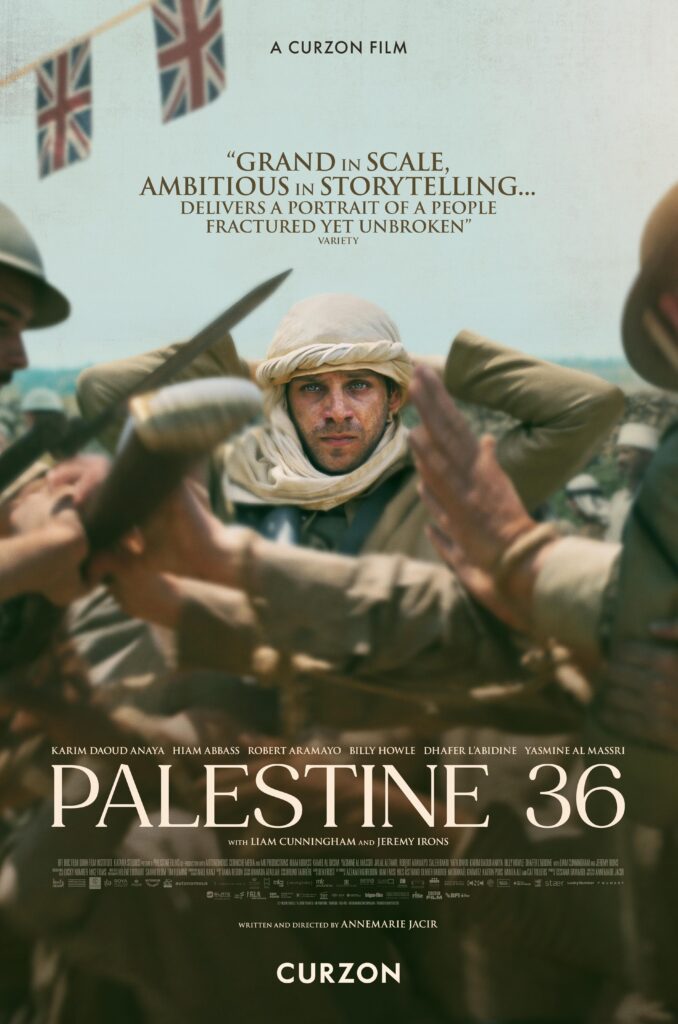
The British villains are somewhat ‘balanced’ by the ineffectual but well-meaning civil servant Thomas Hopkins (Billy Howle). However, Hopkins’s (and. to a lesser extent, Wauchope’s) muddled confusion gives the impression that British policy was driven by accession to Zionist demands at every turn. Aside from Wingate’s Christian Zionism, it is unclear why this is. The oil pipeline destroyed by the rebels in one scene gives a hint as to why British policy-makers were so eager to maintain control of Palestine, but there was no unanimity among the British élite regarding the best way to do this. The Tory ‘die-hards’ who had opposed any measure of independence for Ireland were also bitterly anti-Zionist. While some British officials saw Jewish settlers as potentially a loyal garrison, their view of them was shaped by a pervasive anti-Semitism that presumed that Jews and Arabs were of similar (and lesser) racial stock. In Palestine 36 the Jews are only observed by Palestinians from through the barbed wire of their fortified settlements. This is, of course, realistic, but it is also partial; Arab and Jew did interact in contemporary Palestine in numerous ways, including in communist politics. And ultimately the British and the Zionists would clash, adding another layer of complexity to the conflict.
One of the many tragedies of the Palestinian struggle is that for decades the Palestinians themselves became invisible, to the West at least, and the events powerfully recreated in this film were largely forgotten. It is to Annemarie Jacir’s immense credit that she has introduced them to a modern audience.
Brian Hanley is Assistant Professor in Twentieth-Century Irish History at Trinity College, Dublin.