
By Janus T. Saito-Madsen
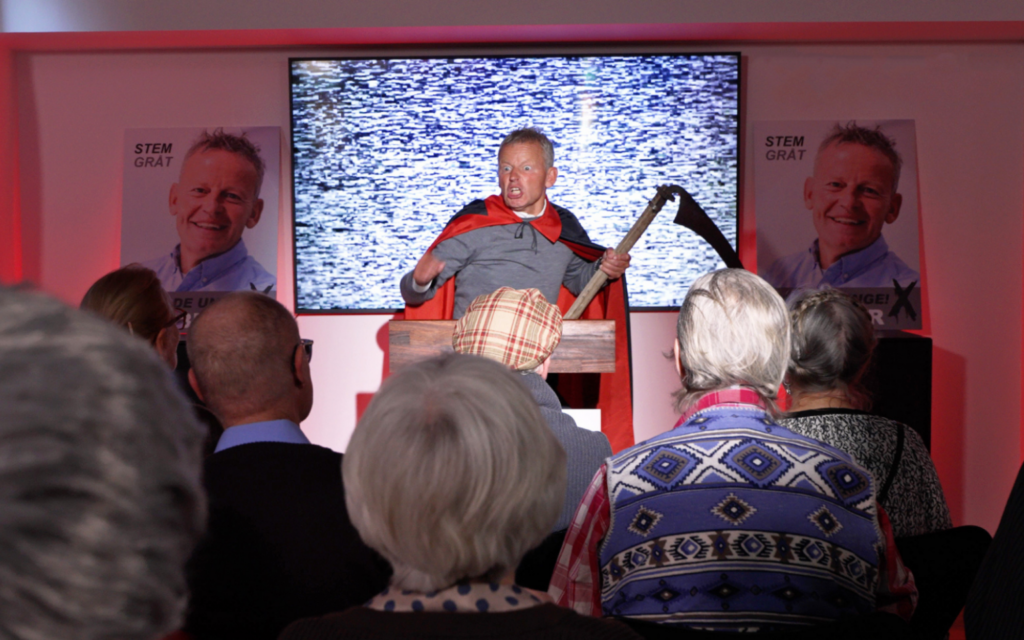
In Denmark we have a word for what’s happening to history on television—‘Bubberification’, named after Bubber (Niels Christian Meyer), a beloved children’s TV host who now fronts major history documentaries despite having no historical training. The name is affectionate but the phenomenon it describes is not.
The pattern will be familiar to anyone who watches public service broadcasting across Europe. Commissioning editors have decided that academic historians are too dry, too complicated, too difficult for modern audiences. The solution? Bring in personalities who can make history ‘accessible’. Give them a personal journey. Let them discover the past on behalf of viewers who, the implicit assumption runs, cannot be trusted to discover it themselves. This is not simply a question of presentation style. It reflects a fundamental shift in how broadcasters conceive of their audience—and of history itself.
In Scandinavia, popular history programming has settled into two dominant formats. The first is the presenter-led journey: a celebrity travels to historical locations, asks questions of experts and reacts with appropriate wonder or horror. The host becomes the centre of the narrative. His or her emotional responses guide the viewer’s own. The history itself becomes secondary to the experience of encountering it.
The second format is the historical drama-documentary—lavish costume productions featuring well-known actors, launched and marketed as documentaries but functioning as historical fiction. Denmark’s recent series on the Mærsk shipping dynasty is a case in point. It presents itself as telling the true story of how events unfolded, but drama requires narrative choices, invented dialogue and imagined motivations. What arrives on screen is fiction dressed in the clothes of documentary, carrying an implicit claim to truth that fiction does not normally make. Both formats share a common assumption: that audiences cannot engage with history directly. They must be guided, entertained, given emotional anchors. The past must be processed and packaged before consumption.
The problem runs deeper than format. Behind these programmes you will rarely find historians. Production teams are drawn from journalism and drama—professionals skilled in storytelling and audience engagement but not trained in the particular disciplines of historical analysis. The difference matters more than broadcasters seem to realise.
A journalist asks: what happened? A dramatist asks: what makes a good story? A historian asks: what can we know, how do we know it and what remains uncertain? These are fundamentally different questions, and they produce fundamentally different content.
Occasionally a historian does present a programme, but this remains the exception rather than the rule. More troubling is that the entire production apparatus behind the camera lacks historical training. Researchers, producers, directors, scriptwriters: they bring skills in narrative and audience engagement, but they approach the past as raw material to be shaped rather than as a discipline with its own methods and ethics. When historians are involved, it is typically as consultants—brought in to check facts, not to shape narratives. The interpretive work, the framing, the selection of what matters and what doesn’t: this remains in the hands of people for whom historical complexity is a problem to be solved rather than a reality to be conveyed.
The result is programming that presents history as settled, known, unambiguous—a story with clear heroes and villains, causes and effects, beginnings and endings. The messiness of the past—the competing sources, the uncertain motivations, the events that meant different things to different people—is cleaned away. What remains is heritage entertainment.
This pattern plays out differently across Scandinavia, but the underlying dynamic is consistent. Norway has developed an almost ritualistic attachment to Second World War resistance narratives. The occupation and the fight against it have become foundational myths, endlessly recycled in ways that confirm national self-image but rarely challenge it. The uncomfortable questions—about collaboration, about those who simply survived, about the choices ordinary people made—remain largely unexamined in popular media. Sweden maintains a peculiar silence about its wartime refugee policy. Between 1940 and 1942, thousands of Jews and other refugees were turned away at Sweden’s borders. The crucial German troop transports that crossed Swedish territory and the iron ore exports that fed the Nazi war machine are known to historians but largely absent from public memory.
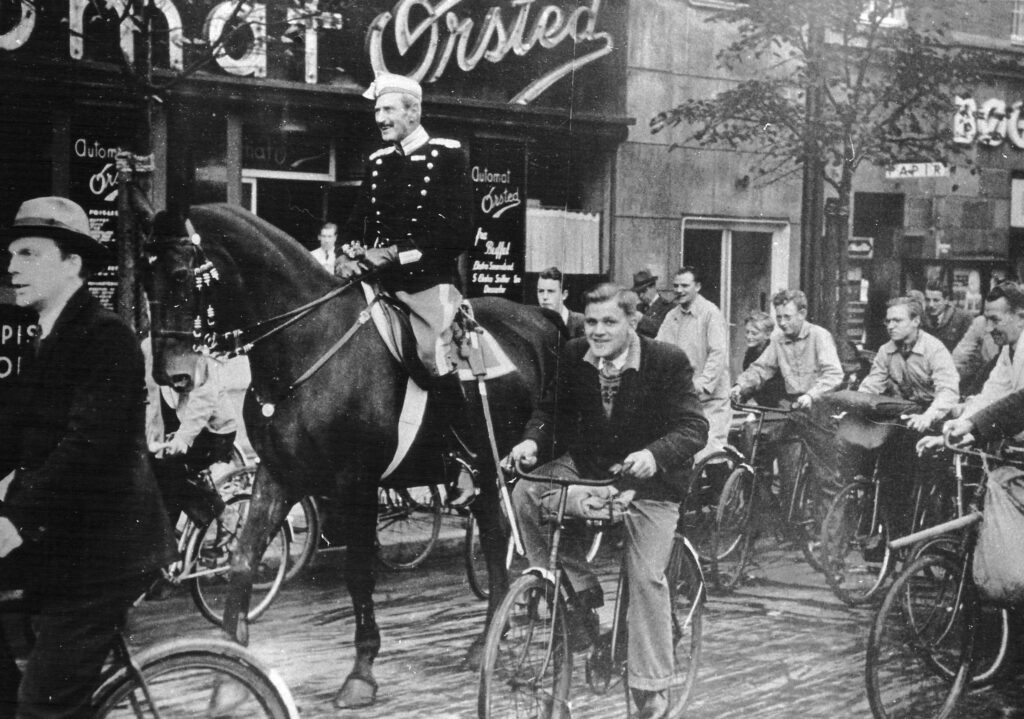
And Denmark’s own position was hardly straightforward. We were a ‘protectorate’ under Nazi occupation, our Social Democrat-led government continuing to function, our factories producing for the German war effort. The heroic narrative of the 1943 rescue of Danish Jews—genuine and remarkable as it was—has tended to overshadow the preceding years of accommodation. This remains contested terrain in Danish memory, and contested terrain makes for uncomfortable television. Three Scandinavian countries, three different ways of avoiding difficult history. The mechanisms differ but the effect is the same: a public offered comfort rather than complexity.
What unites these tendencies is a profound paternalism—a conviction that audiences cannot handle ambiguity, cannot tolerate uncertainty, cannot be trusted to form their own interpretations. This assumption is both insulting and self-fulfilling. When broadcasters consistently present history as simple, audiences lose the habit of engaging with complexity. When every programme offers a clear narrative with emotional guideposts, viewers come to expect this. The capacity for independent historical thinking atrophies from disuse.
This matters because history is not simply a collection of facts about the past. It is an ongoing argument about what the past means and how it shapes us. When we remove that argument from public view—when we present only conclusions, never processes—we impoverish public discourse.
I suspect that Irish readers will recognise elements of this pattern—the pressure to make history ‘relevant’ and ‘accessible’, the tension between rigorous scholarship and broad public engagement, the question of which stories get told and which get quietly shelved. Yet Ireland has navigated this tension with some success. Programmes like RTÉ’s The History Show and NewsTalk’s Talking History demonstrate that rigorous history and genuine accessibility need not be mutually exclusive. These programmes treat their audiences as intelligent adults capable of engaging with complexity. They prove that the choice between scholarly rigour and public engagement is a false one.
This is not an abstract debate about media formats. As AI-generated content floods the internet and trust in institutions erodes, the question of who speaks for History matters more than ever. Generative AI can produce plausible historical narratives at scale—confident, fluent and entirely unmoored from archival evidence or scholarly debate. It represents the ultimate Bubberification: history as content, endlessly generated, requiring no expertise to produce.
If we have already trained audiences to accept pre-packaged historical narratives without question, we have left them defenceless against this new flood. If the only history people encounter is history-as-entertainment, they will have no framework for distinguishing between researched interpretation and confident fabrication.
The defence against this is not to make history more entertaining. It is to rebuild respect for the skills that historians bring: the ability to read sources critically, to acknowledge uncertainty, to hold multiple interpretations in mind and to resist the seductive pull of simple stories. This requires trusting audiences with complexity. The alternative is a public increasingly unable to distinguish between history and heritage entertainment—and, soon enough, unable to distinguish either from AI-generated noise. We owe our audiences more than that. We owe them the respect of assuming that they can think.
Janus Tobias Saito-Madsen holds a degree in History and Museum Studies. He is also a writer and a creator of history festivals and events.