
By David Murphy
This year has seen a series of significant anniversaries connected with the American Revolutionary War, and there is a developing conversation on the role of Irish people on both sides of that conflict. There were many such, and it was not unusual to find several members of the same family serving in the war, either on the Patriot or the British side. (See Victoria Anne Pearson’s article on the Moylan family in the last issue, HI 34.4, July/Aug. 2026.) The Caldwells of County Fermanagh had several members of the extended family who played significant roles. This article will examine three of them, all of whom had one key element in common—a significant association with Native American tribes. Two of these, Lt-Col. John Caldwell and Lt John Caldwell, served as commissioned officers in the Crown forces, while the third, William Caldwell, was a prominent leader of Loyalist irregular forces and their associated Native American allies.
LT-COL. JOHN CALDWELL AND FORT NIAGRA
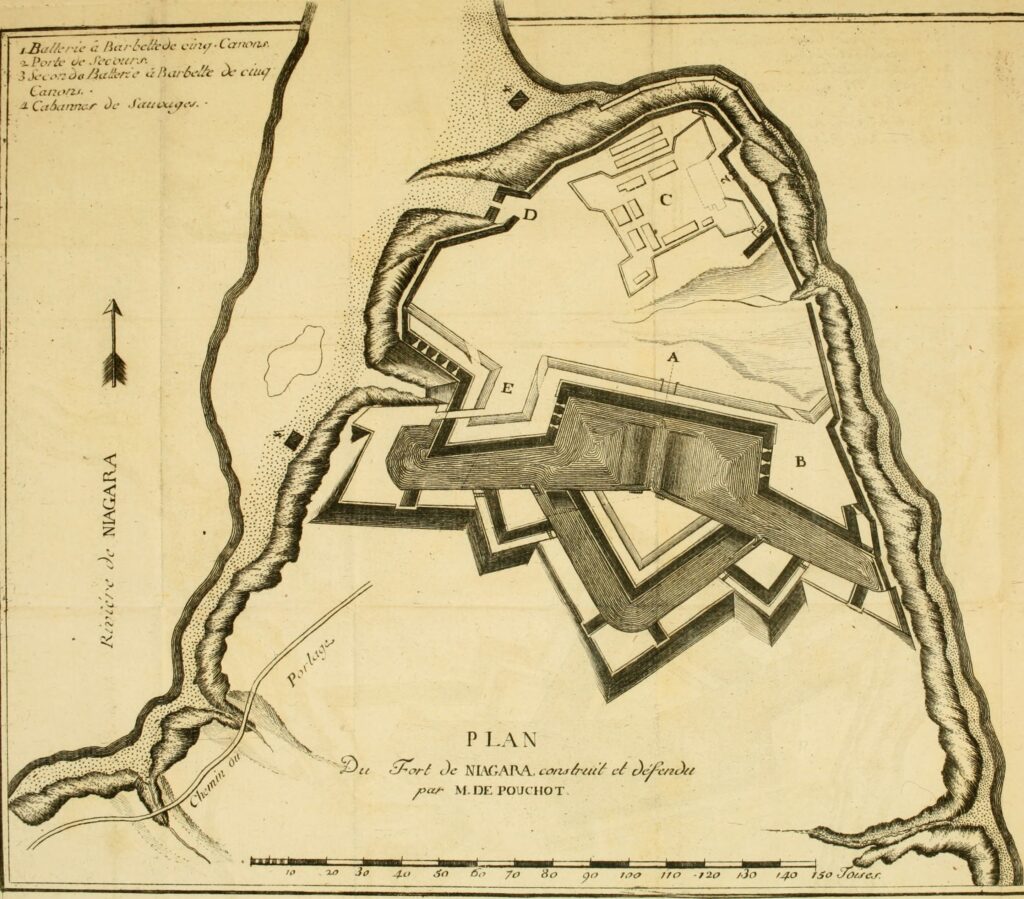
Lt-Col. John Caldwell (1725–76) was born at Castle Caldwell, Co. Fermanagh, on the banks of Lough Erne. He entered the army as his chosen career, being promoted to captain in 1755. Having seen active service during the Seven Years’ War, in 1772 he purchased the lieutenant-colonelcy of the 8th (King’s) Regiment of Foot, which was then stationed in Quebec Province. In 1774 his regiment was assigned to garrison some of the westernmost forts in British territory, and in August Caldwell arrived at Fort Niagara with about 200 men. This fort was important strategically, but Caldwell found it in a dilapidated condition, and his first duty was to begin renovations. Shortly after his arrival, the chief civilian administrator left, and Caldwell became responsible for all matters of military and civilian administration. As a hub of the fur trade, the local population included British settlers, French Canadians and Native Americans. These latter included members of the Seneca and Mississauga tribes, who were fiercely independent and who were the focus of delicate diplomatic efforts. The Native population living around the fort numbered between 2,000 and 3,000 individuals, of whom around 700 were warriors. As a novice in the context of colonial administration and ‘Indian affairs’, Caldwell noted in a letter of 1774 that he felt ‘cast away as I may justly term it upon the most desert part of this Continent’.
Despite the tone of the above comment, Lt-Col. Caldwell was not entirely overawed by the situation, and he very quickly adapted to life on the frontier. He sent a messenger to the Mohawk Valley to make contact with Meath-born Col. Guy Johnson, then the acting ‘Superintendent of Indian Affairs’. Johnson supplied him with a new interpreter, and Caldwell then conducted a series of meetings with local tribes. During the French and Indian War of 1754–63, tribal forces had played a decisive role on the British side. In the deteriorating political climate of the 1770s it was imperative that they be kept onside. Caldwell met with chiefs of the Senecas, the Mississaugas and the Shawnee, all of whom were concerned with the increasing encroachment on their lands. As part of his duties, he was responsible for the distribution of presents to the local tribes, and there were frequent powwows at the fort, usually punctuated with some form of oath-taking. Caldwell strengthened Fort Niagara, while also building armed vessels to control Lake Ontario. Significantly, he developed a network of spies that stretched as far as New York. Fort Niagara would become a destination for Loyalist families and their Native allies fleeing from the Mohawk and Hudson Valleys. These included people of the Mohawk tribe as well as his own kinsman, William Caldwell, who arrived at the fort in 1776. From May 1777, Niagara became the key location for launching raids into Patriot-held territory. In late 1776 Caldwell was under orders to prepare his own troops, and their Native allies, to take the field in the following spring. Ultimately, Lt-Col. John Caldwell would not see the war’s outcome, as he died in October 1776 and was buried at Fort Niagara. Having originally had no experience in tribal diplomacy, his relationship with the local tribes had grown close, and he had been honoured with an Iroquois name (Oquhaenjes or Oghweanjeyo). It was later reported that two chiefs of the Six Nations had asked permission to sit with him on his deathbed.
LT JOHN CALDWELL
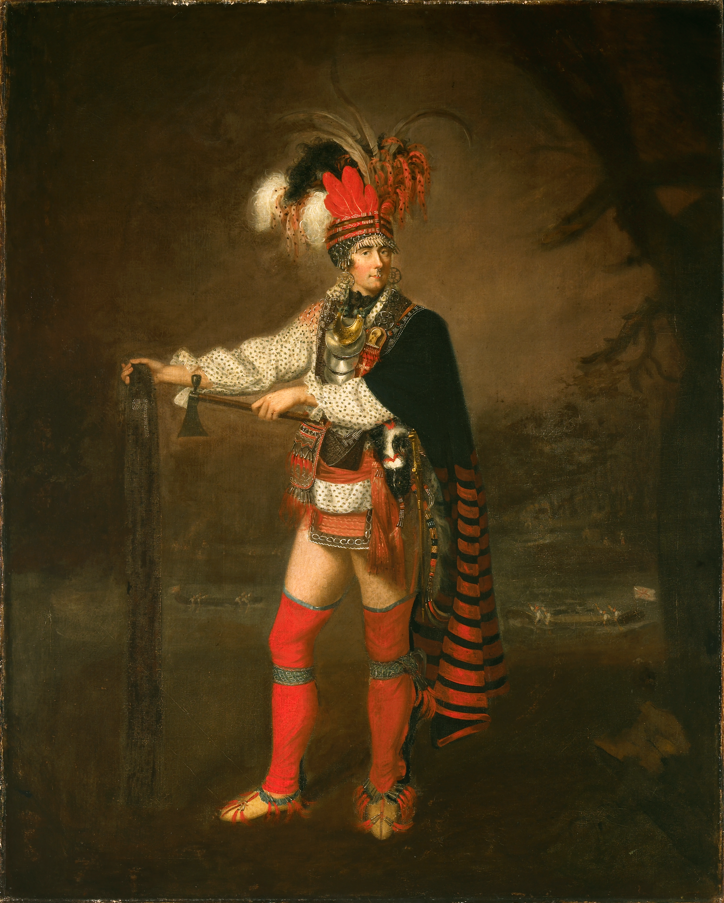
He did survive long enough to see the arrival of his nephew and namesake, Lt John Caldwell (1756–1830), at Fort Niagara. This John Caldwell was the eldest son of Sir James Caldwell (1720–84), the 4th baronet, and he was destined to succeed to the family title and estate. He been tutored for entry into Trinity College, Dublin, in the hope that he would have a significant career, perhaps in politics or diplomacy. His decision to join the army was something of a family scandal, and his uncle was disappointed to see him take a commission, also in the 8th Foot. Like many junior officers of the period, the younger John was in the habit of gambling heavily and had run up considerable debts by 1777. Disappearing to the frontier was perhaps timely, and the younger Caldwell seems to have taken to the frontier lifestyle quickly. In one letter of August 1776 he wrote:
‘A voyage of a hundred or two of miles is looked upon as nothing in this Country, where a bearskin and a blanket, gun, etcetera and a little provision are all that are requisite. I never enjoy myself more, nor my health better, than when on a voyage, with a bearskin to sleep on, and salt pork for breakfast.’
Lt John Caldwell served four years on the frontier and was stationed at Fort Niagara and Fort Detroit. He learned native languages and customs and served primarily on diplomatic missions to Native American tribes in an effort to recruit them for the British war effort, or to convince them to stay neutral. He was made an honorary chief of the Ojibwa tribe (as was Éamon de Valera in 1919). There is some suggestion that Caldwell also had a native ‘wife’, which was not an uncommon practice at the time among officers and officials on the frontier, but this cannot be substantiated. In a significant diplomatic mission to the Ohio Valley in the winter of 1779–80 he met with chiefs from various tribes, including Mingoes, Hurons, Delawares and Shawnees. Surviving records of these meetings suggest that he was met with a lukewarm reception; most of the tribal leaders were friendly but erred on the side of neutrality.
During his time in America Caldwell assembled a large collection of ethnographic material, which included clothing, jewellery, weapons and ceremonial objects. When he succeeded to the baronetcy in 1784, he renovated Castle Caldwell and added a new wing to house this collection and his collection of Irish antiquities. After his death in 1830, this highly important collection of Native American material culture was sold to private collectors. Most of it ended up in the possession of the German collector Arthur Speyer Snr (d. 1958). In 1973 the major part of this collection was bought by the Canadian Museum of Civilisation, in a significant effort to repatriate native material culture. Following a period in India as aide-de-camp to the viceroy, Sir John Caldwell returned to Castle Caldwell and served as governor of County Fermanagh in 1793. He later raised a local militia unit and died in 1830.
WILLIAM CALDWELL
William Caldwell (c. 1750–1822) is variously described in contemporary sources as a cousin or ‘kinsman’ to the two officers above. He was born in County Fermanagh and emigrated to Virginia in 1773. During the course of his life William Caldwell would work as an ‘Indian agent’, an interpreter and a trader, but it is for his military service that he is most remembered. He served as an officer of irregular forces during ‘Lord Dunmore’s War’ in 1774, and during the American Revolutionary War he served as a company commander in Butler’s Rangers. He was based at Fort Niagara and Fort Detroit; described as ‘a very active partisan’, he was almost constantly in the field with his ranger company and tribal warbands. An associate of Joseph Brant (Thayendanegea), the powerful Mohawk war chief, Caldwell engaged in a series of raids into Patriot-controlled territory. (Lord Edward Fitzgerald also met Joseph Brant during his American tour in 1789–90. See Ruairí Nolan’s article in HI 32.1, Jan./Feb. 2024.) These frontier raids represented perhaps the most brutal and merciless phase of the war and were punctuated with episodes in which settlements were torched, and their inhabitants killed or taken prisoner. These forays included the ‘Wyoming Massacre’ (July 1778), the attack on German Flatts in the Mohawk Valley (September 1778) and the raid on Cherry Valley (November 1778). Following the German Flatts raid, Caldwell himself admitted that he and his party ‘would probably have killed most of the inhabitants’ had the local population not been warned of their approach and fled to local forts.
Following the Revolutionary War, he remained active militarily and led a party of volunteers during the Northwest Indian War of 1794, opposing the forces of General ‘Mad Anthony’ Wayne. He served as a lieutenant-colonel of the Essex Militia during the War of 1812. Caldwell was one of the founders of Amherstburg in Ontario, and he also tried to establish a new town for exiled Loyalists on the banks of Lake Erie, referred to as the ‘New Settlement’. He died at Amhertsburg in 1822.
‘MERCILESS INDIAN SAVAGES’
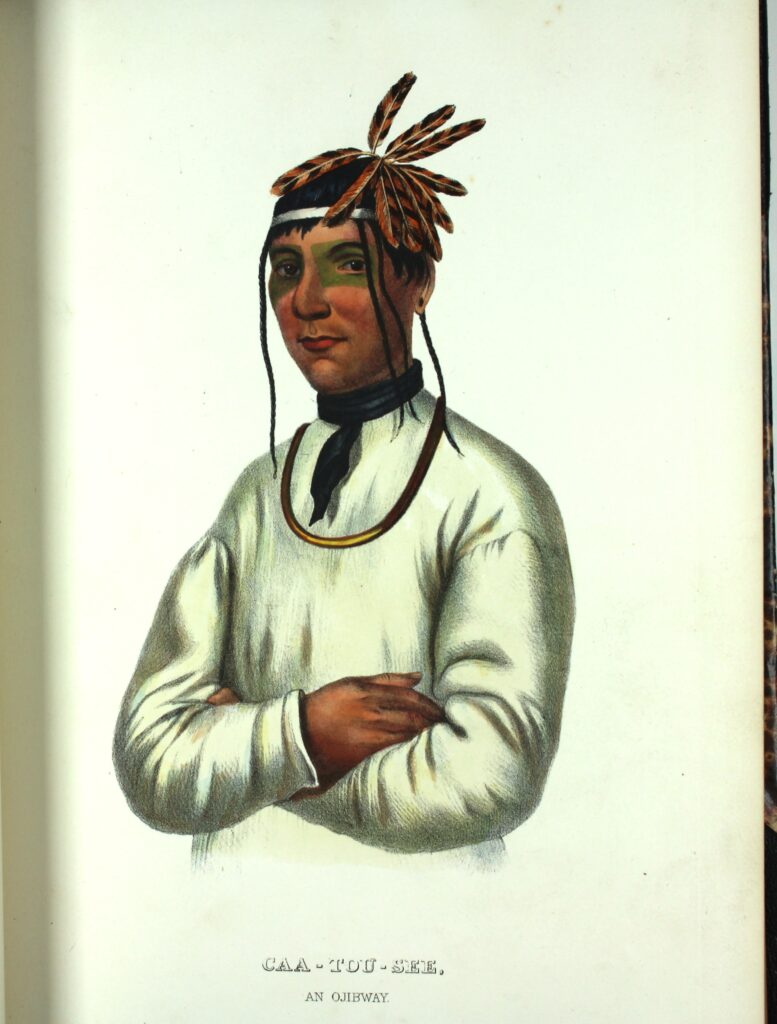
In the American Declaration of Independence of 1776, one of the charges levelled at George III was that he had ‘endeavoured to bring on the inhabitants of our frontiers, the merciless Indian Savages, whose known rule of warfare, is an undistinguished destruction of all ages, sexes and conditions’. In the Patriot narrative of the war William Caldwell was associated with such activity, and he continues to be remembered as a malign figure in the history of the frontier campaign. He appears in Walter D. Edmonds’s historical novel Drums along the Mohawk (1936). In John Ford’s 1939 film adaptation, Caldwell was portrayed as a ruthless villain, complete with eye-patch, by the veteran actor John Carradine.
In 1783 William Caldwell had married Suzanne Baby, and they would ultimately have eight children. While based at Fort Niagara, however, he had a relationship with a Native American woman, said to be a Mohawk, and this union produced a son, William ‘Billy’ Caldwell (1782–1841). Billy Caldwell served as an agent for the British Indian Department, and as an officer of irregular forces during the War of 1812. He later had a significant career as an advocate for indigenous rights. A modern-day confederation of Potawatomi, Odawa and Ojibwa tribal groups, based near Leamington, Ontario, designate themselves as the ‘Caldwell First Nation’.
Castle Caldwell is now a ruin, and the family have long since departed. The careers of the three officers described above show a significant level of involvement in the American Revolutionary War, in particular in the context of the involvement of Native American people. In terms of the modern memory of that conflict, and legacies among Native American tribal groups, the involvement of the Caldwells still has resonances today.
David Murphy is a lecturer in military history and strategic studies at Maynooth University.
Further reading
M. Busteed, Castle Caldwell, County Fermanagh: life on a west Ulster estate, 1750–1800 (Dublin, 2006).
J.B. Cunningham, Castle Caldwell and its families (Belleek, 2020).