
By Clodagh Tait
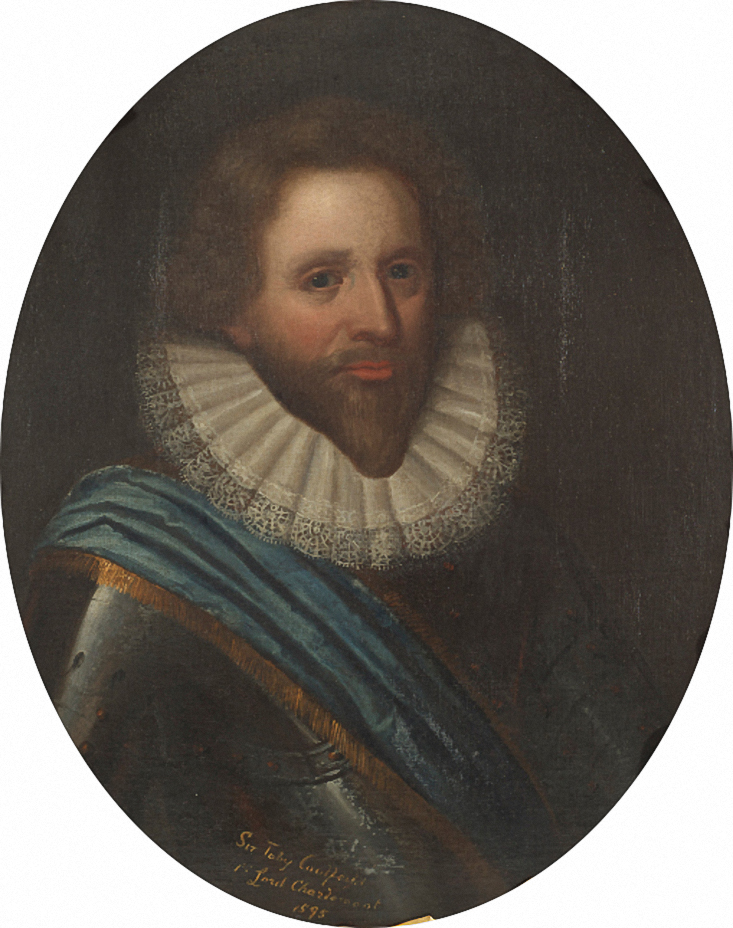
When the earls of Tyrconnell and Tyrone and their associates left Lough Swilly in the ‘Flight of the Earls’ in September 1607, some people were left behind. One was a son of Hugh O’Neill, Earl of Tyrone, and his fourth wife, Catherine Magennis. Conn O’Neill was born in around 1601 or 1602, and when his parents and brothers departed for the Continent he was with his foster-family. Lord Deputy Arthur Chichester reported that ‘The child was by accident left behind, for the earl sought diligently, but by reason he was overtaken by shortness of time, and that the people of these parts do follow their creates [cattle herds] … they are not therefore always ready to be found’. He delegated Sir Toby Caulfeild to locate Conn and take charge of him.
HELD INITIALLY AT CHARLEMONT FORT
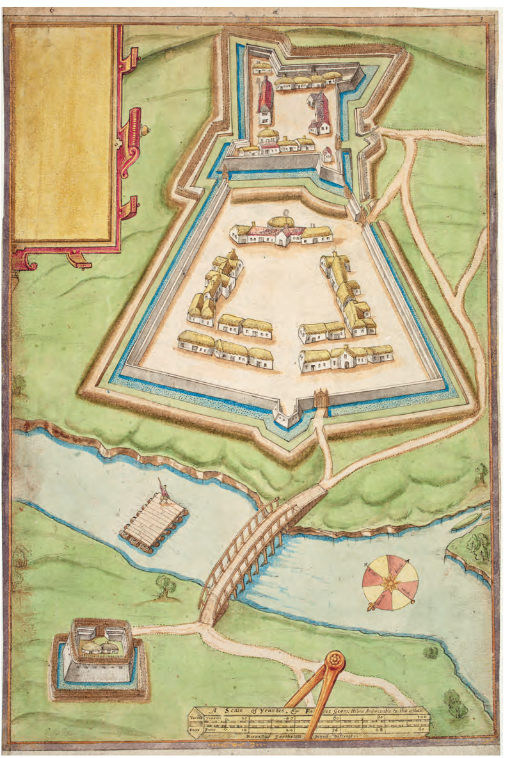
Conn, called Con na Cregagh and Con Roe in early documents, was accommodated at Charlemont, a recently built fort on the Blackwater River. In a 1602 illustration by Richard Bartlett, the fort and associated garrison and village are depicted as a substantial complex of defences and buildings. Con would have lived alongside soldiers, horses and cattle. In 1610, funded by grants from Tyrone’s rents which he had been assigned to collect, Caulfeild was ‘strengthening the fort … and building a house within the same’. The same year, the Countess of Tyrone’s seized goods were allocated to Caulfeild ‘in consideration that he kept Con O’Neil, son to the said Earl, for three years ended at Michaelmas last, 1610, and found [provided] him meat and drink’.
The proceeds of £35 21s. were generous enough, though it is impossible to know how Conn was actually treated. Holding him in Ulster was becoming increasingly risky, however. In April 1615 rumours reached Dublin ‘of a new rebellion intended in Ulster’. There were reports that Tyrone was planning to return, that towns would be burnt and that settlers in the plantation estates would be massacred, or captured and exchanged for prisoners in the Tower of London. It was also alleged that conspirators led by Alexander McDonnell and Brian Crossagh O’Neill ‘had a purpose to steal away Con O’Neile, Tyrone’s son, out of the fort of Charlemont for some further bad design’. Informants said that Brian Crossagh claimed to have ‘a friend in Sir Toby’s house’, a soldier called Ned or Edmund Drumane, whom ‘Sir Toby trusts … as much as he doth any man about him’. When Caulfeild went to Dublin to attend parliament, Drumane would kidnap Conn, who would be kept as a hostage: if things went badly, ‘we can all go to Spain with the boy and be welcome’. Brian Crossagh promised that ‘when we have Con, Sir Toby will never be seen in Tyrone again’.
SCHOOL IN DUBLIN AND ETON
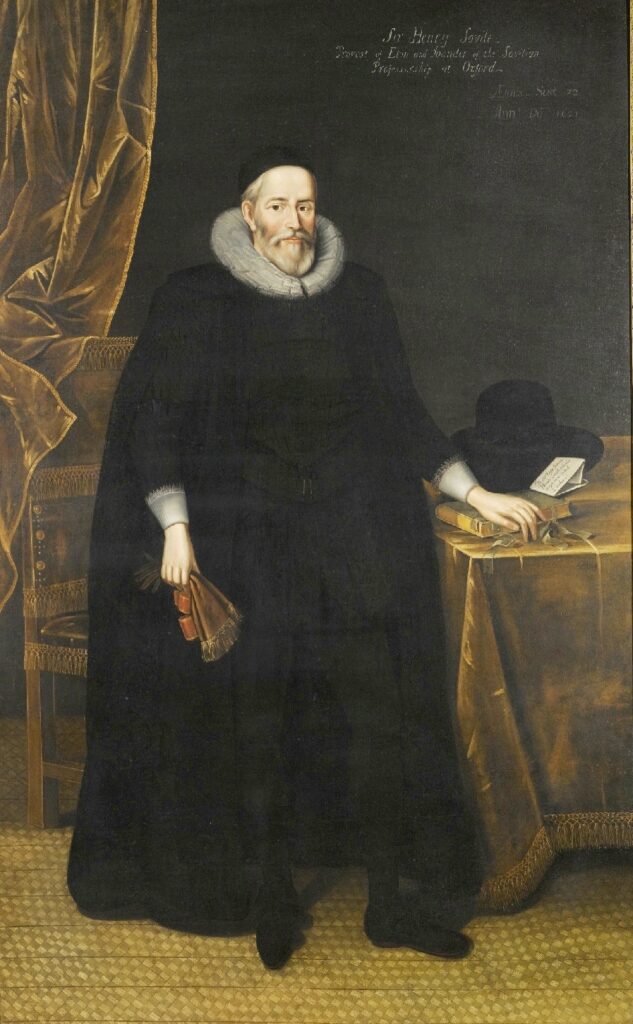
Chichester removed Conn from Charlemont and placed him at school in Dublin. Chichester told the English Council that ‘He hath now attained the age of fourteen or fifteen years, and the eyes of the country are much fixed upon him … He is not safe here.’ The Council reminded him of a previous proposal to send ‘the sons of divers noblemen and gentlemen of that kingdom’ to be educated in England. The hope was that their experiences would thoroughly Anglicise them, and encourage the conversion of any Catholics. Chichester was ordered to send Conn to England ‘under safe convoy’. He was informed in July that, ‘as to Conn O’Neil, Tyrone’s son, His Majesty has disposed of him, and sent him to Eton College’. The provost, Sir Henry Savile, was instructed to bring him up ‘in virtue and religion’ and to be ‘watchful over his behaviour and company’.
We know something about Con’s experiences as a ‘fellow commoner’ from the financial records of his time at Eton. In March 1616 an order was made for the payment of £20 5s. ‘for the charges and expenses of Con O’Neale, son to the Earl of Tyrone, at Eton College’ since the previous September. A sum of £42 was paid out for the period between Christmas 1615 and midsummer 1616, and a further £99 for 1616–17. Among the costs were the £20 per annum paid to Conn’s servant, George Pierson, who probably provided security as well as service.
Remarkably, several detailed bills for Conn’s activities survive, signed by Matthew Bust, the Eton headmaster. His expenses included fees, accommodation and food for himself and Pierson, and for candles, towels, firing, mending locks, windows and doors, and ‘sweeping his chamber and making beds’. There are bills for paper, a dictionary, a catechism, knives, ink and quills, tuition and ‘learning to write’. In 1619 eight shillings were paid for ‘a desk with boxes’. By 1618 Conn was acquiring books in Latin, including Ovid’s Metamorphoses and volumes by Cicero, and later a Greek grammar and Old Testament were purchased. He also was provided with Deus et Rex, a book about subjects’ duty of obedience to the king, and 2s. 6d. was paid on the occasion of his ‘taking an oath’, maybe the oath of allegiance. Payments to a fletcher and for arrows, strings and a bow case indicate archery lessons, and he also received a ‘shooting glove’. ‘Horse hire’ appears on one occasion. Significant amounts were paid to the tailor and shoemaker, and for shirts, bands (collars), cuffs, gloves and two expensive hats. Conn regularly visited a barber, and sums were paid for ‘counsell when he was sick’, attention to a sore finger, ‘for curing his sore face’ and ‘for healing his knee’. That he took part in the schoolboys’ festivities is seen in the 1s. 6d. ‘given to him upon salting day’, a celebration when new students were showered with salt and money was collected.
Conn must have met other Irish teenagers at the school. In 1619 Terence O’Brien, likely a relation of the O’Briens of Thomond, wrote to the Privy Council from Eton, requesting that a search be made for his possessions lost in a shipwreck on the Welsh coast. David, Viscount Buttevant, of County Cork (later Earl of Barrymore) seems to have attended between 1617 and 1620.
TOWER OF LONDON
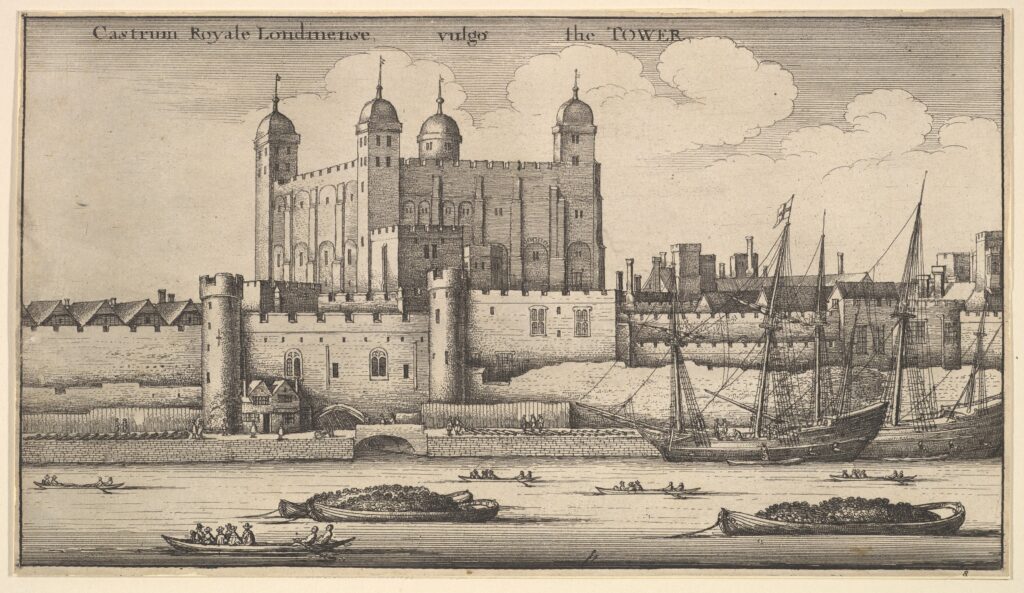
The eventual change in Conn’s fortunes was abrupt. On 12 August 1622 the London Privy Council ordered the new provost of Eton to hand Conn over, and the lieutenant of the Tower of London, Sir Allan Apsley, to take him into custody. On 22 August, Apsley recorded that ‘a son of the Earl of Tyrone’s, being at Eaghtan’s Colledge at scoole, was taken thence and committed by warrant … He is of a civill and good condition.’ Clearly his education had supplied Conn with the manners and appearance of a gentleman. It is possible that he encountered some of the other Ulstermen in the Tower, but nothing is known of how long he spent there or his eventual fate. His father had died in Rome in 1616, making Conn both more and less of a threat. He may have been quietly assassinated: his brother Brian was thirteen when he was mysteriously found hanged in Brussels in 1617. Alternatively, he may just have died of neglect, plague or despair—forgotten again.
There’s a possible twist in this tale. On 10 October 1616, not so long after news of the Earl of Tyrone’s demise would have reached London, someone called Con O’Neale, ‘late of High Holborne’ (a street near the Inns of Court), stole nearly £4 worth of clothing and a sword from Nicholas Fuller, gentleman, possibly the lawyer of that name. Curiously for the Middlesex sessions rolls, this Conn is assigned no ‘status indicator’—most of the other men who appeared before the court are identified by an honorific title (Sir, gent., esquire), a general identifier of relative standing like yeoman, husbandman or labourer, or a trade or profession. This Con O’Neale could have been executed for such a theft, but he was instead found guilty of stealing ‘to the value of eleven pence’ and was sentenced to be whipped. Could it be our Conn, 25 miles from school (or having been expected to enrol at the Inns of Court), trying to make a getaway? Probably not, but I like to imagine it.
By abandoning his search for his son in 1607, Tyrone condemned Conn to a life of difficulty and danger. His plight reminds us of the pressures that projects of state-building, colonisation and Anglicisation in Ireland imposed on many boys from Gaelic and Old English noble and gentry families. Others similarly found ‘the eyes of the country’ on them, as they sought to navigate the exigencies of corporate family interests, the demands of the state, the expectations of traditional allies, and the machinations of those who coveted their lands and feared their influence.
Clodagh Tait is a lecturer in History in Mary Immaculate College, Limerick.
Further reading
R.A. A.-L., ‘Con O’Neale’s Eton school bills’, Etoniana 21 (20 June 1917).
F.J. Biggar, ‘Young Con O’Neale’s school bill’, Ulster Journal of Archaeology 3 (3) (1897), 140–3.
F. Devon (ed.), Issues of the Exchequer … during the reign of King James I (London, 1836).
C.P. Meehan, The fate and fortunes of Tyrone and Tyrconnel (Dublin, 1868).
Middlesex Sessions Rolls: 1616 (https://www.british-history.ac.uk/middx-county-records/vol2/pp119–126).
T.W. Moody, ‘The school-bills of Conn O’Neill at Eton, 1615–22’, Irish Historical Studies 2 (6) (1940), 189–205.