
By Jack Hepworth
To many outside observers, the Gaelic Athletic Association (GAA) might have appeared in robust health in the 1950s. At the élite level of hurling and Gaelic football alike, the All-Ireland championships attracted enormous interest. On 27 September 1953, 86,000 spectators packed into Croke Park to watch Kerry overturn a half-time deficit and defeat Armagh in a memorable All-Ireland football final. The crowd was the biggest recorded at an Irish sporting event. Meanwhile, at club level, dedicated players and administrators formed new teams: by 1963, for the first time, more than 3,000 clubs were affiliated with the GAA.
However, the mass emigration of the 1950s acutely affected Gaelic games’ most quintessentially local units: the parish and rural townland. Facing economic stagnation and rising unemployment, more than 500,000 people left Ireland for Britain in the 1950s. A further 90,000 crossed the Atlantic, bound for the USA. Most emigrants were young: one in three Irish people under the age of 30 in 1946 had left the country by 1971. The exodus affected hundreds of GAA clubs across Ireland. Severe depopulation depleted many teams’ playing ranks. In County Tipperary, for example, Cappawhite lost twenty club members in 1952 alone. In County Donegal, ten Ardara players emigrated in just twelve months.
COLLAPSE OF TEAMS AND COMPETITIONS
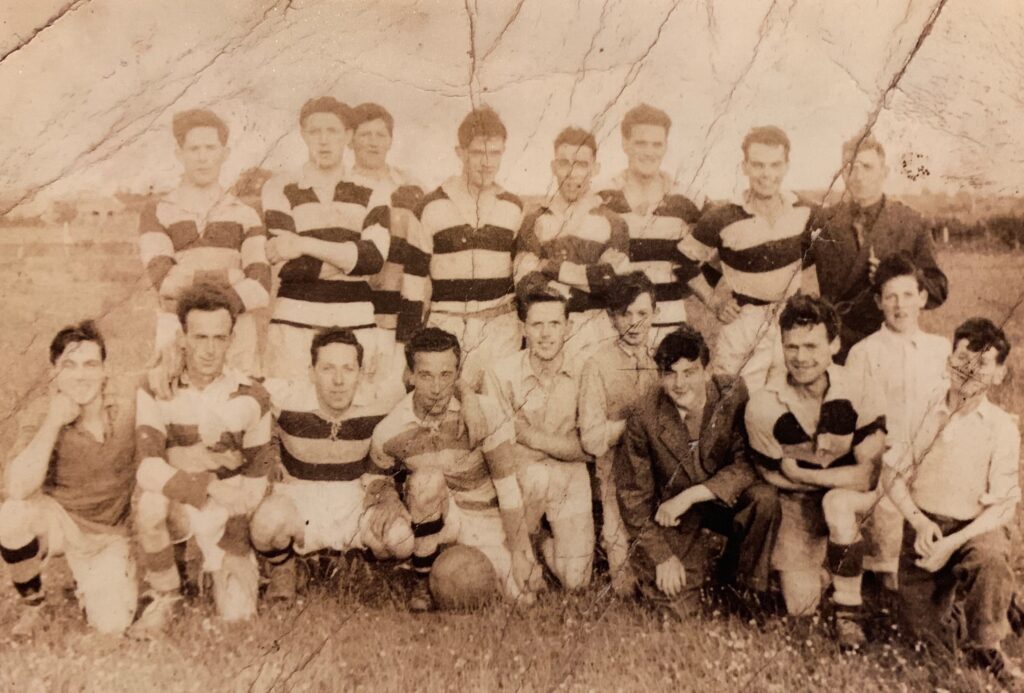
Despite club administrators’ best efforts, some teams and competitions collapsed. In 1952, just one year after winning the Donegal minor football championship, Mountcharles officials were unable to field a minor, junior or senior team for the first time in their history. The Donegal GAA board warned that, if emigration continued, as many as half of the county’s clubs could fold. In south Galway a GAA official reported that the divisional championship had shrunk to a six-team competition of a lamentably poor standard. Similarly doleful reports resounded across county conventions in the 1950s.
Emigration adversely affected even the strongest clubs and inter-county teams. On 22 September 1957, Seán Cunningham heroically scored Louth’s decisive goal in the All-Ireland final in front of 72,000 spectators at Croke Park, but just three months after lifting the Sam Maguire Cup he emigrated to the USA. A celebratory gala for the victorious Louth team poignantly doubled as his farewell event. Meanwhile, in County Derry, a formidable Lavey team were still celebrating their championship victory in 1951 when three of their star players emigrated to England. Inspirational players were greatly missed. After Billy Devane of Garrymore emigrated in 1957, his club temporarily brought him home from London to play in their South Mayo football final.
In several counties, GAA administrators feared for the future of their games. Losing players rapidly, many clubs reluctantly downgraded their teams to junior status. In County Westmeath, the Moate club withdrew from senior competition for the first time in six decades and regraded to junior. In County Sligo, while clubs stopped short of formally merging, several pooled resources, taking turns to run senior teams and transferring players between clubs.
Warnings from bishops and political leaders that ‘the best’ of Irish youth were emigrating echoed through Gaelic games. The GAA hierarchy interpreted emigration not only as a setback for their sports but also as an existential challenge to the Irish nation. Some traditionalists were particularly unsympathetic towards young emigrants. The ‘evil’ of emigration dominated Donegal county secretary Eamon Ó Muineacháin’s 10,000-word annual report in 1956. Ó Muineacháin claimed that emigrants in British cities had ‘lost all respect for their nationality and human dignity’. Similarly, Munster GAA chairman Frank Sheehy told the provincial convention in 1958 that no member of the association should contemplate emigrating unless absolutely compelled.
EMPLOYMENT SCHEMES PROPOSED
Elsewhere, some especially practical GAA officials considered how they might combat the economic causes of emigration. In the rural north-west the authorities proposed employment schemes for GAA members. The club in Fenagh, Co. Leitrim, moved the county convention of 1951 to pressure TDs to develop industry in the region. A ‘leading legislator’ on the Donegal county board proposed in 1959 that clubs should establish de facto labour exchanges to find work for local men. County chairmen, including Liam Hastings of Longford, promoted ‘buy Irish’ campaigns, imploring GAA members and the wider public to support domestic producers. But while some prominent administrators asserted the GAA’s political influence, others were resigned to a continuing exodus. Donegal county secretary Frank Muldoon told the Ulster GAA board in 1956 that clubs must accept that one in three players would emigrate. Ulster secretary Gerry Arthurs agreed that it was ‘not apparent’ that any government could avert the ‘great tragedy’.
As emigration especially depleted senior teams, many county and divisional boards decided to prioritise their younger players. In County Limerick, the Fedamore GAA club instructed its remaining senior players to coach the club’s minor team. When several Fermanagh senior footballers emigrated, county secretary Séamus Ó Ceallaigh exhorted the county board to concentrate on the minor team. Dignitaries presenting medals to the minor championship winners warned them against the ‘foolishness’ of moving to Britain.
GAA REVITALISED OVERSEAS
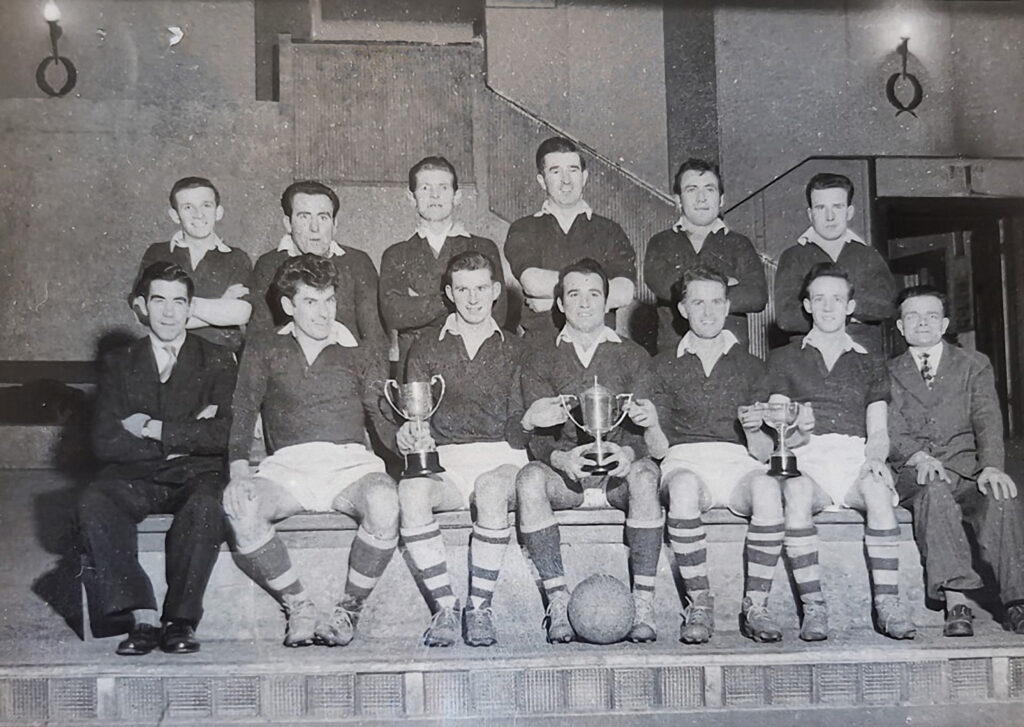
But while legions of clubs across Ireland found it increasingly difficult to compete, emigrants were revitalising Gaelic games overseas. The GAA in Britain reached new heights in the 1950s. By 1969, 155 clubs were affiliated to boards in Britain. Although half of these clubs were in London, GAA strongholds extended to other industrial regions, with 34 clubs in the Warwickshire area and 25 more in Lancashire and Yorkshire.
Irish emigrants in post-war Britain boosted a GAA scene that had originated in an earlier diaspora’s cultural revival. Pioneering exiles had played Gaelic games on foreign shores ever since the GAA’s formative years. Just twelve years after Michael Cusack founded the Association in 1884, committed emigrants founded the London GAA. Some of the finest exponents of Gaelic games lived in exile. London football and hurling teams contested nine All-Ireland finals between 1900 and 1908, and in 1901 the London hurlers defeated Cork to win the All-Ireland title. In the 1920s the Association’s most prestigious prizes were named for Sam Maguire and Liam MacCarthy, who had both chaired the London county board at the turn of the century.
In the 1950s a new generation of Irish emigrants maintained a voracious appetite for Gaelic games. From 1958, the London county board rented Wembley stadium, the home of English soccer, for annual Whit Bank Holiday games. Challenge matches between inter-county teams delighted crowds. In June 1962, 42,000 supporters flocked to Wembley to watch Tipperary’s hurlers defeat Dublin and Roscommon’s footballers beat Kerry.
COUNTY LOYALTIES MAINTAINED
In Britain, the diaspora’s sporting networks reproduced the powerful county loyalties that defined the highest level of Gaelic games. In Birmingham, for example, exiles from County Roscommon formed the renowned St Paul’s club. Some teams transplanted even more local networks across the Irish Sea. In Coventry, sixteen of the seventeen committee members who formed the Four Masters GAA club in 1955 were Donegal exiles. Their new team’s blue and white jerseys mirrored those of their namesake club in Donegal town. In Newport, south Wales, four families from Ballyshannon helped to found the successful Pride of Erin GAA club. Such kinship ties were common in many new clubs in the 1950s. In Bolton, for example, the Smith brothers accounted for four of the nine Cavan men who won the Lancashire championship with Shannon Rangers in 1957.
For GAA members in Britain, sports news from Ireland formed an abidingly emotional connection to home. When the GAA club in Westport, Co. Mayo, opened new grounds in 1958, a Westport exile in Worcester, Austie Kerrigan, wrote to congratulate his home club: ‘the dream of many a Westport Gael has been realised’. Like many Irish emigrants in Britain, Kerrigan and his friends regularly scoured newspapers from their homeland for GAA updates, which ‘brought to each and every one of us happy thoughts and memories, and made us feel proud we were Irishmen’. For emigrants many miles from home, exchanging sports news with county comrades renewed a vital sense of belonging. In 1961 a former Donegal inter-county footballer recorded how he and his ‘fellow-exiles’ in Birmingham regularly reminisced about their playing days and cherished ‘our young emigrants’ who supplied sporting updates from Donegal. The county’s exiles, he wrote, would ‘dearly love’ to see their team win a first Ulster senior football championship.
Sporting emigrants longed to see their native county ascend to the pinnacle of Gaelic games and become All-Ireland champions. Writing home from Edmonton, Canada, in 1957, six Louth exiles eagerly anticipated the All-Ireland football final against Cork. Wishing their heroes good luck, the emigrants reported that it was ‘just like being back home to read all about the good performances the Louth team put up in reaching the All-Ireland Final’. Many exiles’ affinities with their homeland peaked on All-Ireland final days. Reflecting on the All-Ireland hurling final of 1958, Westmeath native John Keenan wrote movingly from New York of how he and his compatriots ‘were all “glued” to the Radio to hear the famous voice of Michael O’Hehir bring us the Croke Park roar and the game which we all enjoyed. The enthusiasm of the game would make one feel like he was on Hill 16.’
‘SICK OF HARD LUCK STORIES’
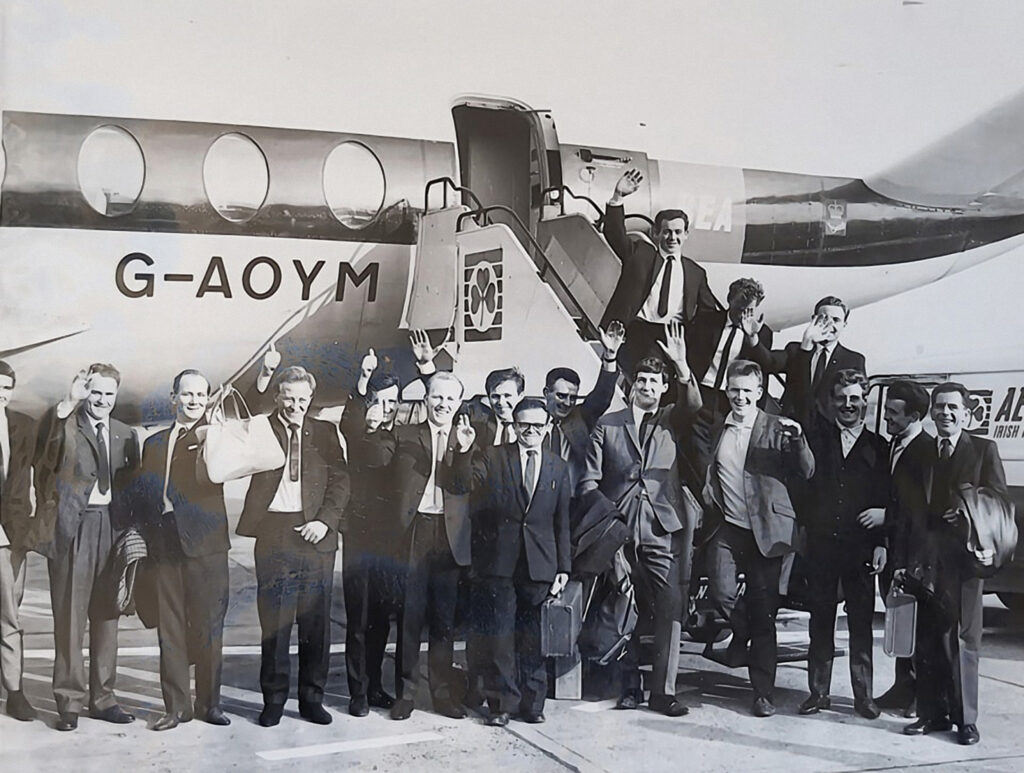
Sometimes, however, exiles’ county passions were less celebratory. When the Leitrim Association of London met in September 1960, the main topic of discussion was their hapless county team’s fourth consecutive Connacht football final defeat. A prominent former county player moved the association to censure the Leitrim GAA board: ‘We are sick of the hard luck stories [and] repeated failures’. In Manchester in 1959, a former club player from Donegal was similarly dismayed by his county’s footballing tribulations. He was ‘saddened’ and ‘humiliated’ to read the Donegal Democrat’s reports of ‘blackguardism … ruining’ club matches and hampering a county team which had never won an Ulster championship. The Donegal emigrant testified to the team’s tremendous importance ‘for the honour of the county, and for the sake of the thousands of Donegal exiles all over the world’.
Young emigrants in Britain formed exceedingly strong social bonds through GAA clubs. In 1956 Thomas Murphy from Tuam, Co. Galway, died in an industrial accident at the gasworks in Bolton. He was just 21 years old. After his tragic death, his Shannon Rangers clubmates rallied: 24 of Murphy’s teammates carried their friend’s coffin to Mass in Bolton and subsequently arranged for his remains to be taken home to Ireland.
EXILES’ EXHIBITION MATCHES
(Patsy Meehan/Sharon Dixon)
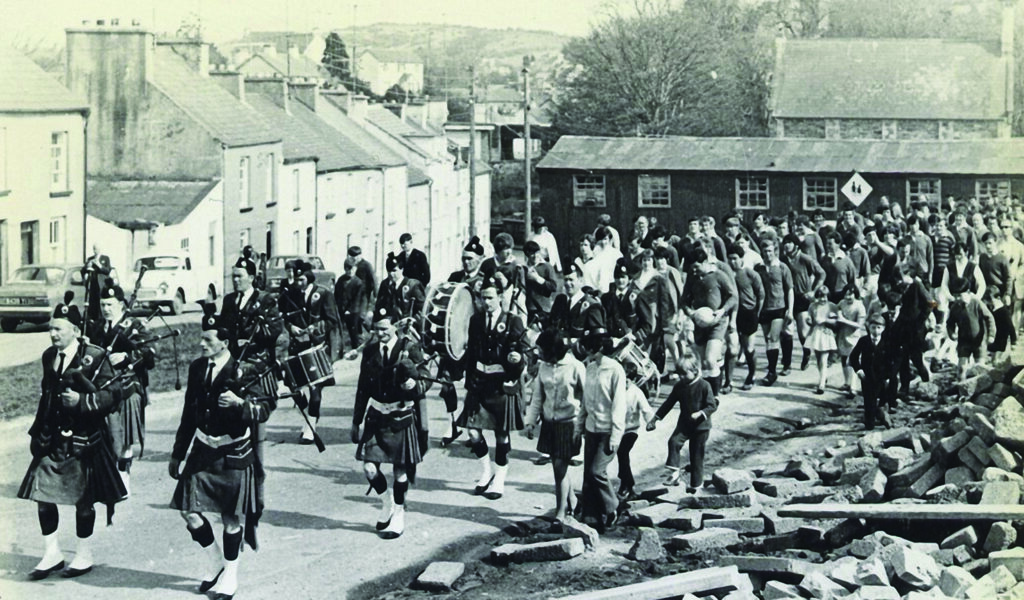
Enterprising GAA clubs in Britain sustained close links across the Irish Sea. Each summer, many clubs in Ireland welcomed their exiles home for exhibition matches. In 1956, for example, the Brian Boru hurlers—mostly comprising exiles from County Clare—won the London championship and then toured their native county, playing a challenge match at Cusack Park in Ennis. At a post-match reception, the Clare county board treasurer hailed these ‘fine … young men’ as great ambassadors for their county: it was ‘a grand thing for the people at home to know they were represented in such a manner abroad’. In 1971 the Coventry Four Masters were guests of honour in Donegal town, where their namesake club hosted an exhibition match followed by a 400-strong dinner-dance at the Abbey Hotel. Revisiting his home town, Patsy Meehan—a founding member of the Coventry club in 1955—said that the marvellous reception made all the exiles’ labours worthwhile.
Emigrants relished these matches for the fond acquaintances they renewed. They also hoped that such visits would prevent their generation’s best sportsmen from being lost to the association in exile. In 1958 a Donegal emigrant implored his county’s GAA board to organise summer matches for the ‘exiles’—not only as a ‘great attraction’ for the public but also to strengthen the county team. If selectors ‘fully tapped’ emigrants’ potential, he argued, Donegal would be genuine contenders for the Sam Maguire Cup. Although GAA authorities welcomed exiles back to Ireland each summer, their enthusiasm did not necessarily extend to reciprocity. In 1956, when the County Roscommon club Elphin asked the Connacht GAA to fund a visit to ex-players in Manchester, the provincial council refused, lest the trip encourage more players to emigrate.
Ironically, emigration was always braided through the history of an organisation devoted to uplifting Irish culture. Ever since Michael Cusack founded the GAA in 1884 for the ‘preservation and cultivation of national pastimes’, many of its members pursued those objectives in exile. A later spike of emigration in the 1950s again depleted the GAA’s ranks in Ireland. Only the determination of officials and players sustained the games through those difficult years. Meanwhile, however, thousands of Irish emigrants invigorated Gaelic games in foreign lands. Especially in Britain, the 1950s diaspora led a new phase of Irish cultural revival. The ironies were not lost on the senior organisers of Gaelic games. Hugh Duggan, chairman of the West Donegal GAA board, spoke for many in the association when he said in 1950 that, while he deeply regretted mass emigration, he was encouraged by how many exiles served as devoted ambassadors for the games.
Michael Cusack and his colleagues would surely have felt similarly conflicted. They would have deplored the renewed exodus of the 1950s, but they would also have been heartened by how many emigrants played Gaelic games in foreign lands and by how powerfully the games strengthened lasting bonds between Ireland’s exiles and the places and people they left behind.
Jack Hepworth is Lecturer in Public History at Newcastle University.
Further reading
M. Cronin, M. Durcan & P. Rouse, The GAA: a people’s history (Dublin, 2014).
M. Cronin, W. Murphy & P. Rouse (eds), The Gaelic Athletic Association, 1884–2009 (Newbridge, 2009).
F. Harkin, ‘“Where would we be without the GAA?”: Gaelic games and Irishness in London’, Irish Studies Review 26 (1) (2018), 55–66.
S.J. King, The clash of the ash in foreign fields: hurling abroad (Cashel, 1998).