
By Joanne Rothwell
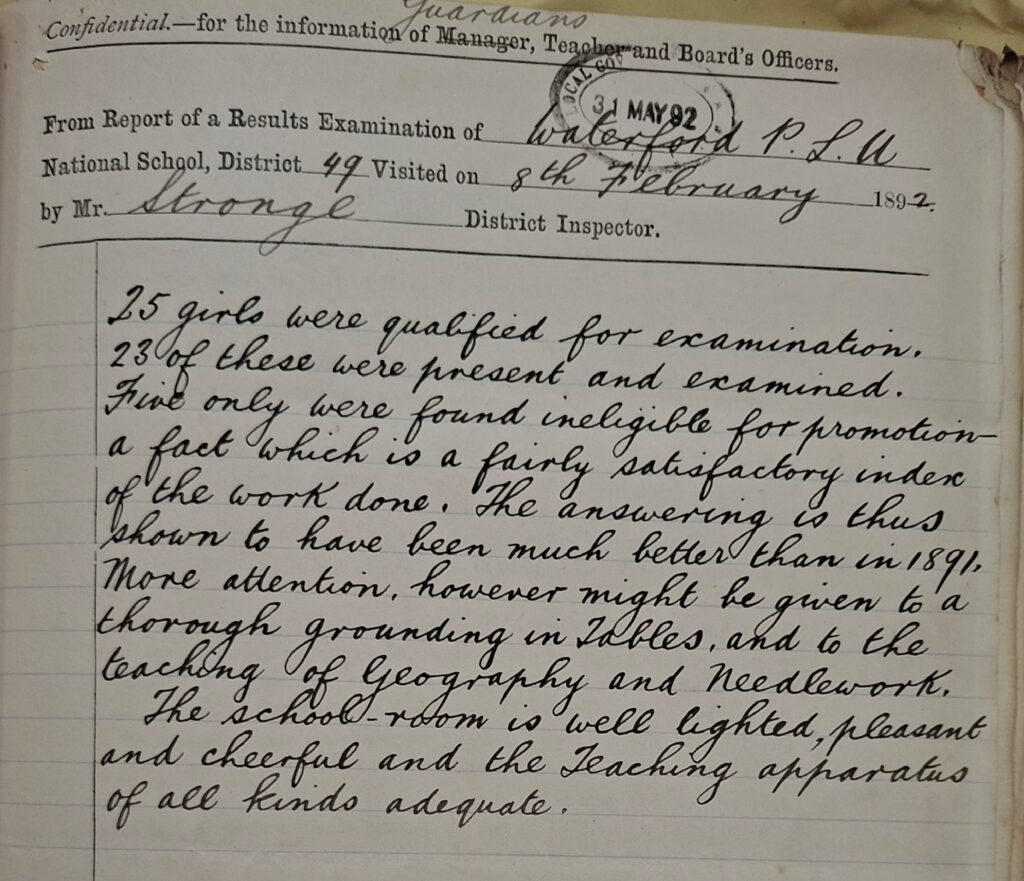
The workhouse schoolmistress was tasked with instructing the children, taking them out for exercise and ensuring their discipline and moral character. She was subject to inspection by the Board of Guardians and the National Board of Education. In their advertisement for an infant schoolmistress in the Waterford News and Star on 19 February 1853, the Dungarvan Union state that ‘Candidates for the above situation must be provided with certificates of competency from the District Inspector of National Education, Mr Graham’.
The schoolmistress had to meet the educational competencies but also be above 21 years of age and of sound moral character. Dungarvan Union attempted to appoint Miss Johanna Cullinane in 1873 as assistant schoolmistress, but as she ‘is only 17 years of age, and … had no experience as a teacher’, the Local Government Board suggested that they endeavour to obtain ‘a more competent and experienced person which with a salary of £20 a year and first class rations the board think can be readily obtained’. By 1915 the schoolmistress in Kilmacthomas workhouse was paid a salary of £30 with an additional £22 15s. in lieu of rations, together with 5¼ quarts of milk; one stone of potatoes; vegetables in season each; and a supply of coals and paraffin oil weekly. Young ladies could not only provide for themselves but also be a source of help to their family if they could qualify for the position. Miss Alice Coghlan was appointed assistant schoolmistress of Waterford workhouse in 1892 at a salary of £25 following a call for support from members of the Board, as she was ‘the daughter of a widowed mother, who has a very large young family—eight of whom are daughters—to provide for’.
The work of the schoolmistress was inspected by the national school inspectors and included reading, writing, arithmetic, geography, literary instruction, taking dictation and, in some cases, needlework. In 1872 the Waterford Board of Guardians discovered that the National Board of Education supplied sewing machines at half cost for needlework classes and were quick to add that to the curriculum and have Miss O’Connell, the schoolmistress, include it in her next requisition to the board. The work of the schoolmistress could also be inspected by the chaplain. The Very Revd Dr Hally inspected the school in Dungarvan workhouse in 1870 and expressed himself surprised at the children’s knowledge of Christian doctrine, stating that this was as a result of the ‘persevering energy and zeal of the schoolmistress, Miss Navin, and her accomplished assistant Miss Quirke, who have left nothing undone to advance the education of these friendless children’.
However, not all schoolmistresses could meet the required standards for zeal and energy, and in the case of Miss Eliza Riordan in Lismore workhouse the workload proved very heavy indeed. In 1879 the board reprimanded her for failing to superintend in person the washing and combing of the children every morning, following the report of Dr Richard O’Reilly, medical officer, who wrote to the board on 5 March 1879 that three girls had been brought to him from the school ‘creeping with vermin’ and stating that ‘I have spoken several times about the want of proper supervision over the children and their washing and in such an establishment as this it is disgraceful to have the children in this state’. The board agreed and brought the matron and the schoolmistress before them to censure them for their neglect. The matron was quick to hold the schoolmistress responsible, stating that it was her refusal to supervise the children in person in the lavatory in the mornings that was the reason the children were not properly washed. The schoolmistress was ordered to personally supervise the children every morning. Miss Riordan responded by complaining of the public reporting of the reprimand in the newspapers and asked whether it was not the duty of the matron to unlock the doors to the female side of the house every morning. Teaching the curriculum, overseeing the washing of the children and supervising the children outside for two hours at a time seems to have taken a serious toll on the health of Eliza Riordan. On 15 May 1879 she died at home in Main Street, Lismore, of phthisis or consumption (TB). Her mother wrote ‘that her daughter lost her health while discharging her duties of the Workhouse and hoping they will consider her claim to some compensation for the time she, Miss Riordan, was with her and the money necessarily expended in her last illness’. The guardians agreed to pay her mother the £3 saved while not having to pay her rations during the six weeks she was on sick leave and living with her mother before her death.
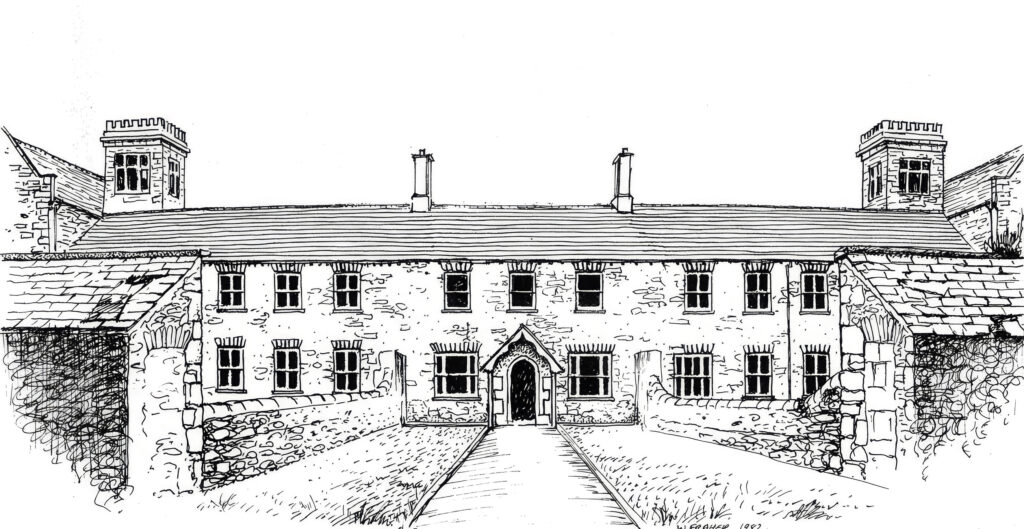
A schoolmistress available at all times was very much an ideal for the workhouse board members. At a meeting reported in the Munster Express in 1907, the members of Carrick Union discussed the appointment of the nun who had temporarily filled the position, stating that ‘her religious garment had in itself a deterring effect and no-one would ever see her away from her duties. She is there at all times, she wants no watching, she does her work for God. They would not see her down showing herself off, or you will never see her in the marketplace or in public places looking out for a sweetheart, she does not want a sweetheart.’ The employment of a nun would also save money, as the National Education Board would pay her full salary and they would not be required to pay her the subsidy they had to pay a lay teacher.
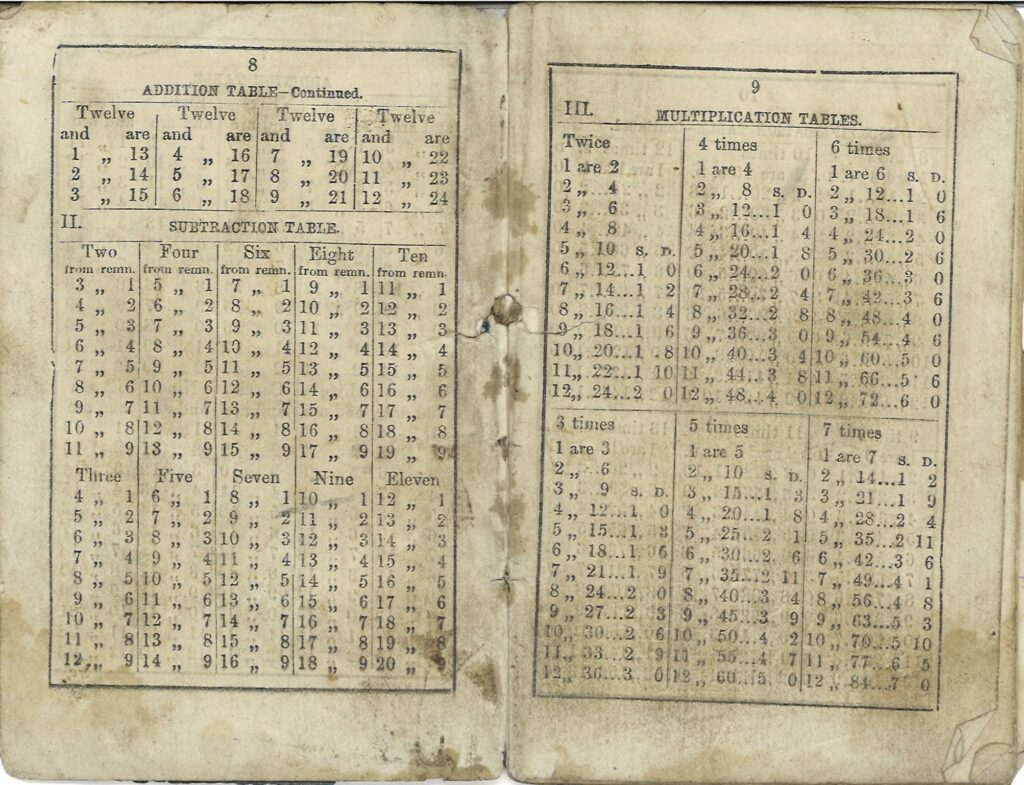
Many women dedicated their lives to teaching in the workhouse schools. Miss Downey in Dungarvan workhouse served for 34 years: ‘She was thoroughly efficient, most painstaking and conscientious in the discharge of her duty’ and was given a superannuation of £60 in recognition of her service. The minutes of the Board of Guardians meetings in local authority archives services across the country give a glimpse into the lives of these women and their work.
Joanne Rothwell is Waterford City and County Archivist.