
By Joseph E.A. Connell Jr
There were four assassination attempts on Benito Mussolini, the infamous fascist dictator of Italy who inspired Adolf Hitler, though he survived them all. Only one came close to succeeding, when 50-year-old Irish woman Violet Gibson fired on him on 7 April 1926 and almost altered the course of history.
The Honourable Violet Gibson was born in 1876, a member of a wealthy aristocratic family headed by her father, Lord Ashbourne, a senior judicial figure in Ireland. Her mother, Frances, was a Christian Scientist. Aged eighteen, Violet was presented as a débutante in the court of Queen Victoria. Growing up between Dublin and London, she was a sickly child who suffered from physical and mental illness—what was then termed ‘hysteria’. She experimented with theosophy before becoming a Roman Catholic in 1902, later moving to Paris to work for pacifist organisations. According to the World, Gibson’s passionate political and religious beliefs drove her to attempt to assassinate the Italian dictator.
On the day of the shooting, Mussolini had just finished giving a speech to a conference of surgeons in Rome. He was walking through the Piazza del Campidoglio when Gibson—a small, ‘dishevelled-looking’ woman—raised a gun and fired at him at point-blank range. Two chance events prevented Gibson from succeeding. First, Mussolini happened to turn his head to look at a group of nearby students who were singing a song in his honour. This caused the bullet to graze the bridge of his nose rather than hit him square in the face. Second, though Gibson tried to fire a second shot, the bullet lodged in her pistol. By that point she had already been dragged to the ground by a mob.
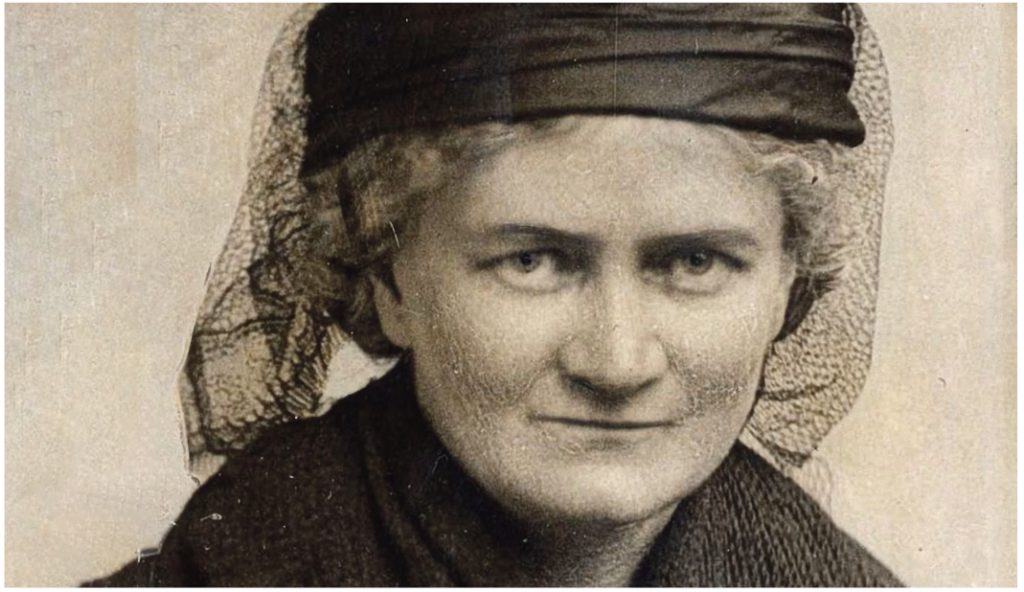
Gibson had armed herself with a rock to break Mussolini’s car window if necessary, and a Modele 1892 revolver secreted in a black shawl. While most witnesses reported that she fired once, Mussolini’s son gives an alternative account in his memoir, recounting that Gibson fired twice, her first shot missing and then her second grazing Mussolini’s nose.
Mussolini was wounded only slightly, dismissing his injury as a ‘mere trifle’. Hours after the attempt on his life, he re-emerged in public, a bandage on his nose but otherwise no worse for wear. Gibson was almost beaten on the spot by an angry mob, but police intervened and took her away for questioning.
She was eventually deported to England, where doctors declared her insane. Her family agreed to place her in a mental asylum in Northampton. While imprisoned, Gibson wrote letters pleading for her release. Addressed to the likes of Winston Churchill and Princess (later Queen) Elizabeth, the letters were never actually sent. Gibson was locked away until her death, aged 79, on 2 May 1956. No family members attended her funeral. She was buried in Kingsthorpe Cemetery, Northampton.
(For Donal Fallon’s review of TG4’s Violet Gibson—the Irish woman who shot Mussolini, see HI 30.2, March/April 2022, pp 54–5.)
Joseph E.A. Connell Jr is the author of The Terror War: the uncomfortable truths of the War of Independence (Eastwood Books, 2022).