
Sir,—The article ‘The Hue and Cry of Heresy’ by Philip McGuinness (HI 4.4, Winter 1996), while interesting, was fundamentally flawed. The author invites the reader to ‘dig deeper into the science and society in which Newton was embedded, and one is allowed…a fascinating insight into the use and abuse of science by ideologues…’. As one who has done this I searched in vain to find justification for the greatest ‘scientific-philosophical conclusion’ of them all, Copernicanism/heliocentrism. Newton without Copernicanism is like Galileo without Copernicanism, or the Catholic Church without the Bible. ‘Every schoolgirl has heard the story of Newton and the apple’, yes, but every schoolgirl has only been taught a biased, obscurantist science. While every schoolgirl will tell you Newton ‘discovered’ that gravity was a ‘pulling’ force which pulls the apple to the ground in true Aristotelian fashion, geocentrist science would offer an alternative: that gravity is a ‘pushing’ force which pushes the apple to the ground.
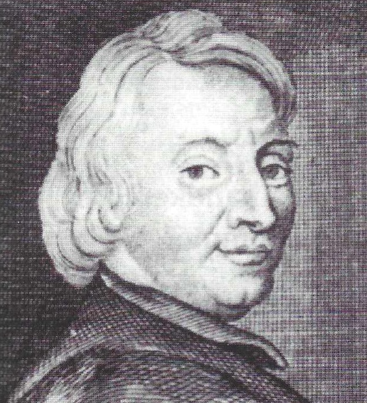
I defy any schoolgirl to find such investigation in science, in scientific textbooks anywhere. Why has science ignored a theory which is every bit as credible as Newton’s? The answer of course is that Newton’s theory was Copernican and anti-biblical, and Swiss physicist, George Le Sage (1724-1803), for example, was geocentrist. ‘Newton’s mechanics—as developed in Principia (1687)—revolutionised science’. I should say they did, because from that moment onwards science became a philosophy, a one-way interpretation of experiment in favour of Copernicanism/heliocentrism.
Let me demonstrate this perversion of true science by the author himself. Pantheism or ether? Toland preferred Bruno’s pantheism while Newton insisted on a medium for celestial movements (why Aquinas’s angels were not included puzzles me). Thus ether or no ether? To solve this problem Philip McGuinness cites the 1887 Michelson and Morley experiment which set out to prove the existence (or not) of ether. What Mr McGuinness failed to say was that this experiment was to use the presumed motion of the earth, as it sped at 67,000 mph through the ether, to find (or not) ether impediment to the velocity of one of the split beams of light:
In the event no difference was discernible, thus disproving the ether hypothesis: it has become known as ‘the most famous experiment-that-failed’.
Objective science would of course recognise a second interpretation of the Michelson/Morley experiment: that the earth was not moving. But philosophically the earth was presumed to move thanks to the acceptance of Newton’s theory. But the hard fact is that Newton proved nothing of the sort. ‘Saving the appearance’ of gravity proves nothing and Aquinas and Aristotle would have laughed their sides off at the idea that it did. Neither did Bradley in 1726, with his discovery of stellaraberration, nor did Bessel in 1838 with his discovery of stellarparallax. These ‘proofs’ for Copernicanism/ heliocentrism were but interpreting the phenomenon to suit their philosophy when an objective examination will show the same discoveries can also be accounted for by geocentrism.
Now when science operates such bias it ceases to be science. Irishman Fitzgerald and Lorentz tried to account for the one-sided interpretation of the Michelson/Morley experiment, not to account for the missing ether but to save Copernicanism, that stick used to beat the Rome of the seventeenth century. There would be no return to that other interpretation of the Michelson/ Morley test, traditional geocentrism. Any study of their work will show absurd ad hocs. Einstein was eventually allowed to plagiarise all the crazy ad hocs when proposing his Special Theory of Relativity in 1905. This theory has been falsified many times, recently by Irishman A.G. Kelly with his A New Theory on the Behaviour of Light (1996).
But with true science compromised to guarantee the Copernican heresy, and the world now philosophically Copernican, especially the Catholic Church itself under Pope John Paul II, articles such as this, written in good faith I accept, will keep the masses indoctrinated. The last thing that will be given an airing is the truth, for few have the love for truth that will overcome bias and prejudice. I offer this letter as true history, as relevant to History Ireland as anywhere.—Yours etc.,
REDMOND O’HANLON
82 Breamor Road
Churchtown
Dublin 14
Author’s reply
My article was meant to discuss themes in the history of ideas in the late-seventeenth and early-eighteenth centuries; Mr O’Hanlon, by contrast, is concerned with what he calls ‘Copernicanism’. Firstly, Nikolaus Copernicus died in 1543, some 150 years before the period discussed in my article. It is therefore unsurprising that Mr O’Hanlon ‘searched in vain to find…Copernicanism/heliocentrism’. Secondly, to create a personal ideology (‘Copernicanism’) out of the scientific work of one person betrays a complete misunderstanding of how science works. New theories and ideas become widely accepted among scientists through criticism and corroboration by experimental evidence. When such a theory becomes generally accepted, it is also ‘depersonalised’, i.e. it has become part of scientific knowledge belonging to all of us. In my article I use the term ‘Newtonians’ but I am not referring to people who believed in Newton’s science; rather, this term refers to ideologues who attempted to construct a social and political order based on Newton’s philosophical speculations, which did not always follow from his scientific achievements. I welcome Mr O’Hanlon’s raising of the ‘geocentric’ [planets and sun orbit Earth] versus‘heliocentric’ [planets orbit the sun] debate. He is, of course, correct in stating that an equally valid interpretation of the ‘non-result’ of the Michelson/Morley experiment is that the Earth is not moving (relative to the ether). However, to jump to this conclusion is to completely ignore the great scientific achievements of Copernicus, Tycho Brahe, Johannes Kepler, Galileo Galilei and Isaac Newton. Copernicus’ idea that the solar system was heliocentric was rejected by many astronomers because the available astronomical observations did not support it. Thanks to superb observations by Brahe, Kepler was able to derive his three laws of planetary motion, which Newton later interpreted in terms of gravitational attraction between objects. While Copernicus didn’t explain much more than was already explained, his heliocentric hypothesis had elegance unlike the geocentric model. The genius of Kepler was to show that planets described elliptical orbits around the sun (Copernicus suggested circular orbits). Sending spacecraft from Earth to Mars, Jupiter and other planets is obvious proof of the success of the heliocentric view of the solar system. Beauty is not just the preserve of artists: the achievements of these scientists are beautiful testaments to both the human mind and nature.
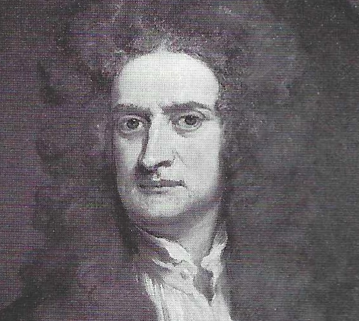
Mr O’Hanlon’s description of gravity as ‘a pushing force’ is innovative. Gravity is an attractive force. This begs the question: what (or who) is doing the pushing? The mass of the Earth ‘pulls’ the sun towards it, just as the sun pulls the Earth towards it. In fact, both sun and Earth rotate around a point called the ‘centre of mass’ which—because of the huge mass of the sun relative to Earth (the sun is about 300,000 times heavier than Earth)—is located very near the centre of the sun (If both were equal in mass, the centre of mass would behalf-way between the two). Mr O’Hanlon offers his letter ‘as true history’. Alas, I fear that his arguments are both unhistorical and unscientific.—Yours etc.,
PHILIP McGUINNESS
Dept. of Physics
Queen’s University
Belfast