
By Damien McLellan
In the summer of 2024, I walked about three miles along the very busy and very dangerous A4212 north-west from the market town of Bala in Gwyned, Wales. I wanted to slowly experience the moving sight of the Irish tricolour flying in the village of Frongoch. I expected little more. I had assumed that there would be nothing left of the internment camp where c. 1,800 Irish Volunteers had been incarcerated after the 1916 Rising. Among them were Michael Collins, Richard Mulcahy, Terence MacSwiney and Arthur Shields.
If you arrive by car, you will probably get out at the lay-by where the Irish and Welsh flags fly above a plaque in Irish, English and Welsh, briefly commemorating the site, which looks west over a valley. No barbed wire or wooden huts. You might then drive on. But I walked back to where I spotted another Irish flag flying and where I was welcomed to the Frongoch Museum by its owner, Alwyn Jones. Rather than take a quick look around then, I booked a tour for the following day.
Frongoch is in a very nationalist area of Wales. Over 97% of the children in the primary school on the site speak Welsh at home. Little wonder, then, that the 1916 prisoners received much covert local support and that the community staged an exhibition at the site to mark the centenary in 2016. From this event emerged the drive to establish a permanent museum, inspired by Alwyn Jones, who lives and has farmed on the site and curates a fascinating collection of documents, photographs and artefacts.
Frongoch was chosen as an internment camp as it was not in England, was remote and was served by a railway. A whiskey distillery on the site had failed in 1910, so there were buildings and services in situ. It was first used for the internment of German POWs; they were moved out to accommodate the Irish prisoners, who began to arrive from various UK prisons by train in June 1916. The South Camp dormitories were in the former grain store of the distillery, infested by rats, and the North Camp consisted of at least 25 wooden huts on a higher, exposed site.
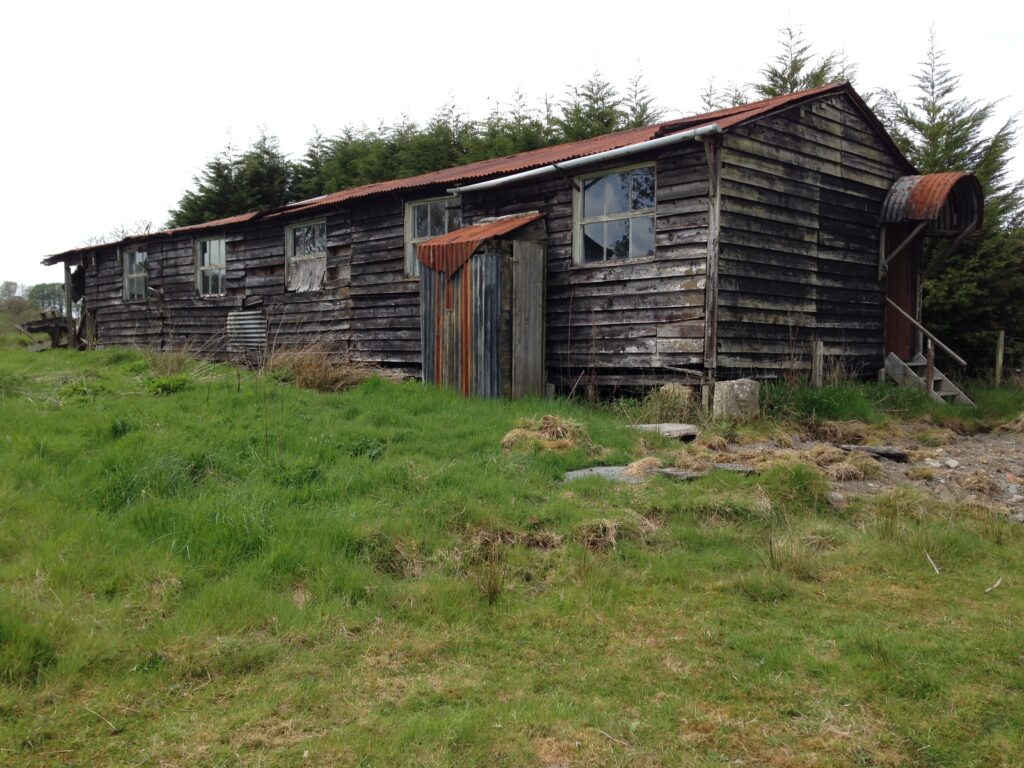
There is a consensus among historians that the Irish prisoners never considered escape. And why would they? The authorities had naively provided a perfect setting for them to recover, train and prepare for the next phase of the struggle. According to Frank O’Connor, ‘The most extraordinary thing that occurred in Frongoch was the reorganisation of the Irish Republican Brotherhood’, and this could be traced ‘to the startling suddenness with which an unknown lad from Cork later established his ascendency over the whole revolutionary movement’. O’Connor also claimed that Michael Collins earned his nickname ‘the Big Fellow’ at Frongoch because of his bullying, boisterous and big-headed behaviour.
By September 1916 the camp had been reduced to a militant core of 540 inmates and the mood significantly changed for the worse. The authorities attempted to conscript prisoners who had lived in Britain before 1916. Collins advised a campaign of withholding names, and those who did so were removed to the punishment huts in the. North Camp, barely surviving on basic rations and being denied their post, especially their food parcels. They were also denied medical treatment; the camp’s chief medical officer, Dr David Peters, was so distressed at not being allowed to treat them that he took his own life by drowning. All the prisoners were released before 24 December 1916.
Alwyn showed me around and I was surprised that the substantial homes of the camp commandant and his staff are still occupied. The family who live in the commandant’s house told me that it was difficult to heat in the winter. Even on that summer day I could feel the chill of the past. ‘Croke Park’, the recreation field, looks exactly as it did in 1916, a lush green, and much visited and celebrated by the GAA. The railway station and signal box are there, now a holiday home but for me haunted by the memory of some of our most significant and bravest countrymen who stepped down onto its platform.
What I didn’t find was any acknowledgement from my government for the efforts of Alwyn and the local Welsh community to keep all this together. Wouldn’t 2026 be a good year for a visit from our First Citizen to the site of this camp? I’m certain that the Frongoch primary school children would be delighted to see her.
Damien McLellan is a consultant psychotherapist and local historian from Waterford.