
By Angus Mitchell
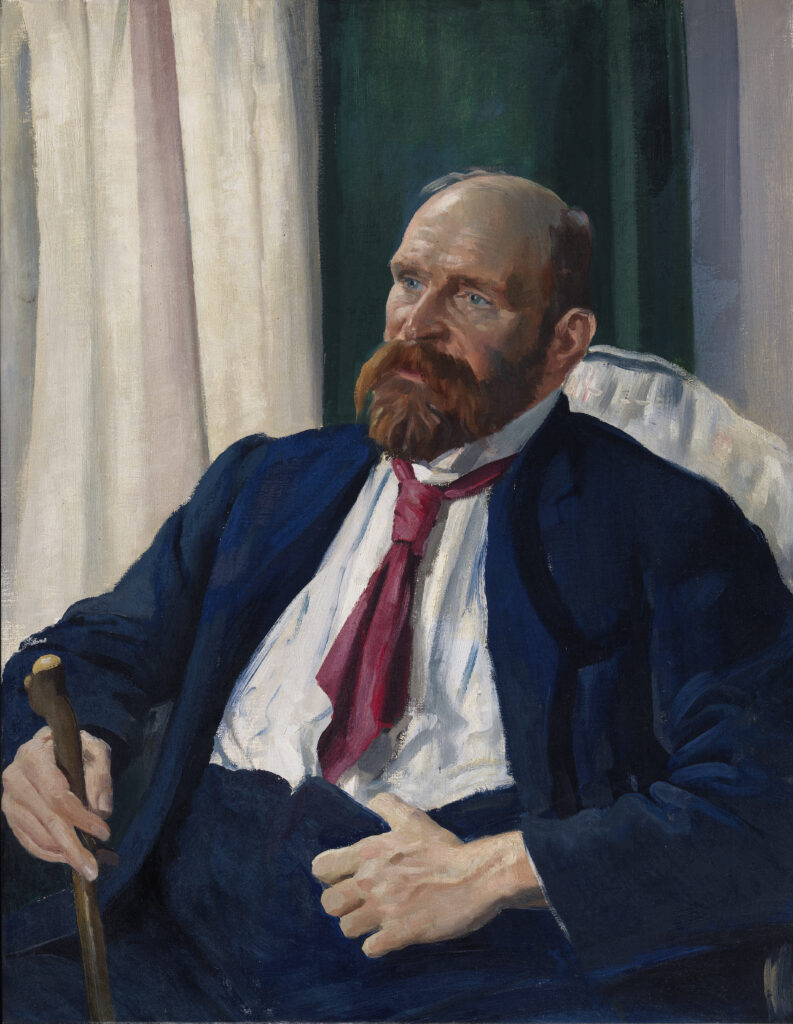
Easter Week 1916: as gunfire echoed across Dublin, a small band of Irish Citizen Army volunteers received orders to cross from their position at the Royal College of Surgeons and search for materials to fortify barricades. They entered a building on the other side of York Street via the roof. Moving cautiously downstairs, they found a locked door on the first floor; peering through a keyhole, they spotted stacks of heavy books—perfect for their purpose—and they prepared to break down the door.
That’s when one of the party, Liam Ó Briain, intervened. Having attended lectures in this very building, he recognised the door as the entrance to the School of Irish Learning. ‘Wait,’ he muttered, telling his comrades that this door protected some of the most sacred texts in the Irish language—facsimile editions of the Book of Leinster, the Book of the Dun Cow, the Yellow Book of Lecan and the Book of Ballymote. ‘These are the books of Old Ireland … One could say that it is on behalf of these old books that we are fighting.’ His comrades were quickly persuaded to leave the door intact, and the precious volumes remained unscathed.
This incident, recounted in Ó Briain’s memoir Cuimhní cinn (translated as Insurrection memories 1916), symbolises that lineage connecting Ireland’s ancient literary tradition to its struggle for independence—a revolution fought as much for political self-determination as for the survival and revival of the Irish language. The School of Irish Learning, whose rooms were spared that day, had established itself over the previous decade as the pre-eminent centre for Celtic scholarship in Ireland, drawing students and academics from across Europe to study and translate Ireland’s ancient language and literature.
THE ROTUNDA LECTURE
The inauguration of the School of Irish Learning might be traced to a lecture delivered at the Rotunda in Dublin in May 1903, when the German Celtic scholar Professor Kuno Meyer (1858–1919), a lecturer at University College, Liverpool, presented a compelling case for ‘The Necessity for Establishing a School of Irish Literature, Philology, and History’. His address was made to the Oireachtas of the Gaelic League and was introduced by its president, Douglas Hyde.
Meyer began by acknowledging the Gaelic revival sweeping across Ireland, which he described as ‘one of the most remarkable and unexpected national movements of our time’. However, he identified a critical gap threatening this cultural renaissance: the absence of a scholarly infrastructure to support and extend it. Since the deaths of John O’Donovan (1806–61) and Eugene O’Curry (1794–1862), academic and official Irish scholarship had stagnated. Meyer lamented that these eminent individuals had left no school behind, resulting in isolated researchers working without the benefit of institutional support or collaborative networks.
Countless Irish manuscripts of immense value lay dormant and unstudied in the great libraries of Ireland and Europe, awaiting the right level of expertise to bring them to light. The Book of Hy-Many (Leabhar Ua Maine) exemplified the problem. This fourteenth-century manuscript, held privately until its 1883 donation to the Royal Irish Academy (RIA), had languished for two decades for lack of qualified philologists capable of deciphering its contents. If comparable English materials relating to King Alfred had been discovered, Meyer argued, they would have generated immediate worldwide attention.
While the Gaelic League had successfully revitalised interest in the language among the general population, Meyer insisted that without rigorous scholarship to document, analyse and interpret Ireland’s linguistic and literary heritage the movement would lack the foundation it needed to thrive. This work was, in his view, ‘a question of national importance’.
FOUNDATIONS
Kuno Meyer was substantially helped in the foundation of the School of Irish Learning by the Celtic scholars Whitley Stokes and E.J. Gwynn and the historian Alice Stopford Green. Drawing inspiration from the École des Chartes in Paris, they envisioned a research centre dedicated to training in Irish palaeography, manuscript studies, archival science and historical criticism.
Stopford Green leveraged her extensive network of influential contacts in London to build a distinguished governance structure for the School, assembling a committee that included Lt.-Gen. Sir William Butler and the senior civil servant Sir Antony MacDonnell, the permanent under-secretary to the lord lieutenant of Ireland (1902–8). In 1904 she embarked on an American tour to generate financial and academic support, determined to position the School as a serious international enterprise.
When the National University of Ireland was established in 1908 with chairs in Irish and Celtic philology, the School’s role evolved. Rather than serving solely as a teaching institution for advanced students, it now repositioned itself as the leading authoritative centre for scholarly publication, complementing the emerging university infrastructure for Irish studies.
EARLY YEARS
In the early years the School of Irish Learning undertook a comprehensive cataloguing project to synthesise the vast corpus of Irish manuscripts dispersed across multiple institutions, including the RIA, Trinity College, Dublin, the British Museum, the University of Oxford’s Bodleian Library, the Advocates Library in Edinburgh and the Bibliothèque Royale in Brussels. Central to this mission was the creation of a detailed taxonomy that organised these ancient texts into distinct categories.
The School’s classification scheme encompassed religious literature and documents spanning the early Irish Church period, including lives of saints, liturgies, hymns, prayers and religious poetry; the Brehon Laws and various legal documents; the hereditary bardic poetry preserved from the ninth to seventeenth centuries; sagas and historical chronicles such as the Annals; translations from classical and medieval literature; and learning materials comprising Latin and Irish grammar, glossaries, medical treatises, astronomical works and monastic school texts.
The School operated on a modest scale, offering two courses annually: a three-week Easter session and a six-week summer session. Classes were taught by a rota of prominent Celtic scholars, including Professor Meyer, Professor John Strachan of Manchester, the Welsh specialist Professor John Rhys and Professor Rudolf Thurneysen of Liverpool. In its first three years the School attracted approximately 60 students from Ireland, England, Scotland, Wales and the United States. By 1905 it operated on an annual budget of £250, derived from Treasury grants, subscriptions, book sales, donations and fees. This modest sum funded lecturers, publishing costs and scholarships. Perhaps most significantly, in 1904 it launched its flagship journal—Ériu.
ÉRIU
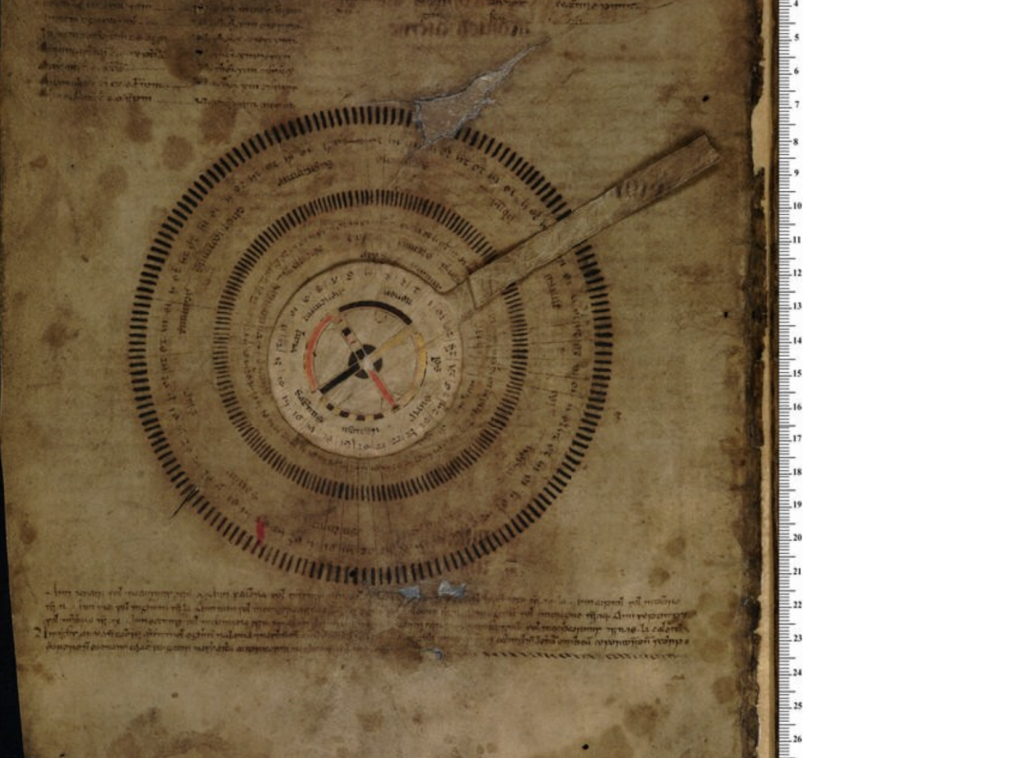
Ériu was dedicated to Irish philology, literature and linguistics. It contained contributions that spanned different aspects of Irish studies—from analyses of ogham inscriptions and early legal texts to detailed grammatical studies and editions of medieval tales. The journal remains to the present day a rigorous peer-reviewed publication for scholarship in Irish-language studies.
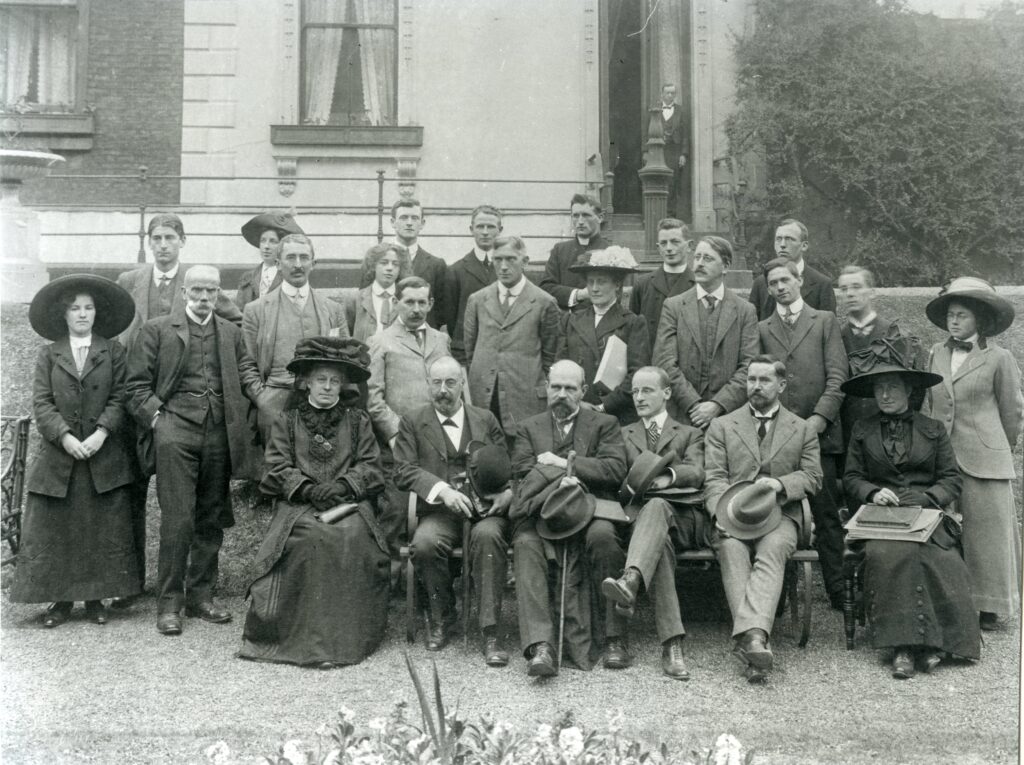
A 1911 photograph (above) still hanging in the library of the RIA exemplifies the progressive nature of the School. Among those seated are Rudolf Thurneysen, regarded as the greatest living authority on Old Irish; Norwegian Carl Marstrander, a former Olympic athlete and brilliant linguist who mastered Irish during a residency on the Blasket Islands; and Máire ní Chinnéide, Irish-language scholar, playwright and camogie pioneer. The group portrait is a testament to an intellectual community that would soon be dispersed by war, yet whose legacy would somehow survive the political turbulence.
WAR
The outbreak of the First World War shattered the peaceful pursuits of the School and the scholarly endeavours it had nurtured. Having succeeded Heinrich Zimmer to the chair of Celtic Studies at Berlin University in 1911 and being honoured with the freedom of Dublin and Cork in 1912, Meyer was stripped of both civic honours and resigned from his position as director of the School and editor-in-chief of Ériu. His pro-German lecturing and propaganda work in America abruptly ended after he sustained severe injuries in a train accident in California in 1915. His marriage to Florence Lewis, the nurse who helped him recover, did not survive their return together to Europe. Meyer died suddenly in Leipzig in October 1919, aged 60, his end hastened by grief over Germany’s humiliation at the Treaty of Versailles.
Though Meyer was posthumously restored to the freedoms of Dublin and Cork in 1920, the wartime rupture had fractured the collaborative relationships essential to the School’s mission. Its manuscript-cataloguing projects were incomplete and its vision for advancing Celtic studies was severely compromised. Volumes of Ériu were published in 1916 and 1921, but that foundational spark was lost in the bitter resonances of European conflict.
THE HAND-OVER
By 1924, faced with mounting financial difficulties, negotiations were opened up by the committee chaired by Douglas Hyde to incorporate the School into the RIA. The Academy established a subcommittee which included E.J. Gwynn and R.I. Best, both highly active members of the School since its foundation, and the natural scientist Robert Lloyd Praeger. A proposal was drawn up for the transfer of all outstanding assets—notably its journal Ériu, a valuable library of 300 volumes and the stock and copyright to its publications. In return, the RIA agreed to maintain the School’s publications and continue the commitment to Irish-language scholarship. The final meeting of the School of Irish Learning was held in May 1926 in a committee room at the RIA.
The brief flourishing of the School of Irish Learning drew scholars from throughout Europe and stands at the helm of what has been described as ‘the heroic age of Celtic philology’. Before 1914 it was leveraged as an instrument of cultural proto-diplomacy, establishing scholarly networks that placed Ireland at the centre. However, Europe’s rapid shift towards fascism and the later efforts by the Nazis to harness Celtic studies to its world-view saw its legacy unfairly confounded with the rise of political extremism.
In June 1940 Éamon de Valera established the School of Celtic Studies as part of the Institute for Advanced Studies, preserving the School’s vision for future generations. This institution continues to this day to embody that earlier wave of scholarly endeavour, while the digital archive ‘Irish Script on Screen’ (https://www.isos.dias.ie/) provides free access to a labyrinthine library of Irish-language sources.
Angus Mitchell received funding from the RIA Commemorations Bursary 2025/26 to undertake research for this article. His biography Casement has just been republished by Haus Publications.
Further reading
S. Ó Lúing, Kuno Meyer 1858–1919 (Dublin, 1991).
Papers of the School of Irish Learning: RIA Special List AO33.