
By Owen O’Shea
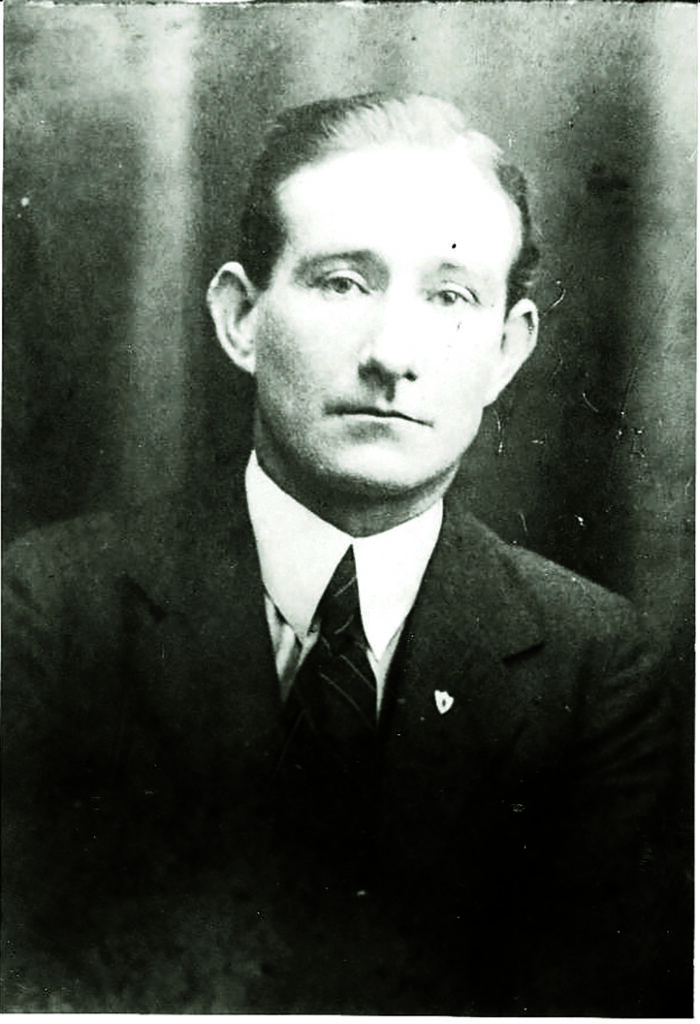
The Irish Press—which Éamon de Valera and others founded in 1931 ‘to give the truth in the news’—is rightly credited with providing Fianna Fáil with a significant publicity and propaganda boost. It offered a valuable platform for Fianna Fáil candidates and policies in a national press that was largely pro-Treaty and pro-Cumann na nGaedheal in outlook. The role of the local and regional press in generating electoral support for Fianna Fáil has not been the subject of much historical investigation, even though newspapers were the unrivalled means of communication for Irish politicians in the 1920s and 1930s. Apart from the public meetings and rallies that were addressed by candidates, the newspaper was an essential means of communicating with voters and motivating them to go to the polls. Moreover, editorial biases and commentary were enormously influential in causing shifts in political alignments.
KERRY NEWSPAPERS STRONGLY PRO-TREATY
For most of the 1920s, all Kerry newspapers were very strongly supportive of the Treaty and the Cumann na nGaedheal government led by W.T. Cosgrave. Despite significant anti-Treaty sentiment in a county that had borne the scars of indiscriminate and extra-judicial murder by the National Army during the Civil War, the Kerryman and its sister paper the Liberator strongly supported Cosgrave and his government, believing that ‘the only hope was to work the Treaty’. Other newspapers, including the Kerry People, the Kerry News and the Kerry Reporter, were also in the pro-Treaty camp. The Kerryman, which consolidated its position by acquiring the News and Reporter in 1926—giving it almost a monopoly of newspaper ownership in the county—loudly advocated for Cumann na nGaedheal candidates while condemning anti-Treatyites and Éamon de Valera as being responsible for the Civil War and the ‘broken bridges and burned houses’ of 1922–3.
Negligible space or commentary was afforded to other parties in the Kerryman and its publications. As a result, the anti-Treaty position and the message of Sinn Féin—and, after 1926, Fianna Fáil—struggled to be heard.
When Fianna Fáil was founded, the party organisation in Kerry flourished and it won three of the seven seats in the constituency in June 1927. Nevertheless, the local press continued to adopt a firmly pro-Cumann na nGaedheal stance, particularly after the assassination of Kevin O’Higgins, and provided limited and often derogatory coverage and editorials about Fianna Fáil and its leader. While Cumann na nGaedheal’s Professor John Marcus O’Sullivan TD, for example, was lauded for his ‘giant intellect’ in the Kerryman, the Fianna Fáil candidate, Eamon Kissane, was ‘from a brilliant and brainy family’ according to the Kerry Champion. In 1927 the Kerry News argued that ‘the nation and economic development of the country, are at the moment irreversibly bound up with the return of the Cumann na nGaedheal Party strong enough to form a Government’.
PADDY CAHILL AND THE KERRY CHAMPION AND KERRY EXPRESS
The local newspaper landscape was transformed in 1928 when the Kerry Champion was established. It was co-founded by Paddy Cahill, the Sinn Féin TD for Kerry from 1921 to 1927. A close ally of Austin Stack, he had been leader of the Kerry No. 1 Brigade of the IRA during the War of Independence. Cahill retired from the Dáil at the June 1927 general election and supported Stack, who ran as a Sinn Féin candidate, but he subsequently supported Fianna Fáil. Cahill was editor as well as managing director and his co-founder was Tommy Lynch, a Fianna Fáil activist and chairman of Tralee Urban District Council.
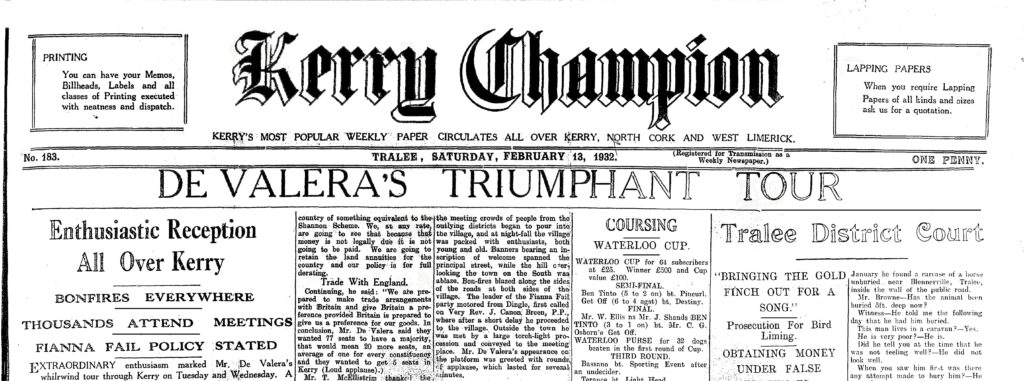
The Champion was explicitly and enthusiastically supportive of Fianna Fáil and of Éamon de Valera, particularly during the crucial 1932–3 election cycle. In one of its first editorials, it warned that ‘electors must not allow themselves to be intimidated’ by Cosgrave and his supporters in the press. In February 1932, and in the same week that Fianna Fáil swept to power in the general election, Cahill established a second newspaper—the Kerry Express. Published twice weekly, it would, the Champion promised, bear ‘all the qualities’ of its parent publication.
The two newspapers gave the Fianna Fáil organisation and its candidates a vital communication platform and each afforded significant space to Fianna Fáil election rallies and meetings, all of which provided a counterbalance to the prominence given to Cumann na nGaedheal in the other newspapers. As well as providing significantly more column inches for reporting on Fianna Fáil meetings, they also published several advertisements for the new party and helped to promote its policy platform.
‘IRELAND’S MAN OF DESTINY’
Apart from the multiple columns and front-page headlines devoted to the Fianna Fáil campaigns in the constituency, the language used in Paddy Cahill’s newspapers to describe Fianna Fáil, and particularly its leader, were hugely influential. This mirrored what was reported in the Irish Press, which wrote of the ‘great processions and cheering crowds’ that greeted de Valera in County Kerry. ‘LIGHTNING TOUR OF KERRY’, ‘Huge Crowds and Remarkable Enthusiasm Everywhere’ and ‘Tralee’s Mighty Hosting’ were typical of the headlines in the Kerry Champion during de Valera’s tour of Kerry for the 1932 campaign.
Cahill’s reporters, among them journalist Liam Skinner, were particularly devoted to de Valera, who was often portrayed as an almost messianic figure. Skinner reported on a visit by de Valera to Listowel in 1933, noting how the cloak over de Valera’s shoulders was ‘discarded and that tall, slight figure of Ireland’s Man of Destiny stands forth to gratefully acknowledge the wave of enthusiastic emotion which sweeps that human sea below’. The flattering and fiery rhetoric continued:
‘Kerry’s staunch and uncompromising Republican faith, always aglow, has been fanned into a fierce blaze by the visit of Éamon de Valera to-day (Friday). How else to explain the unforgettable scenes of enthusiasm, amounting almost to religious fervour, witnessed in the four corners of “The Kingdom” during the past twelve hours? For since he crossed the Cork–Kerry border shortly before mid-day the Fianna Fáil leader’s progress has been that of a conqueror.’
‘HIS VITALITY IS AMAZING’
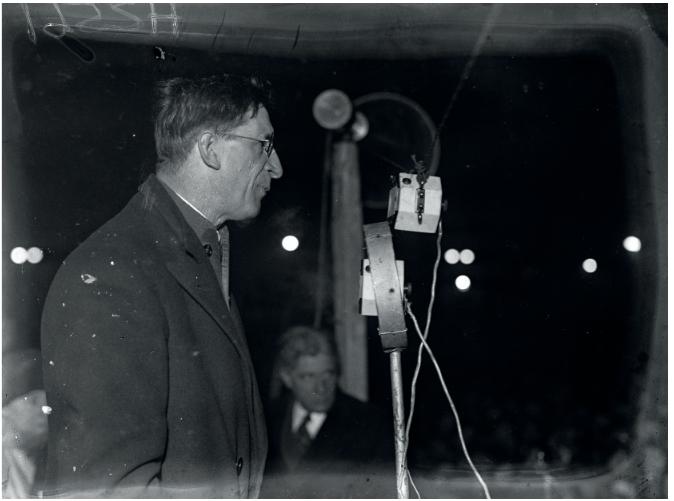
Éamon de Valera campaigned with vigour and determination in Kerry during the party’s early years, and the reports of his visits to Kerry from 1926 onwards ranged from fewer and unfavourable mentions in the Kerryman stable to extensive acres of newsprint in the Champion and the Express, usually on the front pages. The treatment of de Valera and his electioneering prowess in Paddy Cahill’s newspapers may have been fawning at times but it accurately reflected the theatricality and vitality at Fianna Fáil meetings which were so lacking at those of a tired and lethargic Cumann na nGaedheal. Liam Skinner wrote in the Kerry Champion of de Valera’s visit to Kerry in 1933:
‘His vitality is amazing, seemingly without limits … he travels through it [Kerry] in a single day, addressing as many as five or six formal public meetings, and often submitting to an unexpected demand to stop and speak to a crowd waiting at a crossroads in a remote district, hoping for no more than a glimpse of the Leader, and to cheer him on his road.’
A report from Listowel in 1933 conveys the excitement of a de Valera rally:
‘Heralded by a seemingly unending procession—a solid phalanx of marching men beneath the lurid glow of serried rows of flame announce the arrival of the central figure of it all. Éamon de Valera occupies the second of that long line of motor cars. The procession headed by bands and banners moves through the town. The enthusiasm as it passes is indescribable. Bonfires blaze, scrolls span the streets, the Tri-colour floats from the windows en route. It is truly a triumphal entry.’
Buttressed by such reportage, Fianna Fáil in Kerry created the impression of a greater degree of energy, showmanship and momentum at election meetings than their opponents, and de Valera’s rallies made a lasting impression on the local and Irish political landscape.
The pro-Fianna Fáil press in Kerry took great pleasure in the ascent of the party to government in the early 1930s. A triumphalist tone was struck after Fianna Fáil’s stunning election victory in January 1933: the result, according to the Kerry Champion, was revenge for the infliction on the people of the Treaty by those who embraced it and would echo down the ages:
‘Those are some of the reasons why this general election will become a milestone in Irish history, to be held up for the inspiration and veneration of future generations of Irishmen and women living in a free united and prosperous land.’
This editorialising and reportage helped the party to secure five of the seven Kerry seats in 1932 and 1933. In 1933 two out of every three Kerry voters backed Fianna Fáil, as its support increased significantly again to nearly 68% of the vote share and over 45,000 first-preference votes. The vote was the highest received by the party in any constituency in 1933.
‘MORE REPUBLICAN THAN EVER’
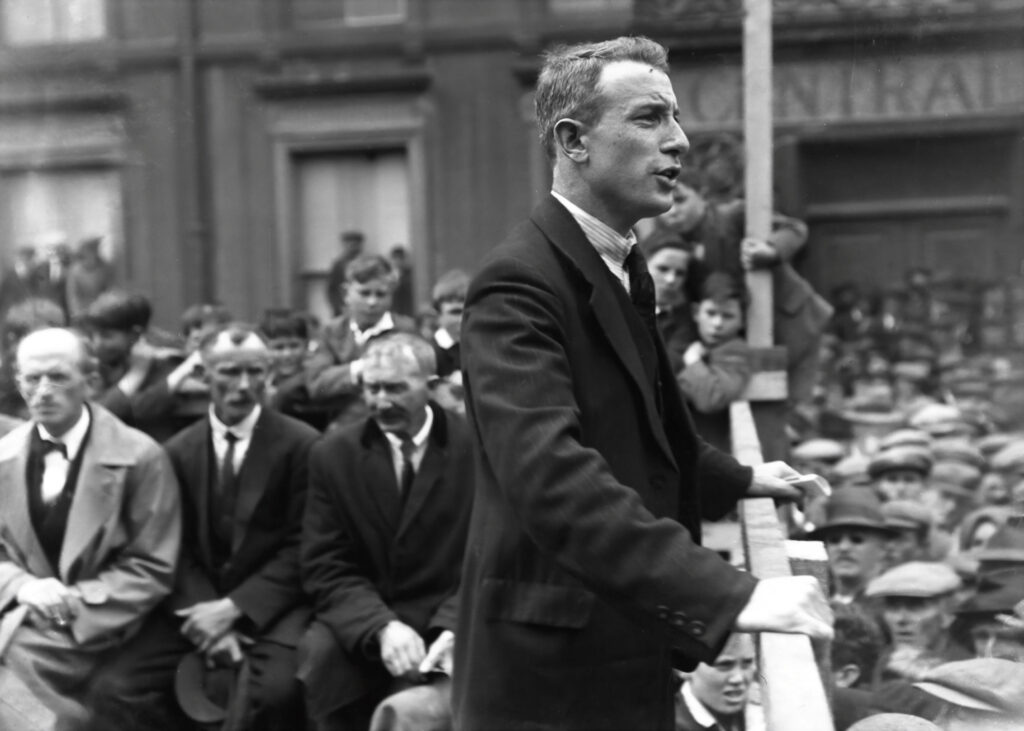
The Kerry Champion declared, with some justification and not a whit of humility, that following the 1933 result Kerry was now ‘more Republican than ever’. During its first six years in existence, Fianna Fáil had surged in popularity in Kerry by offering a radical political programme to voters and by securing significant support from the anti-Treaty constituency. It established as many branches in the constituency in its first year of existence as Cumann na nGaedheal had formed in four years.
Beyond that, however, the Kerry Champion and Kerry Express can be credited with providing de Valera and his new party with a major propaganda fillip at a time when the local and national press were hostile to his party and aligned to Cumann na nGaedheal. For several decades after 1933, Fianna Fáil in Kerry continued to dominate politics through organisational strength, effective canvassing strategies and policies which resonated with voters. Those policies were amplified in the pages of Paddy Cahill’s newspapers to the enormous benefit of de Valera and his party.
Owen O’Shea’s biography of Austin Stack will be published later this year by Merrion Press
Further reading
O. O’Shea, From bullets to ballots: politics and electioneering in post-Civil War Kerry, 1923–33 (Dublin, 2025).