
By Eugene Broderick
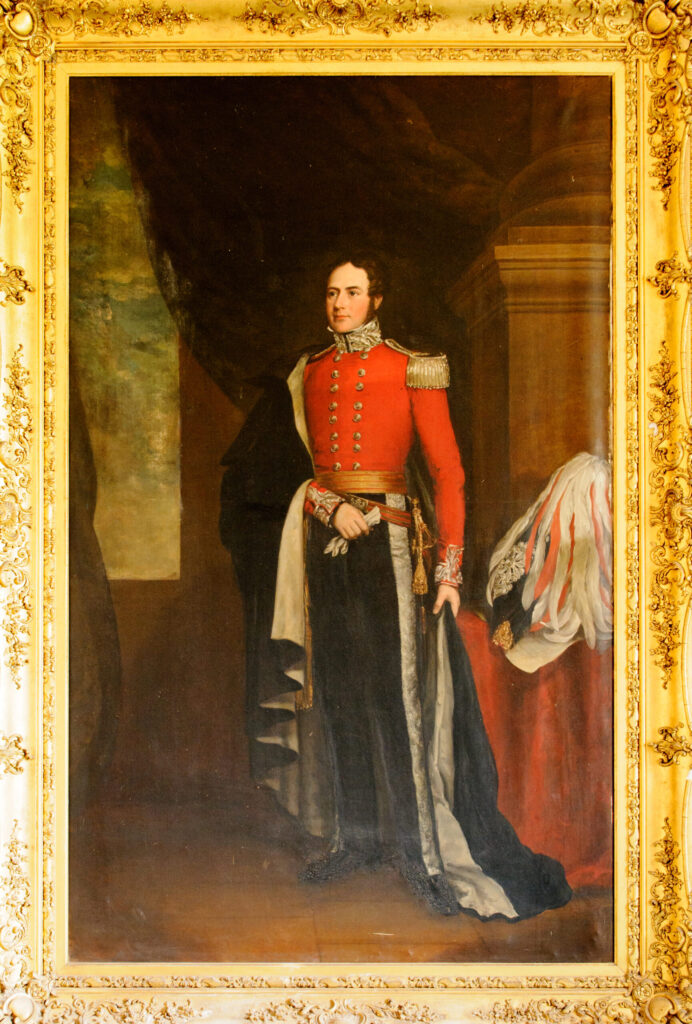
The June 1826 general election in County Waterford was a titanic struggle between entrenched opponents of Catholic Emancipation and an increasingly assertive and confident local Catholic Association, led nationally by Daniel O’Connell. In this contest Lord George Beresford represented the anti-Emancipation religious and political Protestant establishment, while the candidate of those who challenged it was Henry Villiers Stuart. This election is one of the most significant in modern Irish history.
STUART VERSUS BERESFORD
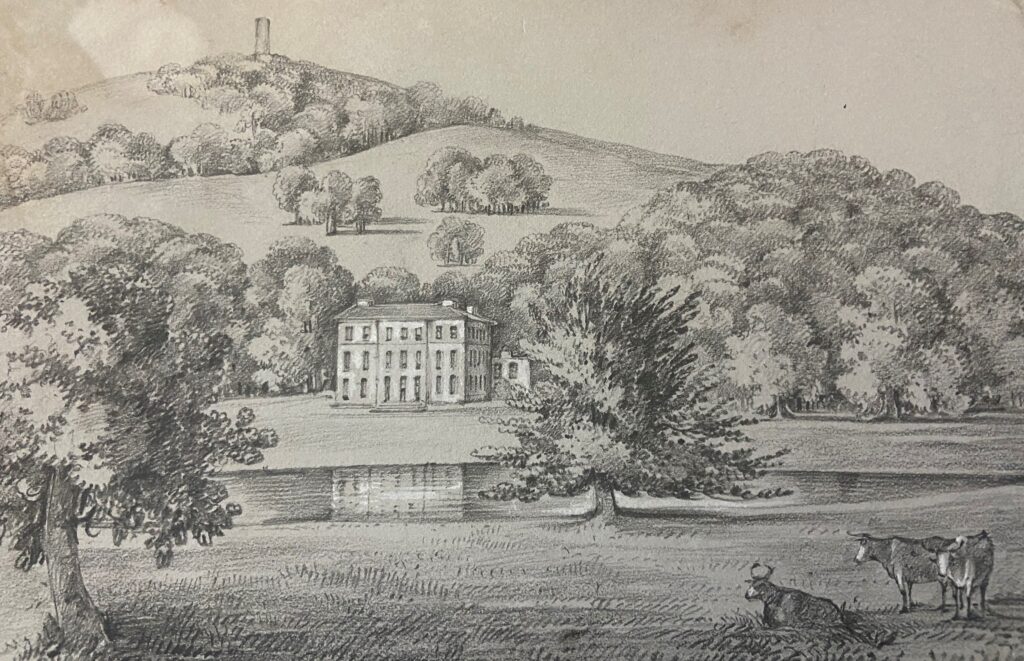
Stuart was the grandson of the last Earl of Grandison, who had large estates in Waterford, and in 1824, having attained his majority, he decided to make Dromana his principal residence. He was a liberal Protestant supporter of Catholic rights and was soon being spoken of as a possible candidate in a future election. One of County Waterford’s two seats was held by Richard Power, who supported Catholic Emancipation, while the second was in the possession of Lord George Beresford, who resisted the concession of religious equality. He was a member of one of Ireland’s most powerful families, and it was claimed in 1812 that one quarter of the positions of patronage in Ireland were filled by their connections. A County Waterford seat in Westminster had been held by the Beresfords since the Act of Union. To their opponents they were the quintessential representatives of Protestant Ascendancy. While it would be a daunting task to dislodge Lord George from his position of political dominance, his opponents recognised that success could have reverberations beyond the county’s boundaries.
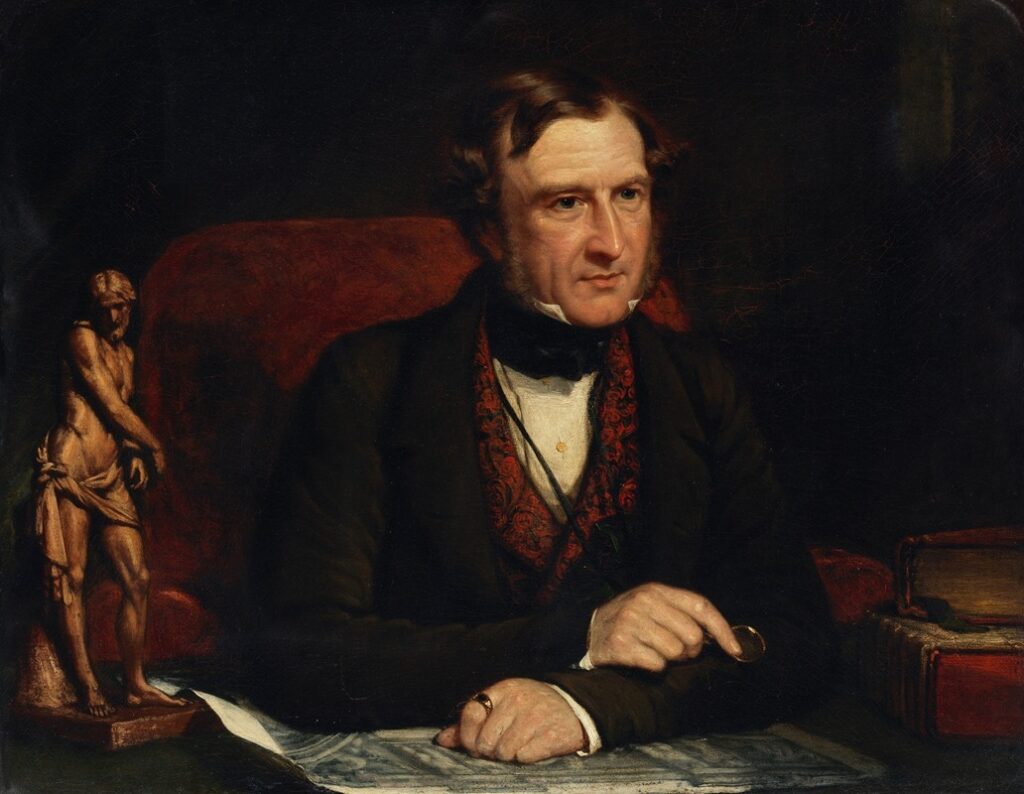
A second factor was the support given by the Catholic clergy. The alliance between the local Catholic Association and the priests had been forged in 1824 owing to the concerns of the latter regarding the activities of Protestant proselytising societies in city and county. The final reason why a challenge to Beresford was contemplated was the existence of considerable liberal Protestant support for Catholic rights in Waterford. An example of this was a meeting of Protestants in Dungarvan held on 12 February 1825, pursuant to a requisition signed by twelve Protestant magistrates, for the purpose of petitioning parliament in favour of Catholic demands. On 26 July a public dinner was organised by Catholics to express appreciation of this action. It proved to be a most significant occasion: at this event it was indicated that Henry Villiers Stuart would be a candidate in the next general election. The dinner marked a public political alliance between liberal Protestantism and the local Catholic Association, with the avowed purpose of ejecting Lord George Beresford from his parliamentary seat.
‘AN INCURSION INTO THE ENEMY’S TERRITORY’
Stuart issued an address to electors in August 1825, the dissolution of parliament being expected in October. The election was delayed, however, and this allowed Beresford to rally his considerable electoral forces. By the time parliament was eventually dissolved in the summer of 1826, Lord George enjoyed a majority over Stuart, estimated at more than 600 votes by Wyse.
In order to defeat Beresford, Stuart’s supporters found it necessary to adopt a daring strategy. Devised largely by Wyse, it entailed an appeal to the predominantly Catholic electorate to vote for Stuart. This electorate was composed for the most part of those possessing the 40-shilling freehold franchise, granted under the terms of the 1793 Relief Act. According to a parliamentary return of 1825, 2,199 such freeholders were entitled to vote in County Waterford. However, these voters were generally regarded as the political property of their mainly Protestant landlords and were expected to exercise their vote in a manner determined by, and pleasing to, those same landlords. In an era of public voting, to defy the electoral wishes of a landlord could mean eviction; consequently, the 40-shilling freeholders were not seen as having any political independence. This proposed appeal to the freeholders was thus indeed a high-risk strategy; in Wyse’s words, it was ‘an incursion into the enemy’s territory’.
ELECTION CAMPAIGN
It was a strategy made possible by the political groundwork already laid by the Catholic Association. The structures established for the collection of the ‘Catholic rent’ were transformed into election committees throughout the county. The alliance between the Catholic Church and the Association ensured the vital support of the priests. Critically, as was noted by Wyse, the collection of the rent had heightened popular political consciousness, and this facilitated the receptiveness of freeholders to the appeals made for their support by Stuart.
The election campaign was fiercely fought between Stuart and Beresford, with sectarian bitterness being all too evident. In many respects this was inevitable, given that the fundamental issue separating the candidates was the divisive and contested matter of religious equality. While the leadership of the Catholic Association employed liberal and tolerant language in formal addresses, that spoken in the heat of the electoral battle was often crudely populist, habitually intemperate and occasionally vitriolic. The exigencies of the struggle resulted in the weaponisation of language in the form of sectarian polemics. Such utterances struck a chord with Catholic audiences hostile to a Protestant establishment which manifested itself at local level in acts of social arrogance and in the tangible reality of hated tithes, among other things. The Beresfords were characterised as ‘bigoted’ and as the ‘hereditary enemies of Catholicism’. Lord George was described as the ‘libeller’ of the ‘pious’ Catholic clergy, who was simply perpetuating his family’s tradition of hostility to the Church of Rome.
Lord George’s supporters countered with the much-favoured and oft-repeated theme of the power of the Catholic priesthood and its malign influence over Stuart’s voters. Priests were accused of being the principal means by which anti-Beresford forces sought to subvert the ‘natural’ bond between landlords and their tenants. This alarmed the opponents of Emancipation precisely because this bond was regarded as the basis of the political power exercised by the proprietors of the soil over those who rented it from them: it was the foundation of the Protestant control of parliamentary representation. Only the priests, it was alleged, possessed the power and influence to raise such a mutiny. The clerics were accused of wielding a spiritual tyranny over their flocks, reducing them to a state of thralldom and terrified obedience, and using all the powers of ‘priestcraft’ to ensure obedience to their will. Calls by them to vote for Stuart were, it was claimed, enforced by ‘curses’ and ‘invocations of the terrors of hell’ on those Catholics who failed to heed their words.
Evidence of the sectarian character of the campaign may be found in the local newspapers, which played an important role in electioneering. The Waterford Chronicle, a journal imbued with liberal Catholic values, was a trenchant advocate of religious parity. Its contents were a heady mixture of unequivocal and unrepentant anti-Beresford propaganda, together with information and advice for those supporting Stuart. The Waterford Mail fulfilled an identical role for the Beresford campaign, serving, as it did, the Protestant and Tory interest in city and county.
STUART VICTORIOUS
Initially, O’Connell and the Catholic Association in Dublin viewed with doubt Thomas Wyse’s strategy of appealing to the freeholders for support. The national leadership regarded them as the mere political serfs of their Protestant landlords who historically did their bidding at elections. On 9 June Stuart invited O’Connell to Waterford. Accepting the invitation, on 18 June he began a tour with Stuart of Beresford’s strongholds. There O’Connell witnessed, at first hand, the enthusiasm of the freeholders in their support for the challenge to the Protestant Ascendancy in the county and this convinced him that the pro-Catholic candidate could win.
Stuart’s campaign was well organised and disciplined. There was a notable absence of the rioting and drunkenness which so often characterised Irish elections. Major Richard Wilcocks, a police commander in Waterford, reported to Dublin Castle that ‘the profoundest peace prevailed, in spite of the fact that he had never witnessed in all his experience such party spirit, with the Catholics all wearing green handkerchiefs, sashes, cockades and ribbons, flying green flags in all parts of the city’. Stuart enjoyed a dramatic and comprehensive victory: 1,357 votes to Beresford’s 527.
In the aftermath of Stuart’s victory there was a palpable sense of excitement in Waterford among members and supporters of the Catholic Association. The sentiments of an editorial in the Waterford Chronicle reflected their mood: ‘Ireland is emancipated … the Beresfords are down. The citadel of the ascendancy has been levelled to the ground.’ For many of the county’s Protestants, however, the outcome of the election was a truly alarming experience. While the result was a shock, the manner of its achievement was even more so—the encouragement by the Catholic Association of popular defiance of Protestant landlords. This constituted the subversion of the subservience of tenants upon which rested the foundation of Protestant political power.
Furthermore, the events in Waterford in July 1826 highlighted another, and even more uncomfortable, reality for the county’s Protestants: their paucity of numbers and consequent political vulnerability at a time when the Catholic majority were demanding their rights in a strident and determined fashion. In 1824 Daniel O’Connell described Waterford as an ‘extremely Catholic county’. Protestants came to understand this fact in 1826. The first official enumeration of denominational affiliation in 1834 confirmed the accuracy of O’Connell’s description, revealing that there were 8,952 Protestants in a total population of slightly under 178,000.
LANDLORD RETRIBUTION
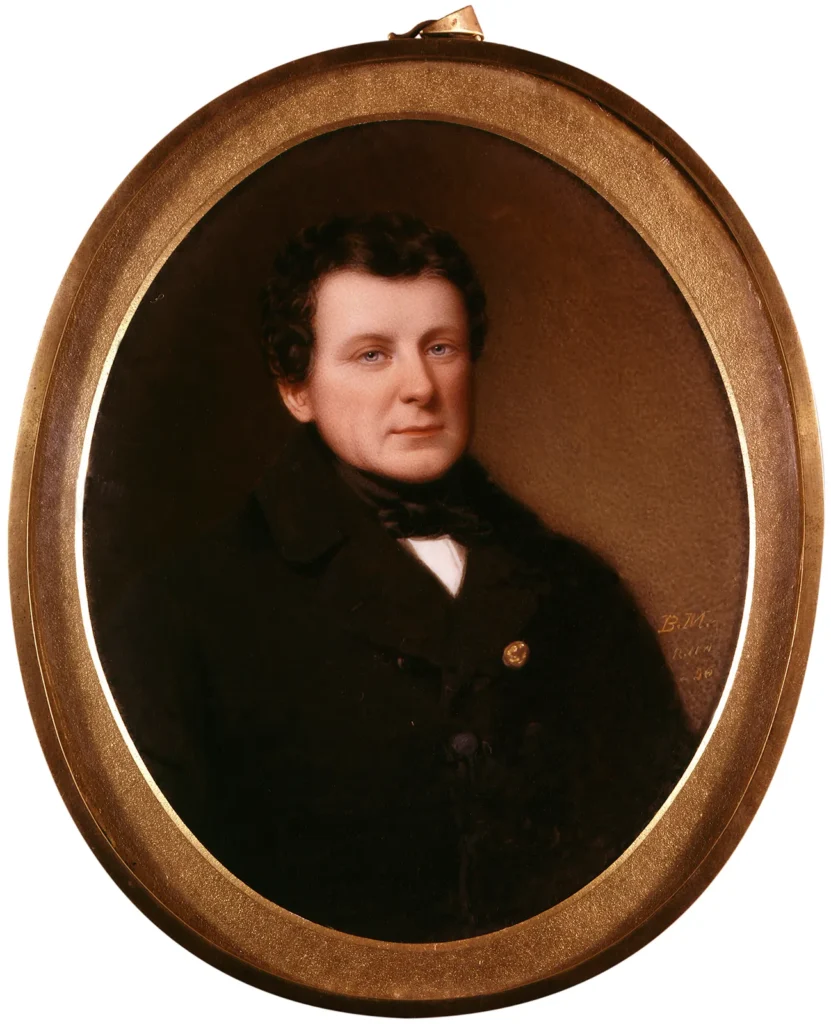
In the aftermath of the election, tenants suffered the retribution of their landlords for defying their wishes and voting for Stuart. The circumstances of many of the 40-shilling freeholders in the county were certainly very difficult. At a meeting of the Catholic Association in Waterford city in September 1826, it was reported that 500 eviction notices had been served on Beresford estates. In early October a petition was read at an Association meeting in Dublin from tenants in Kilmacthomas, a village some 26km from Waterford city, detailing the miseries they were enduring for defying Lord George Beresford and imploring assistance to alleviate their plight. A month later, a Fr John Sheehan wrote to Daniel O’Connell: ‘The gentry and the aristocracy here have resolved to wage a war usque ad internecionem [of extermination] against the forty-shilling freeholders who overturned their power at the last election’.
In response to the plight of the freeholders, on 7 August 1826 a meeting was convened in the city to establish the County of Waterford Protecting Association. It was announced that the association was a response to all acts of oppression directed at 40-shilling freeholders. The situation demanded energetic and decisive action: funds were to be made available to protect their fellow Catholics suffering for their ‘meritorious exertion’ at the general election in support of Stuart. Almost a year after the election, letters were still being received by the Catholic Association in Dublin seeking assistance to alleviate the sufferings of evicted tenants in a county described by O’Connell as ‘screaming for relief from one end to another’.
In 1826 there were revolts by Catholic freeholders in other counties—Louth, Monaghan, Westmeath and Cavan. These were sudden and less organised than in Waterford. It was the planned and considered character of the latter county’s campaign by advocates of Emancipation that distinguished it from the others. Here was forged a formidable political alliance, composed of the Catholic Association, priests and liberal Protestants, which successfully harnessed and directed the electoral potential of the predominantly Catholic 40-shilling freeholders, using structures developed to collect the ‘Catholic rent’. It was not just that victory was achieved in a dramatic struggle against the Beresfords but also that Waterford offered a template for a national framework for future electoral contests, which threatened the foundations of Protestant parliamentary dominance. The events in Waterford in June 1826 heralded the prospect of an electoral and political revolution in Ireland.
Eugene Broderick is a member of the advisory board of Waterford Museum of Treasures.
Further reading
E. Broderick, Thomas Meagher: forgotten father of Thomas Francis Meagher (Newbridge, 2022).
D. McCartney, The dawning of democracy, 1800–1870 (Dublin, 1987).
F. O’Farrell, Catholic Emancipation: Daniel O’Connell and the birth of Irish democracy, 1820–30 (Dublin, 1985).
T. Wyse, Historical sketch of the late Catholic Association of Ireland (2 vols) (London, 1829).