By Clare Ryan
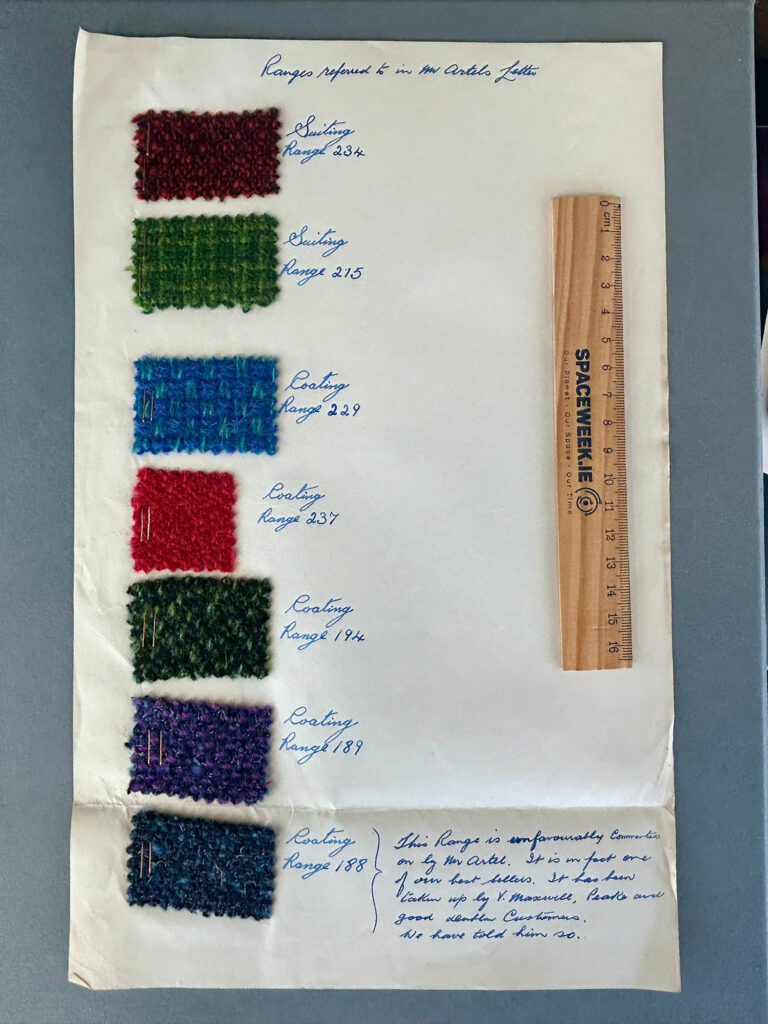
The Clayton Woollen Mill Collection, housed in the Meath County Archive, preserves over a century of records (1888–1969) and offers a rare, documentary view of one of Ireland’s most significant textile enterprises. The Clayton Woollen Mill, on the banks of the River Blackwater in Navan, operated from 1867 to 1968 and became a major employer, a key player in the national woollen industry and a participant in international trade. In contrast to the familiar image of cottage spinning and hand-weaving, its records reveal the realities of a mechanised, vertically integrated woollen mill and the wider social and economic world that sustained it.
The Millbrook site has a long industrial pedigree, with its earliest known use linked to the Augustinian abbey mills in the twelfth and thirteenth centuries. By the nineteenth century it functioned as a paper mill run by Michael and Simon Browne, who started work there aged sixteen in 1835. In the 1850s John Ford converted the premises to wool production, but technological lag and shifting markets limited success. A decisive change came in 1867, when John and Frederick Clayton, Yorkshire-trained textile specialists, acquired the mill. Exploiting its hydro-power potential, they developed a modern woollen enterprise. The Claytons later took over Stackallen Mill in 1870 and opened a factory at Knightsbridge, Dublin, in 1887; after 1940 only the Navan mill remained in operation.
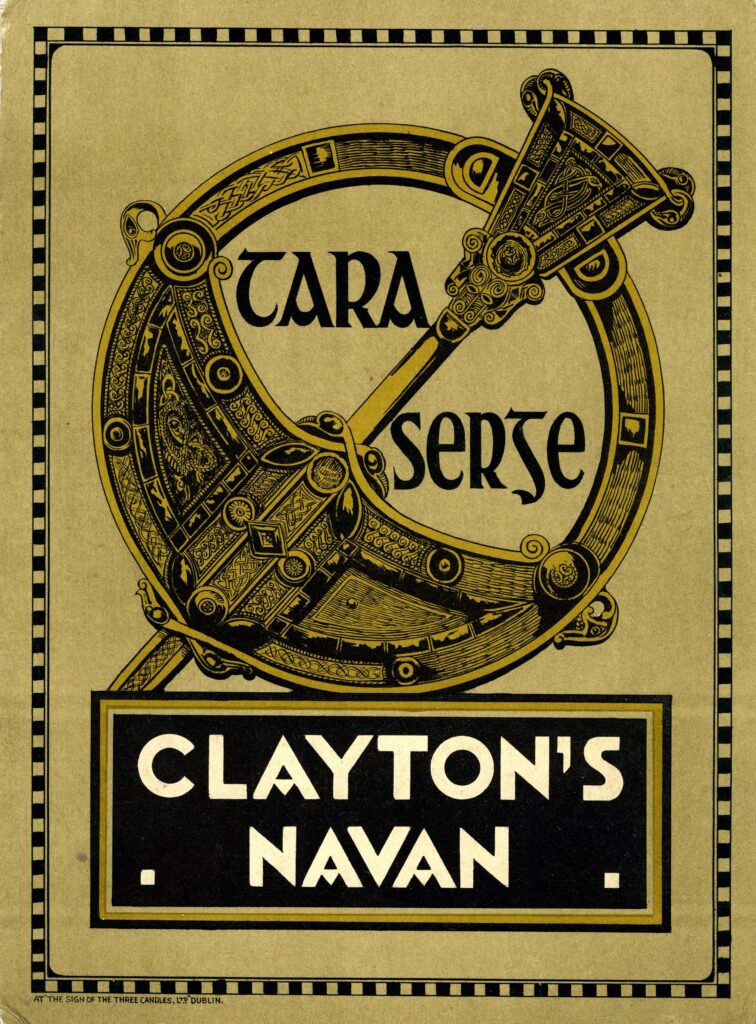
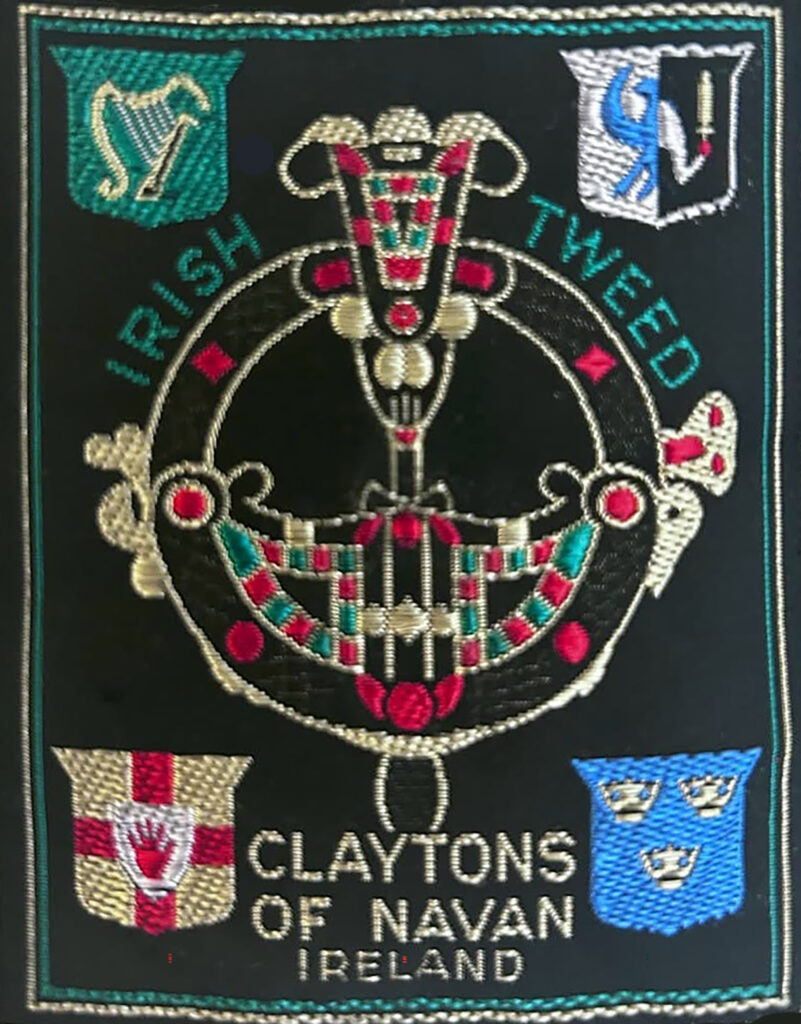
From the outset, the Claytons pursued mechanisation and self-sufficiency. The firm was unusual in Ireland in being vertically integrated, carrying out every stage from raw fleece to finished cloth on one site. By 1903, a 250hp steam engine had been installed, and later the mill generated electricity using a repurposed ship’s engine. Today, only Kerry Woollen Mills and the Cushendale Woollen Mills (Kilkenny) retain a comparable vertical model. Clayton’s produced tweeds, serges, flannels, blankets and friezes. Raw wool was sourced locally and from England and Australia to complement the coarser Irish fleece. Power looms, dyeing vats and rigorous finishing processes underpinned a reputation for durability and quality, recognised by awards such as a gold medal at the 1884 London Exhibition.
Like many nineteenth- and twentieth-century mills, Clayton’s shaped the built environment as well as the labour market. In 1884 William Curry & Sons built Millbrook Terrace to house mill workers, embedding the factory within the urban fabric of Navan. Payroll records show a predominantly local labour force, often with multiple generations of the same families employed over time, pointing to relative stability in employment patterns.
The Second World War transformed Clayton’s business. In 1940 the firm secured a government contract for 25,000 yards of serge for the Irish army. Profits rose sharply, peaking at £10,319 in 1945, supported by rationing and the widespread scarcity of woollen goods. Operations were intensive: in one week in 1942 the mill consumed seven tonnes of coal, ten tonnes of timber and three tonnes of turf to sustain a 50-hour work week. Records show how management balanced resource shortages through negotiations with government bodies and by sourcing fuel from local and rail suppliers. They also reveal tensions between military and civilian demand: in 1941 St Joseph’s School complained that its orders were delayed owing to the priority given to army cloth.
From the 1940s to the 1960s the Clayton Woollen Mill became closely integrated into international textile markets. The firm worked with agents across Europe and North America, most notably Ticher Ltd in Germany, which handled orders, trade-fair participation, logistics and market intelligence. Correspondence records discussions on tariffs, sales strategies and the use of promotional gifts, including Irish whiskey, for central European clients. Clayton’s also employed representatives in Canada, the United States, Sweden, Denmark and the Netherlands. In the 1950s, New York-based designer and businesswoman Ellen Brooke Licht served as both an agent and a potential investor in US operations. Export records document deliveries to fashion houses and wholesalers in New York, Frankfurt and Montreal, firmly positioning Clayton’s within the mid-twentieth-century international wool trade.
Despite this record of innovation and international reach, the Clayton Woollen Mill could not withstand the broader forces of de-industrialisation. From the late 1950s, synthetic fibres, cheaper imports and ageing machinery placed the company under severe pressure. Financial records show a marked downturn after 1953 and continuing losses into the 1960s. Labour relations deteriorated, with reduced hours, tighter timekeeping and falling morale. In 1968 J.A. Linscheid outlined the final problems in a letter: absenteeism, a shortage of skilled weavers and neglected machinery maintenance. The mill closed that year aand the premises were sold; a smaller concern, Hilltop Mills, was established by Linscheid and John Orr, continuing some elements of the business for a further twelve years.
Clayton’s most enduring legacy is its archive. Now held in the Meath County Archive, the collection comprises more than 189 bound volumes and 135 archival boxes and is probably unmatched in scope for an Irish textile manufacturer. Weavers’ Wages Books (1885–1963) chart pay, labour costs and workforce trends. Shareholder Records (1888–1970) trace ownership and investment, while Board Minutes and Agenda Books (1888–1956) document strategic decision-making. Extensive correspondence (1889–1962) with clients, suppliers and regulators illustrates the firm’s operational reach. Mill accounts, ledgers, cash and commission books (1888–1955) provide detailed financial data, and Invoices Inwards (1939–49) illuminate supply chains and external economic pressures. Supplementary newspaper cuttings and specialised account books tie production cycles to wider economic events. Together, these sources enable research into wages, management tactics, trade routes, industrial modernisation and the social fabric of twentieth-century Ireland, from electricity use to rail-freight disputes and participation in European and North American trade fairs.
The Clayton Woollen Mill exemplifies the industrial potential of rural Ireland during a period of global expansion and domestic transition. It’s a story of technical modernisation, export-oriented marketing and deep community engagement which challenges narratives that reduce the Irish economy to agriculture and cottage craft. At the same time, its decline underscores the vulnerability of small national industries to international competition and technological change. Preserving the Clayton Woollen Mills Collection ensures that this experience is not lost. It allows scholars and the wider public to reconstruct the history of a single enterprise while situating it within the broader evolution of Irish industrial heritage in an era that bridged empire, independence and modernisation.
Clare Ryan is an archivist with the Meath County Archive.