
ON THIS DAY
BY AODHAN CREALEY
JULY
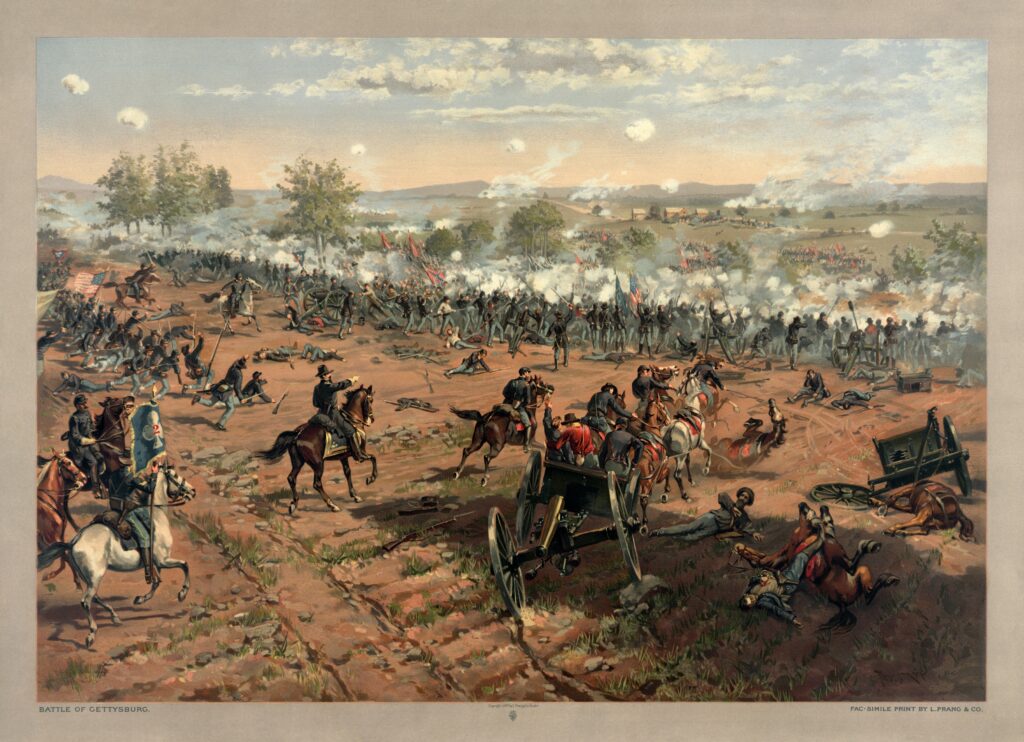
01/1863
The Battle of Gettysburg, Pennsylvania, during the American Civil War began. Gettysburg was not a single battle but a series of pitched battles over three days in which the Union Army of the Potomac, under General George G. Meade, defeated the invading army of Northern Virginia under General Robert E. Lee. Thousands of Ulstermen, mostly on the Union side, played their part. The opening day went badly for the Union, though. William Gamble from County Fermanagh, a battalion commander under General Buford, managed, with a small number of men, to successfully curtail advance brigades of Lee’s armies. The highlight of the second day was Col. Joshua Chamberlain’s heroic charge against the Confederates at Little Round Top, though earlier that day Col. Paddy O’Rorke from County Cavan made a similar charge with some 500 men of the mainly Irish 140th New York Regiment. Carrying the regimental flag and urging his men forward, O’Rorke was shot in the neck and died instantly. He was just 26. The third day centred on ‘Pickett’s Charge’, Lee’s final gamble. Following a prolonged artillery barrage, nine artillery brigades attacked a Union position behind a wall in the centre of the Union line on Cemetery Hill. Defending that position was Col. Dennis O’Kane from Coleraine, Co. Derry, commander of the mostly Irish 69th Pennsylvania Infantry. Though the enemy managed to breach the wall, leading to fierce hand-to-hand combat, he and his men succeeded in turning the Confederate attack into a retreat. O’Kane, however, was mortally wounded and died later that day. There was further good news for the Union the following day with the surrender of Vicksburg to General Ulysses S. Grant, another Union hero with Ulster roots.
04/1776
The Second Continental Congress in Philadelphia approved the Declaration of Independence, drafted by Thomas Jefferson. That same evening the declaration was sent to County Tyrone-born printer John Dunlap, who produced 200 copies known today as the ‘Dunlap Broadsides’.
06/1946
Clann na Poblachta was founded in Barry’s Hotel by Seán MacBride, Noel Hartnett, Jack McQuillan and Michael Kelly. Twenty-two of the 27-member provisional executive had been active in the IRA.
06/1946
George W. Bush, 43rd US president (2001–9), who in 2004 faced massive protests over the Iraq War during one of his four visits here, born in Connecticut, the eldest son of George H.W. Bush, 41st president (1989–93).
11/1996
The Drumcree crisis: the RUC had banned the march four days earlier. However, following intense loyalist violence and with 50,000 Orangemen and supporters gathered there, the RUC reversed their ban and allowed 1,200 Orangemen to march. Taoiseach John Bruton expressed his anger at the decision to Prime Minister John Major.
17/1936
The Spanish Civil War between the Spanish Republic and Nationalists led by General Francisco Franco began. The three-year conflict claimed the lives of up to a million, including 60–70 Irish volunteers, mainly with the International Brigades.
18/1966
The 492-seat Abbey Theatre (1904) was reopened on its original site by President de Valera, exactly fifteen years after the original theatre had been destroyed by fire.
21/1976
Christopher Ewart-Biggs (54), the newly appointed British ambassador to Ireland, and Judith Cook (27), a civil servant, were killed in an IRA landmine explosion just 200 yards beyond the gates of his official residence in Sandyford, Co. Dublin.
26/1956
President Nasser of Egypt nationalised the Suez Canal Company that was previously under British and French control, provoking the Suez crisis and relegating Britain to the second tier of global powers.
AUGUST
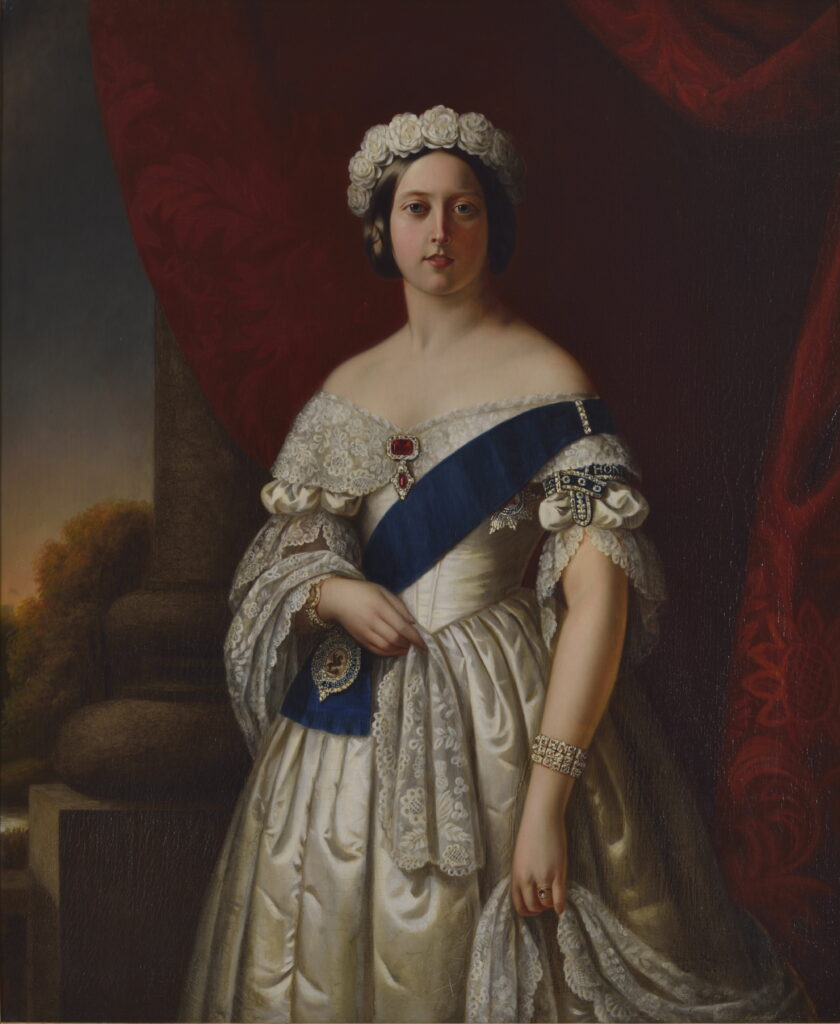
02/1849
Queen Victoria landed in the Cove of Cork—promptly renamed Queenstown—on her first visit to Ireland, spending four days in the Viceregal Lodge (now Áras an Uachtaráin) before a visit to Belfast. Over her 64-year reign she was to make three further visits. In 1853 she returned to open William Dargan’s Dublin Exhibition and in 1861 spent three days in Killarney, where lavish hospitality almost bankrupted the Muckross and Kenmare estates. She was well received in all her visits, though on her last, in 1900, a ‘Patriotic Children’s Treat’ for 40,000 poor children was organised in opposition by Maud Gonne and James Connolly at the same time as the official celebration in the Phoenix Park. She is widely commemorated north of the border. Besides the grand statue in her honour by Thomas Brock in the grounds of the City Hall, unveiled in 1903, a number of Belfast’s streets and institutions are named after her, such as Great Victoria Street, Victoria Square and the Royal Victoria Hospital, where there is also a statue in her honour. This is not the case, of course, in the republic. In Dublin a monument to her by John Hughes was erected in 1908 by the Royal Dublin Society on Leinster Lawn, between Leinster House (their headquarters then) and Merrion Square, but in 1948 it was removed ‘to create parking space’, kept in storage for almost 40 years and then gifted to the good people of Sydney, Australia, by Charles J. Haughey. However, her beloved Albert, who died in 1861, had better fortune. A statue in his honour by John Henry Foley placed on Leinster Lawn (1872) remains there today, the last royal statue still standing in the country.
05/1956
John Miller Andrews (85), prime minister of Northern Ireland (1940–3), died. In 1933, as minister for labour, he observed that of the 31 porters in Parliament Buildings there was only one Catholic, ‘there temporarily’.
07/1986
Peter Robinson MP, later first minister of Northern Ireland (2008–16), was arrested in Clontibret, Co. Monaghan, after invading the village at the head of a 500-strong loyalist mob in protest at the Anglo-Irish Agreement.
10/1976
The British army shot dead a member of the IRA who was driving a car which then mounted the pavement on Finaghy Road North in West Belfast, killing three children, Joanne (8), Andrew (6 weeks) and John (2) Maguire. Their mother, Anne Maguire, was seriously injured and took her own life four years later.
14/1976
The Peace People, founded by Mairéad Corrigan and Betty Williams to mobilise public opinion against violence after the deaths of the Maguire children, held their first rally.
19/1946
William Jefferson ‘Bill’ Clinton, 42nd US president (1993–2001), born in Arkansas, the son of Virginia Dell Cassidy and William Jefferson Blythe Jr, a travelling salesman who died in a car crash three months before his birth.
20/1876
The IRB Supreme Council withdrew support for Home Rule and called on republican MPs to leave Westminster. Joseph Biggar and John O’Connor refused to do so and were expelled from the organisation.
25/1776
David Hume (65), Scottish philosopher whose History of England (1773) was the standard text on that subject for the general reader until the end of the nineteenth century and who was particularly disparaging of the ‘barbaric and ignorant’ Irish, died in Edinburgh.
28/1996
Liam McCormick (79), regarded as Ireland’s leading church architect, notably of St Aengus’s Church, Burt, Co. Donegal, which he referred to as ‘my pagan building’ inspired by and aligned on the nearby hillfort of the Grianán of Aileach, died.